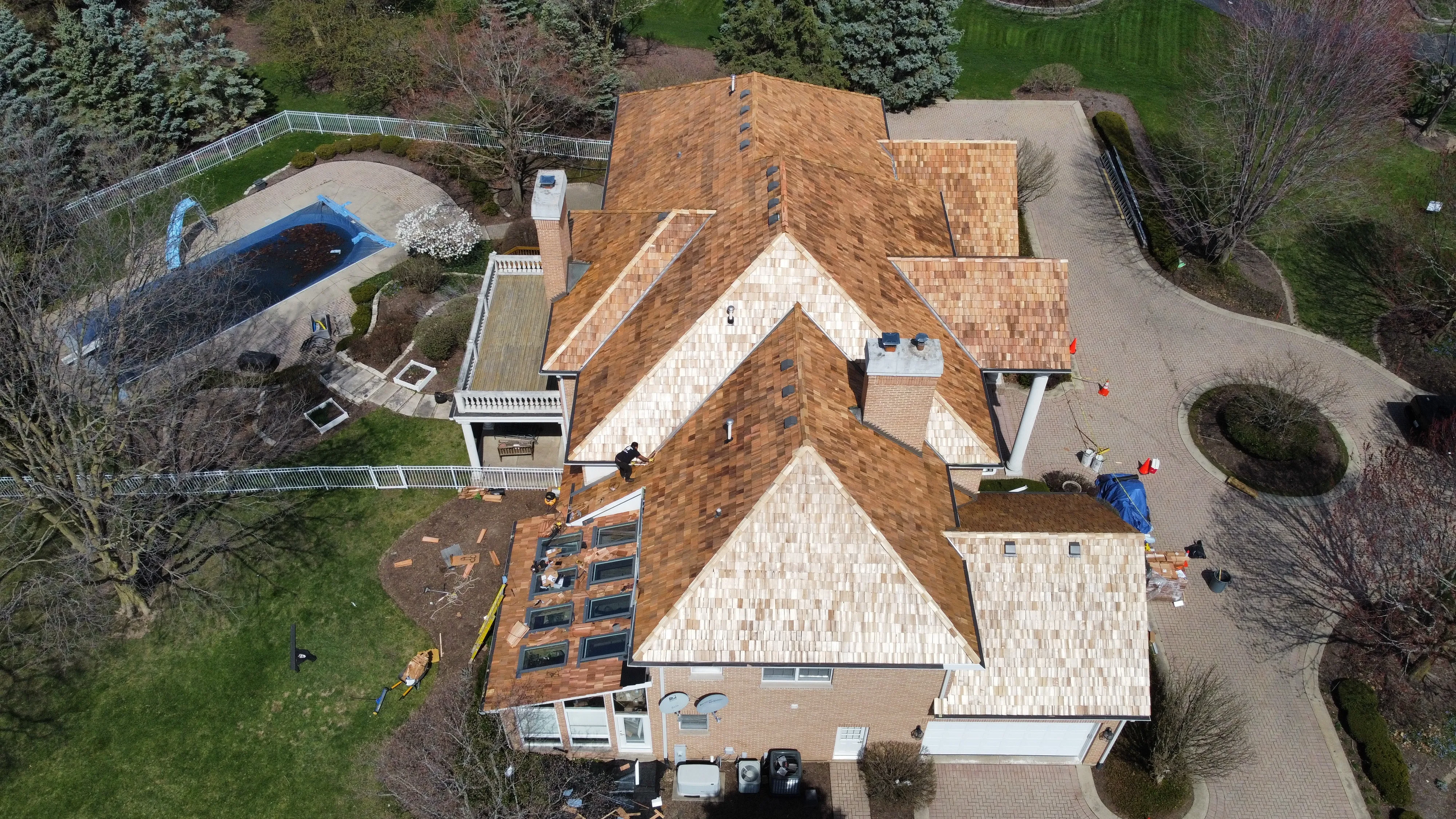
Emergency Roof Repair
in Chicago
24/7 response. On-site within hours. We stop the leak, secure the structure, and document everything for your insurance claim.
(708) 847-5095Chicago Storm Pros is a service of C&N Construction, Inc. (cnroofs.com). Reviews, project counts, certifications, and ratings shown here reflect C&N Construction's work.
Emergency? We'll Call You Back Fast.
Or call (708) 847-5095 right now.





"Cameron Divine worked tirelessly with my insurance company. It took MONTHS, but he did not give up. The crew arrived EARLY the next morning."
Cynthia G."Gil filed an appeal, arranged a third-party arbitrator. The arbitrator agreed a new roof was the only reasonable remedy. A dream come true."
Bruce L."John worked tirelessly. On three separate occasions he was up on the roof with insurance inspectors. In the end, he secured payment for the entire roof."
Stephen F.This Is What a Documented Roof Looks Like
Real footage from our crews, not stock. The inspection that documents every layer for your claim, the tear-off down to the deck with new wood wherever it's needed, and the roof that goes back on built for the next storm.
- Storm damage hides at the edges. That's what gets missed.
- New decking whenever it's needed, never a layover.
- Local, licensed, and permanently here to honor the warranty.
Storm just hit? Snap a photo of the damage.
Photograph the gutters, vents or shingles. We circle what we seem to see and say whether an inspection is worth it.
Free. 30 seconds. No signup.
This AI only looks for storm and roof damage, and it isn't perfect. Think of it as a good starting point for a conversation.
Your browser shrinks the photo and removes the location data before it leaves your device. Privacy details.
Want to check recent storms near you? Your city only.
We never ask for a street address here, and the city stays in your browser.
Want us to get an inspector over, as soon as tomorrow in most cases?
A free inspection puts someone on the roof with a hand on the shingle. The report is yours to keep.
When Your Roof Can't Wait
Some roof problems can sit for a week while you get estimates. Others can't wait an hour. When water is pouring through your ceiling at 2 AM during a thunderstorm, you need someone who answers the phone, shows up, and stops the damage before it spreads to your walls, floors, and electrical system.
Water coming in under an ice dam is its own kind of emergency. See ice dam removal for what to do tonight and how we clear them safely.
Chicago's weather creates roofing emergencies year-round. Spring brings severe thunderstorms with damaging hail and straight-line winds that tear shingles off in sheets. Summer delivers microbursts and occasional tornado activity. Winter piles on heavy snow loads and the freeze-thaw cycling that builds ice dams along your eaves. Every season brings a different way to compromise your roof.
Call for emergency service any time water is actively reaching your interior or electrical system. Water stains on your ceiling mean water has already traveled through your attic. If it's reaching light fixtures, outlets, or your electrical panel, you have a safety hazard that needs tarping now. If you're not sure where to start, read our guide on what to do if your roof is leaking.
Call if storm damage exposed the roof deck. Wind-ripped shingles or hail punching through to the underlayment leaves plywood absorbing water every hour it's uncovered. The longer it sits, the more saturation, the more rot, and the more expensive the repair gets.
Call if a tree or debris hit your roof. A limb through the shingles is obvious, but smaller branches can crack ridge caps, dislodge flashing, and open gaps you can't see from the ground. Anything that hit your roof needs a professional look.
Call if you see structural sagging. A roof that looks bowed or uneven after a storm may have compromised rafters or trusses. Get everyone out of the affected rooms and call immediately. Call right away rather than waiting to see if it gets worse.
Call for ice dam damage in winter. Ice dams form when heat escapes through your attic, melts snow on the upper roof, and the water refreezes along the colder eaves. The resulting ice ridge traps water, which backs up under your shingles and leaks into your home. Chicago sees 80+ freeze-thaw cycles per year, making ice dams one of the most common winter emergencies in the metro.
“Water is coming through the ceiling and I need someone today.”
24/7 emergency repair and tarping“There's a leak and I don't know where it's coming from.”
Leak diagnosis and repair, priced honestly“There's water pooling where it never pooled before.”
Get it looked at before it comes inside“The hail damage looks terrible from the street.”
Hail inspection and the insurance pathOur Emergency Roof Repair Process
When you call C&N for an emergency, here's exactly what happens. No surprises, no runaround.
Step 1: Call us. Any hour, any day.
Cierra, our phone assistant, answers any hour, any day. No "leave a message and we'll get back to you during business hours." Cierra takes the details and tries to reach the team right away, because emergencies don't follow a 9-to-5 schedule. Call (708) 847-5095 and tell us what's happening.
Step 2: Rapid dispatch.
We deploy a crew from our Hillside, IL base. Depending on weather conditions and road access, we're typically on-site within a few hours. For active leaks and structural threats, we prioritize dispatch above all other scheduled work.
Step 3: Safety assessment and emergency tarping.
The crew's first job is securing the structure. That means identifying every point of water entry, assessing structural stability, and installing heavy-duty tarps and board-up materials to seal the breach. The goal is simple: stop water from entering your home. We use commercial-grade tarping rated for Chicago wind conditions, not the blue poly sheeting you'd pick up at a hardware store.
Step 4: Damage documentation.
While the crew secures the roof, they photograph everything. Every damaged shingle, every puncture, every compromised piece of flashing gets documented with close-up photos, measurements, and written descriptions. This documentation becomes the foundation of your insurance claim. Carriers approve claims based on evidence, and we build a thorough damage report from the moment we arrive.
Step 5: The adjuster visit.
You file your claim with the initial damage report we give you. When the adjuster comes to your property, our Haag-certified inspector meets them on the roof. Haag certification means our inspectors are trained in the same damage assessment methodology the insurance industry uses. We speak the adjuster's language, which means nothing gets overlooked or undervalued.
Step 6: Permanent repair or replacement.
Once the scope is agreed upon, we schedule the permanent work. We operate over a dozen roofing crews and get people onto your roof as soon as insurance starts paying your job. All roofing materials are GAF-certified. Our in-house crews handle the installation, not subcontractors. For full replacements, we typically complete the job in one to two days depending on roof size and weather.
Step 7: Extended warranty protection.
As a GAF Master Elite contractor (top 2% nationwide), we can offer Golden Pledge and System Plus warranties that cover both materials and workmanship. These are manufacturer-backed warranties, not just a piece of paper from a contractor who might not be around in five years. We've been in Chicagoland since 2015 and we're not going anywhere.
Roof Leaking Right Now?
Call (708) 847-5095. We respond 24/7 and dispatch crews within hours.
Call NowOr call (708) 847-5095
Emergency Services We Provide
Our emergency division handles every type of urgent roofing situation across the Chicago metro. Here's the full scope of what we respond to.
Emergency roof tarping and board-up is usually the first step. We install heavy-duty commercial tarps secured to the roof deck to stop water intrusion immediately, using fastening methods that won't cause additional damage to your roof structure.
Storm damage repair covers wind, hail, and tornado damage to shingles, flashing, vents, ridge caps, and soffits. We handle everything from a few missing shingles to major storm damage requiring full storm restoration.
Active leak repair is trickier than most people expect. Water travels along rafters, sheathing, and insulation before it appears on your ceiling, sometimes 10 or 15 feet from the actual entry point. Our crews trace the leak back to its source and seal it rather than patching the ceiling stain. Our guide on emergency roof leak repair explains what to expect during this process. We also handle fallen tree and debris removal, safe extraction of branches and materials from your roof with a full damage assessment underneath.
If the problem is localized, we can often complete a permanent shingle or flashing replacement during the same emergency visit. Ice dam removal uses steam equipment that won't damage your shingles or gutters, and we assess the ventilation issues causing the dams in the first place.
Fire damage roof repair is a specialized response. Fire compromises roof structure even when flames didn't reach the roofline. Heat warps decking, melts underlayment, and weakens fasteners. We assess fire-affected roofs and document the restoration scope for your carrier. For commercial properties, we respond to flat roof systems including TPO, EPDM, and modified bitumen membranes.
Why Chicago Roofs Take a Beating
Chicago is one of the toughest environments for a roof in the country. It's not one extreme that causes problems. It's the constant cycling between extremes.
Freeze-thaw cycling is the slow killer. Chicago averages over 80 freeze-thaw cycles per year. Every time the temperature crosses 32 degrees, moisture in your shingle gaps and flashing seams expands and contracts. Over years, this works fasteners loose, cracks sealant, and opens entry points for water. Most Chicagoland homeowners have no idea their roof is being slowly disassembled by temperature alone.
The Chicago metro also sits in one of the most active severe thunderstorm corridors in the Midwest. Spring and summer bring hailstorms, straight-line winds, and microbursts. On March 10, 2026, NOAA Storm Events listed 4.8 inch hail at Darien, DuPage County, among 17 reports (NOAA event record). Severe storms happen multiple times per season.
Properties on the north and east sides of the metro get hammered by lake-effect snow bands off Lake Michigan. A single heavy event can add thousands of pounds of load to your roof. Older roof structures may not be rated for the snow loads they're actually receiving. The lakefront and near-west suburbs also experience sustained wind speeds significantly higher than areas further inland. That sustained wind accelerates shingle wear, loosens ridge caps, and creates uplift pressure that peels roofing materials from the deck.
Many inner suburbs have homes built in the 1950s through 1980s with roofs that are 20 to 30 years old. Original roof structures may not meet current building codes for wind and snow loads. Older plywood decking, deteriorated felt underlayment, and corroded flashing all create vulnerability to sudden failure during severe weather.
These conditions combine to create emergencies that demand immediate, competent response from a contractor who understands local weather patterns and builds to handle them.
How Emergency Roof Repairs Work with Insurance
Your policy sets its own terms for emergency roof repairs caused by sudden weather events; check your declarations page. The process has several steps. If you're wondering whether your situation qualifies, read our breakdown of whether homeowners insurance covers roof leaks.
Contact your insurance company as soon as possible after the damage occurs. Your policy sets its own deadline for notice of a loss, so check your declarations page, and sooner is always better. Your carrier will assign a claim number and schedule an adjuster visit. Before that visit, you need professional documentation of the damage.
Insurance adjusters assess damage using systematic inspection protocols. They're looking for evidence that the damage was caused by a specific weather event rather than normal wear and aging. They measure affected areas, note the type and pattern of damage, and compare what they see against known storm data for your zip code. An adjuster who finds a well-documented damage report waiting for them is more likely to write a complete scope of repair.
The single biggest factor in claim outcomes is evidence quality. Photos taken during the emergency response, measurements of affected areas, descriptions of damage types, and a timeline connecting the damage to the storm event all build a case your carrier can approve confidently. When we arrive for an emergency call, documentation starts immediately. By the time your adjuster shows up, we have a complete damage report ready.
Insurance companies sometimes issue initial estimates that undervalue the repair scope. They may attribute storm damage to pre-existing wear, exclude areas they didn't inspect closely, or use pricing that doesn't reflect actual material and labor costs in the Chicago market. When the initial estimate falls short, we file supplements with the technical evidence to support a revised scope. Over 25,000 completed projects means we've worked with every major insurance carrier in Illinois. Our insurance claims hub has carrier-specific guides for the most common insurers in Chicagoland, and we know their processes, their documentation requirements, and their common objections. Our Haag-certified inspectors meet your adjuster on the roof and ensure the full scope gets captured in the initial estimate. This process applies to emergency repairs as well as scheduled storm restoration and hail damage repair.
On an approved storm claim, your out-of-pocket cost in Chicagoland for the covered work is your deductible. Your policy sets it: often a flat amount such as $1,000 to $2,500, and for wind and hail frequently a percentage of dwelling coverage (1% to 2%). Paying cash, most residential roof replacements land between $14,000 and $25,000 depending on the size of the home, with larger or complex roofs running higher and repairs starting around $400.
What moves the number
Roof size and pitch, tear-off layers, decking condition, and material tier. Every quote is itemized line by line, so you can see which one is moving yours.
What a normal job includes
Tear-off and disposal, underlayment and ice and water shield, flashing and drip edge, ridge venting, cleanup with magnetic sweeps, the permit, and warranty registration.
Full pricing detail: replacement costs, repair costs, and how we get paid when the inspection is free. Insurance figures assume a covered peril and approved claim; your policy controls. The only out-of-pocket surprises we allow are the ones we disclose first: rotted decking and upgrades you choose.
Water showing up in the basement after a storm often starts at the roofline too: basement seepage after heavy rain covers the ponding, flashing, and gutter failures that send water down the wrong path.
What to Do While You Wait for the Emergency Crew
After you've called us at (708) 847-5095, here's how to protect your home and family until the crew arrives.
Move furniture, electronics, documents, and anything water-sensitive to a dry room immediately. Even a slow drip causes permanent damage to hardwood floors and upholstered furniture within hours. Set buckets under active drips and put towels around the base to catch splatter. If you're catching water from multiple points, prioritize the drips closest to electrical outlets and fixtures.
If the ceiling is bulging, poke a small hole to release trapped water before it collapses on its own. A ceiling full of pooled water will fail under the weight, causing far more damage than a controlled drain. Place a bucket underneath, then use a screwdriver to puncture the lowest point of the bulge. Stand to the side, not directly under it.
Stay off the roof. A damaged roof is unstable. Wet surfaces, loose materials, and compromised decking make falls extremely likely. Our crews have fall protection equipment and training for exactly these conditions. From ground level, take photos and video of any visible exterior damage, interior leaks, and water stains. Timestamp them. Your phone does this automatically.
If water is near light fixtures, outlets, or your electrical panel, turn off the breaker for that section of the house. Water and electricity is a life-threatening combination. If you can't safely access your breaker panel, call the fire department first.
Don't Wait for More Damage
Every hour an exposed roof sits unprotected, the repair cost grows. Call (708) 847-5095 for 24/7 emergency dispatch.
Call NowOr call (708) 847-5095
Emergency Roof Tarps in a Chicagoland Winter
A tarp is a temporary cover that keeps water out until the roof can be repaired. It isn't a repair, and it isn't meant to last the season. In winter it matters more, because a leak that lets in melt water or snow can reach insulation, ceilings and walls quickly.
What a Proper Emergency Tarp Is
A proper emergency tarp is a heavy, reinforced sheet, not a thin hardware-store tarp pinned at the corners. It extends well past the damaged area on every side and, where the damage is near the peak, runs over the ridge so water can't get under the top edge. The edges are secured to the roof structure with wood strips, so wind loads spread across the whole edge instead of tearing at a few nails. Water has to run off the tarp toward the eave, the way it runs off shingles.
The tarp then stays until the permanent repair. If it sags, flaps or collects water, it has stopped doing its job and the roof needs another look.
What Not to Do Yourself in Winter
Don't climb onto an icy or snowy roof. Ice, frost and a sloped surface make a fall likely, and the tarp itself is slick. The Occupational Safety and Health Administration (OSHA) says it plainly in its roof tarping fact sheet: "Do not walk on a tarp. A tarped roof will be very slippery, especially when wet." It also says to never install a tarp "during a storm while it is windy or raining." Checked October 22, 2026.
Skip these too:
- Chipping or hacking at ice on the roof, which can break shingles.
- Tossing a tarp over the damage and weighing it with bricks or buckets. It will blow off, or the weight will tear it.
- Nailing through only the tarp's edge or grommets, which tear out in wind.
- Working near power lines, or leaning a metal ladder anywhere near them.
If water is coming in, work from the inside. Move valuables, set out buckets, and photograph the leak, then call. Our crews have fall protection and the training to tarp in winter conditions.
Photos to Take for the Insurance Record
Photos help whether or not you ever file a claim. Take them before and after the tarp goes on, and keep the originals.
- The outside, from the ground. Wide shots of each side of the house, then close-ups of any missing shingles, ice at the eave, or damaged gutters. Use the Roof Photo Check for a first read of what the photos show.
- The inside. The ceiling stain, the drip, wet insulation if you can see it, and water on floors or belongings, each with the date.
- The cause, if visible. A fallen limb, a hole, a gap at flashing.
- The tarp. The finished tarp from several angles, so the record shows what was covered.
- Receipts. Anything you spent on temporary protection.
Your policy sets its own deadline to report a loss, so check your declarations page. We're roofing contractors, not public adjusters, and we don't interpret policy language. We document what's on the roof and the tarp, and you decide what to do with the record. When the weather clears, a free roof inspection covers the permanent repair, and our guides to ice dam removal and winter roof replacement cover what comes after.
A handyman is fine when
One slipped shingle on a young roof, a gutter re-hang, or a small cash fix under a few hundred dollars. No claim involved, no documentation needed. We'd rather tell you that than sell you a truck roll.
Call us when
Storm damage, anything slope-wide, a replacement, or any job where insurance is paying, because that's a documentation job as much as a roofing job. Weighing whether to file at all? The break-even math is here.
It's urgent when
Water is inside, decking is exposed, or a tree is on the roof. Emergency tarping runs 24/7, and the tarp decision is separate from choosing your replacement contractor, so don't let anyone bundle the two at your door.
Why Chicagoland Property Owners Trust C&N for Emergencies
Illinois roofing license #104.017643. GAF Master Elite (top 2% of contractors nationwide), Haag Certified Inspectors, BBB A+, OSHA certified crews. Work carries a 2-year limited lifetime workmanship warranty plus manufacturer-backed GAF system warranty options. Crews dispatch from the Hillside headquarters and work all of Chicagoland year round. See the work itself, our crews' own photos, on the recent work page.


On a recent insurance-funded roof, the carrier's first estimate missed 292 linear feet of gutter work. Our documented supplement recovered it: a $2,928 line added to the carrier's own estimate, with photos attached. And when we didn't complete a $13.81 downspout item on another project, the final invoice showed a $13.81 credit. Itemized in both directions, every time. The actual documents are on our billing transparency page.
Chicago Storm Pros is a service of C&N Construction, Inc. (cnroofs.com). Reviews, project counts, certifications, and ratings shown here reflect C&N Construction's work.
When your roof is leaking at midnight during a thunderstorm, you need a contractor you can trust to show up, do competent work, and stand behind it. Here's why thousands of Chicagoland homeowners and property managers call C&N first.
C&N holds GAF Master Elite contractor status, a designation only 2% of roofing contractors in the country earn. It requires demonstrated installation excellence, ongoing training, and a verified track record of customer satisfaction. It also means we can offer GAF's strongest warranty coverage, including Golden Pledge and System Plus options that cover both materials and workmanship.
The 25,400+ completed projects since 2015 aren't inflated with gutter cleanings and caulk touch-ups. These are full roof repairs, replacements, and storm restoration projects across the Chicagoland suburbs. That volume means our crews have seen every type of damage, every roof configuration, and every insurance carrier's process. Roofing Contractor Magazine ranked us #46 on its 2025 Top 100 Roofing Contractors list, ranked by annual revenue. Consistency at that level only happens when the work quality backs up the numbers.
Our BBB A+ rating reflects complaint resolution, transparent business practices, and consistent customer outcomes. We've maintained that rating since our founding. Every crew member is an employee, not a day-labor subcontractor. They're OSHA safety trained, background checked, and equipped with proper fall protection. For emergency work on damaged roofs, that training isn't optional. It's the difference between a controlled repair and a second emergency.
We answer the phone Christmas morning, 3 AM on a Tuesday, Super Bowl Sunday. Emergency roofing is a core service, not an afterthought. If your policy doesn't pay for the emergency, or if you need to cover your deductible, financing options are available so the repair doesn't have to wait.
Emergency Roof Repair FAQ
How quickly can you respond to a roofing emergency in Chicago?
What constitutes a roofing emergency that needs immediate service?
How much does emergency roof repair cost in Chicago?
Will my homeowner's insurance cover emergency roof repairs?
Is it safe to inspect my roof myself after storm damage?
What should I do if my roof is leaking before the crew arrives?
Can emergency roof repairs be done in winter in Chicago?
Do you provide emergency tarping, or just permanent repairs?
What areas around Chicago do you service for emergencies?
What type of warranty do you provide on emergency repairs?
Emergency Roof Repair Across Chicagoland
24-hour tarping and emergency roof response across DuPage, Cook, Will, Kane, Lake, and Kendall counties, plus the Peoria metro. Pick your town for local storm history and recent work.
DuPage County
Cook County
- Alsip
- Arlington Heights
- Bellwood
- Berkeley
- Berwyn
- Brookfield
- Burbank
- Chicago
- Cicero
- Des Plaines
- Elk Grove Village
- Elmwood Park
- Evergreen Park
- Forest Park
- Hanover Park
- Hillside
- Hoffman Estates
- La Grange
- Lemont
- Maywood
- Melrose Park
- Midlothian
- Mount Prospect
- Norridge
- Oak Lawn
- Oak Park
- Orland Park
- Palatine
- Palos Heights
- Palos Park
- Park Ridge
- River Forest
- Riverside
- Schaumburg
- Streamwood
- Tinley Park
- Westchester
- Western Springs
Will County
Kane County
Lake County
Your Roof Won't Wait.
Neither Will We.
On-site within hours. Emergency tarping. Full damage documentation for your insurance claim.
(708) 847-5095Or Request a Callback
We'll reach out within minutes for emergencies.