
Wind Damage to a Roof:What to Look For.
Missing shingles, creased tabs and exposed underlayment show up at the edges first. Here's how to spot them from the ground, what to photograph, and when a closer look is worth your time. Our free roof inspection is there when you want one.
Chicago Storm Pros is a service of C&N Construction, Inc. (cnroofs.com). Reviews, project counts, certifications, and ratings shown here reflect C&N Construction's work.
Free Storm Damage Roof Inspection
We dispatch a Haag-certified inspector to your address, same day in most cases.
What wind damage looks like on real roofs
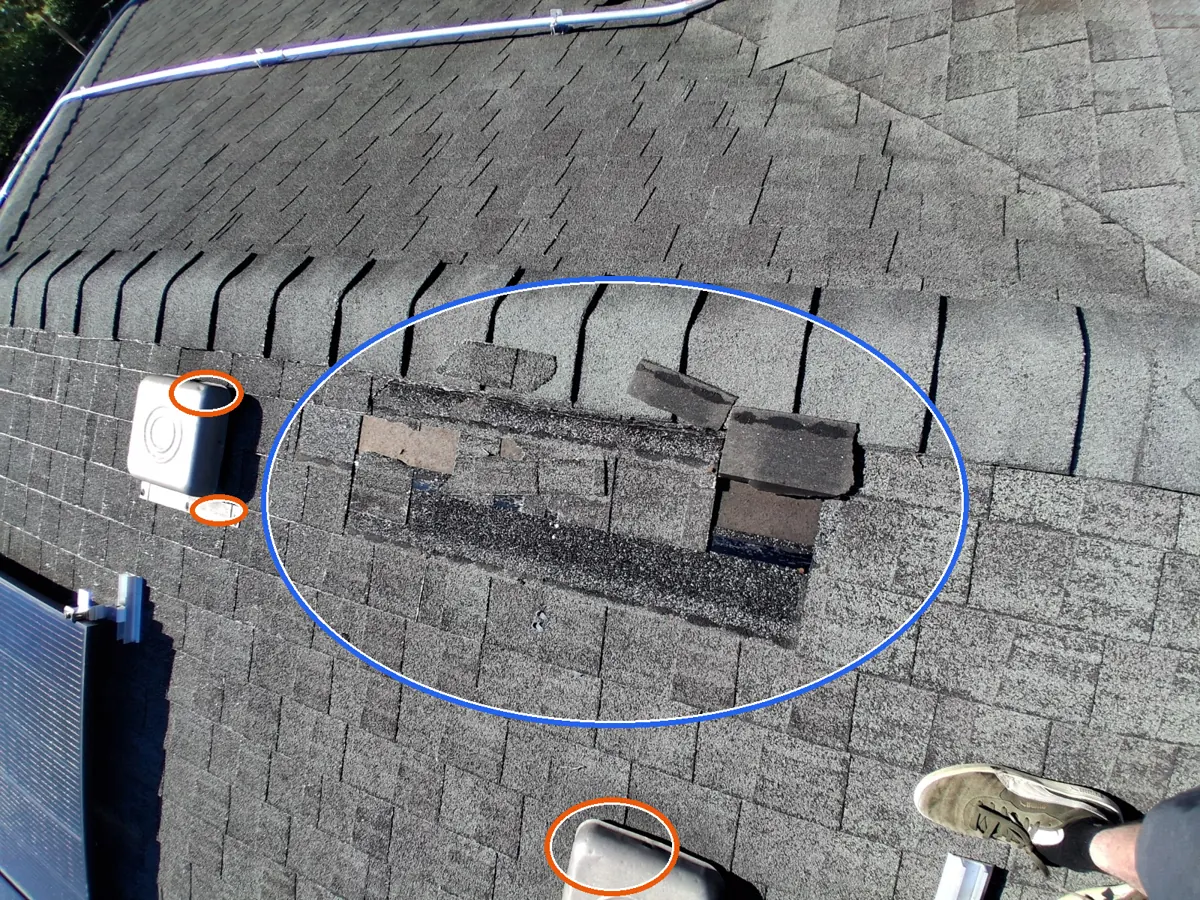
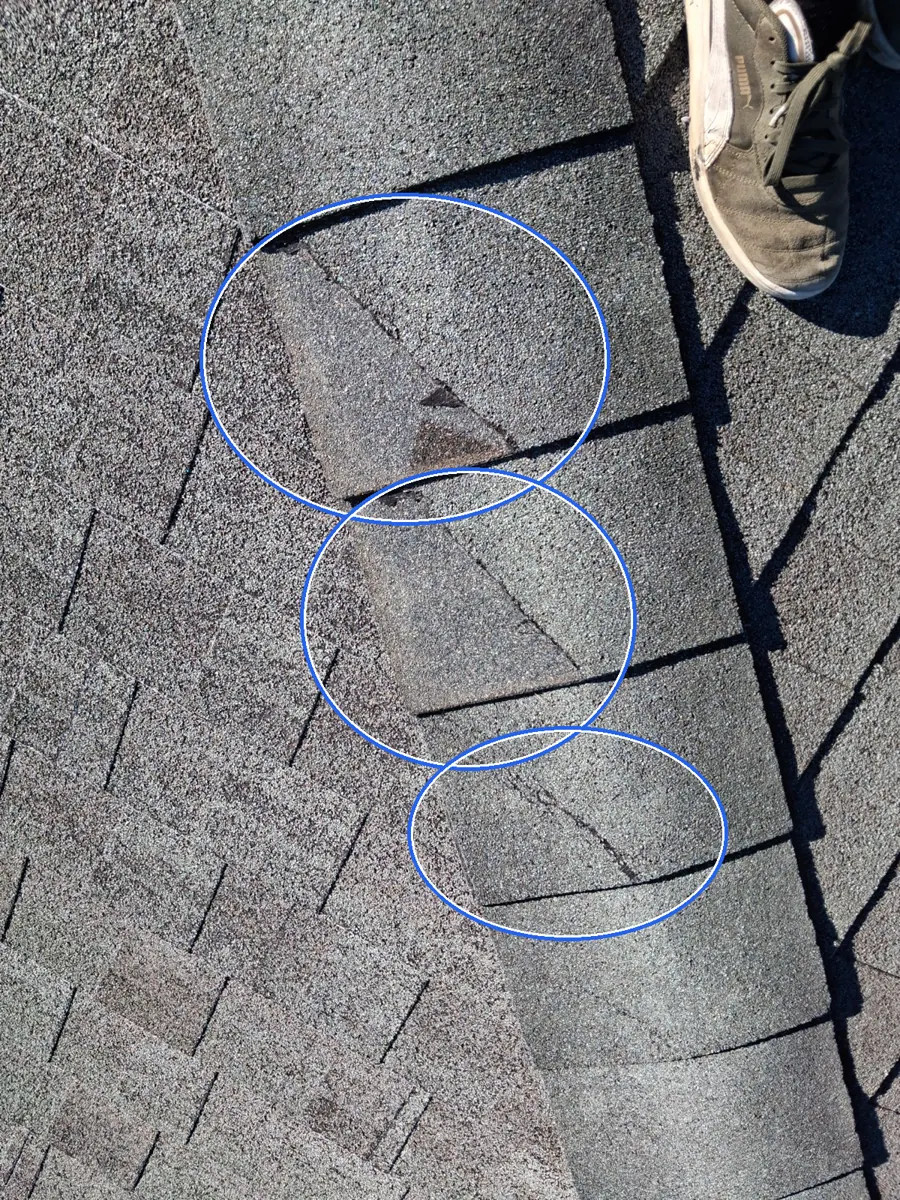
Every photo is from a real C&N job. The circles mark what our team flagged.
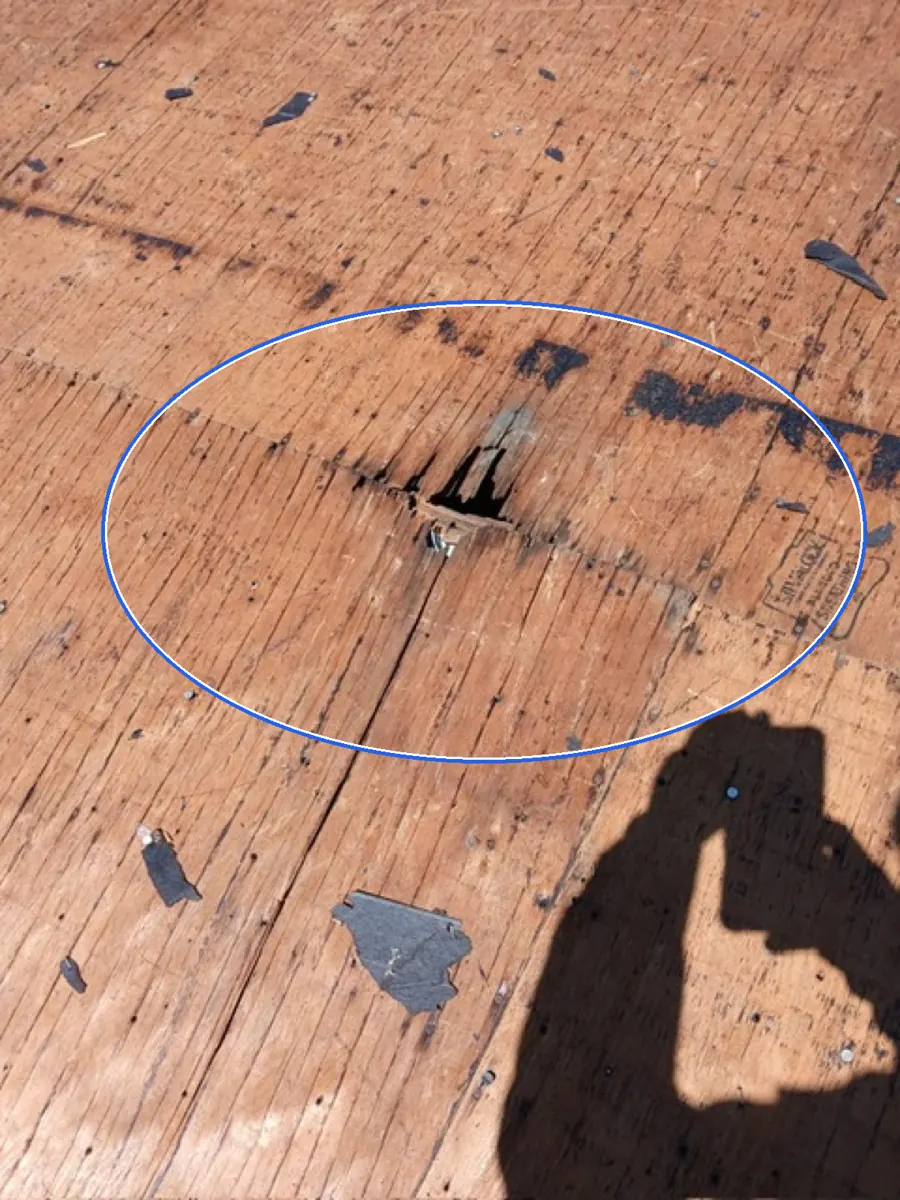
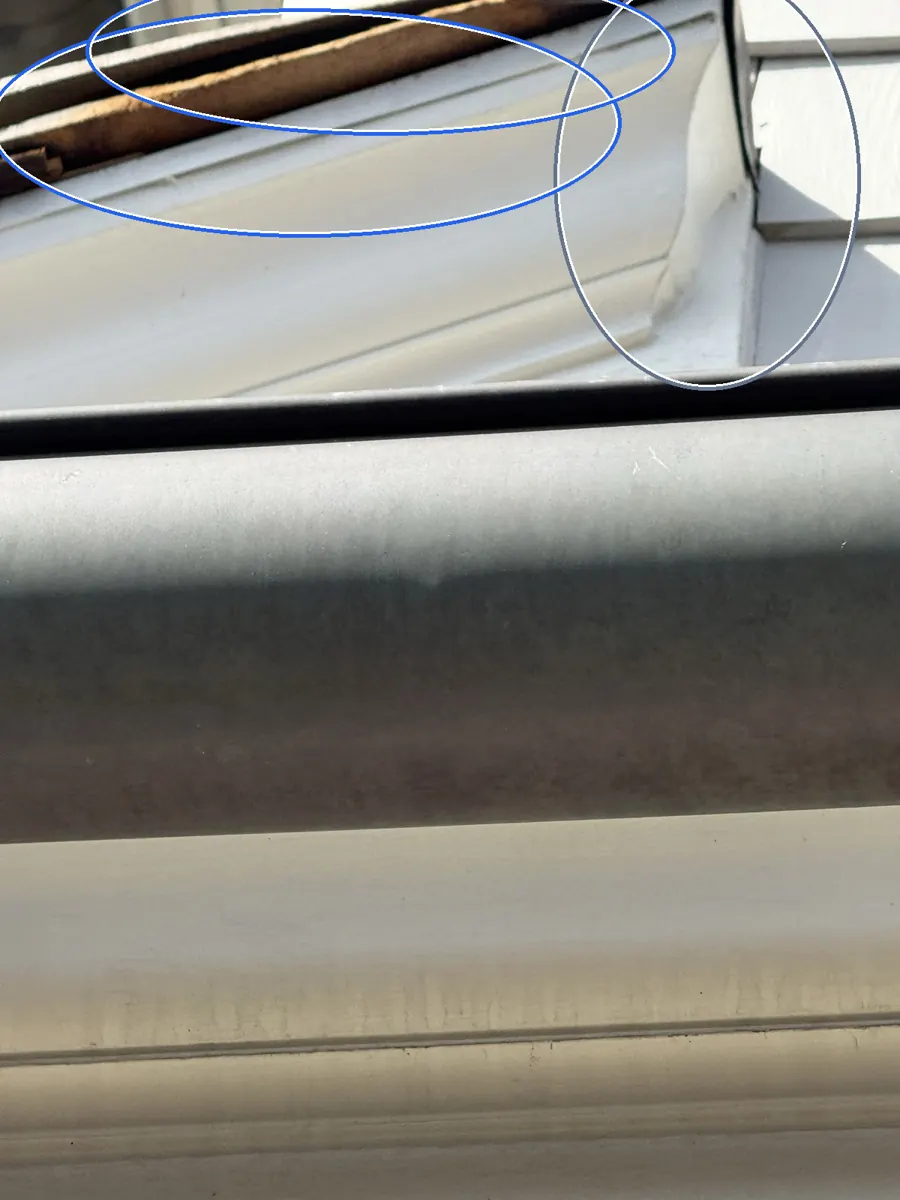
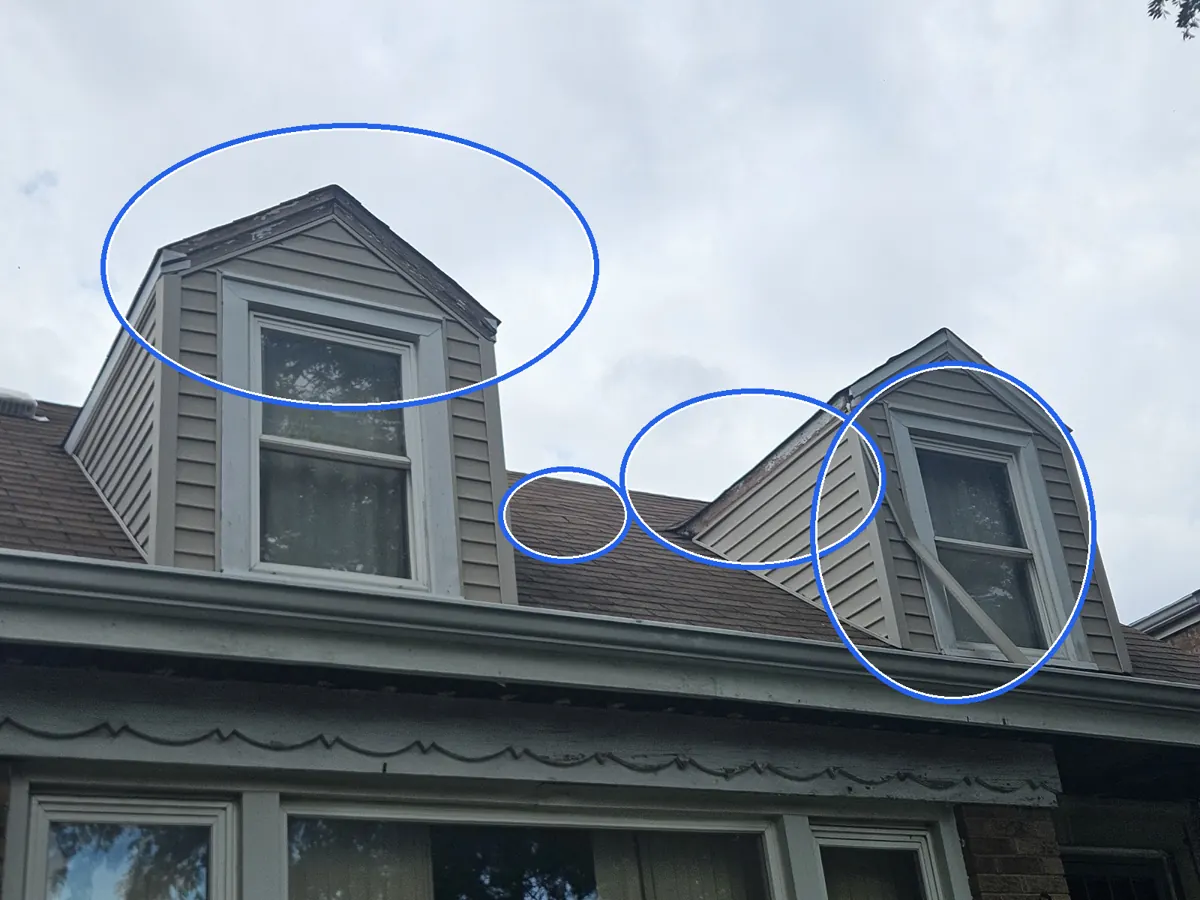
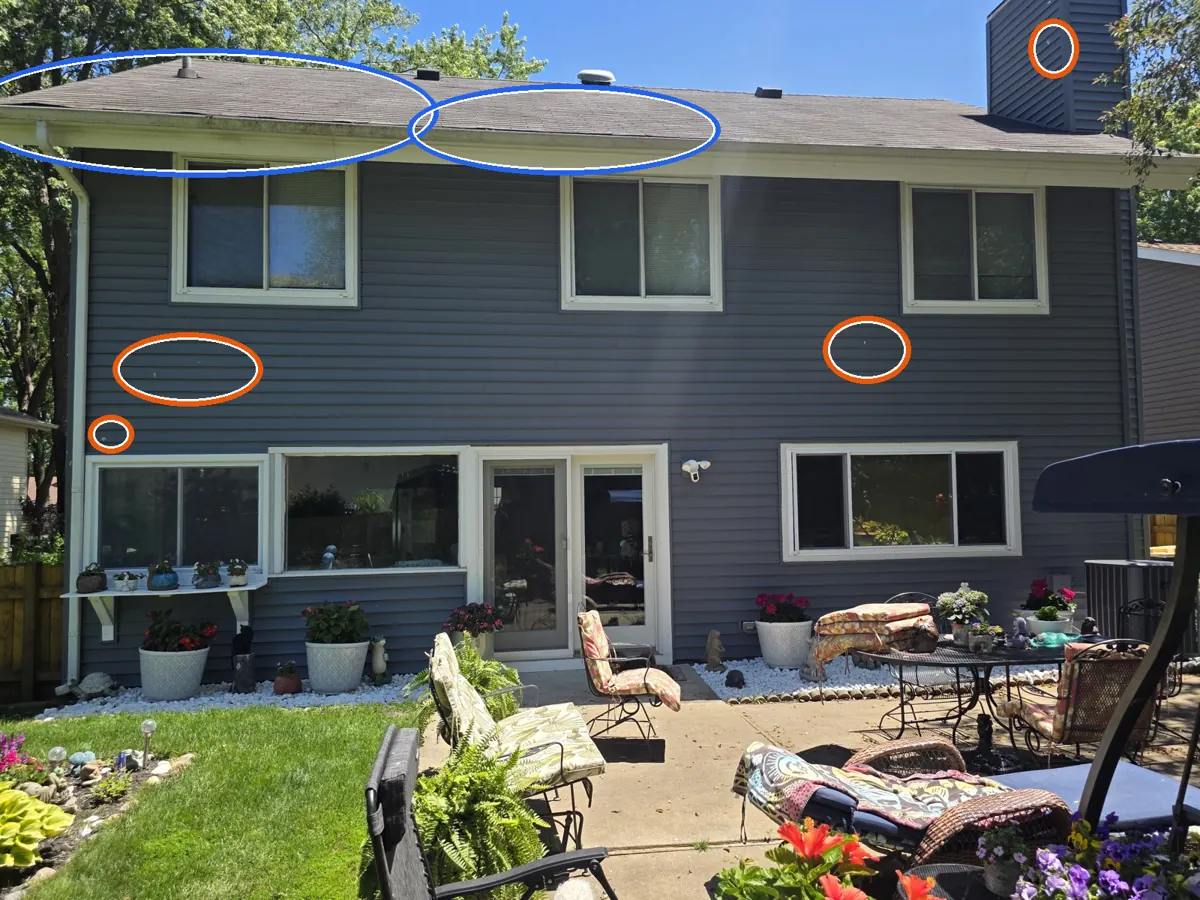
Think you have the same thing? Check your roof
Wind lifts, creases and tears off shingles, and it starts at the edges, corners and ridge. From the ground, look for missing shingles, tabs sitting higher than their neighbors, and dark underlayment showing through. Photograph what you see before cleanup, then book a free inspection to check what the ground view can't show.
Think the wind got your shingles? Snap a photo.
Photograph the gutters, vents or shingles. We circle what we seem to see and say whether an inspection is worth it.
Free. 30 seconds. No signup.
This AI only looks for storm and roof damage, and it isn't perfect. Think of it as a good starting point for a conversation.
Your browser shrinks the photo and removes the location data before it leaves your device. Privacy details.
Want to check recent storms near you? Your city only.
We never ask for a street address here, and the city stays in your browser.
Want us to get an inspector over, as soon as tomorrow in most cases?
A free inspection puts someone on the roof with a hand on the shingle. The report is yours to keep.
What Wind Does to a Roof
Wind doesn't push on a roof so much as pull on it. Air rushing over the house creates lift, and that suction is strongest at the eaves, the rake edges, the corners and the ridge. Those are the places a shingle loses its grip first.
An asphalt shingle stays put because of nails and a strip of sealant that bonds each tab to the course below. Sealant softens in the sun and sets as the roof heats up, so a roof installed late in the year, or one with dirty or aged sealant, can have tabs that were never fully bonded. When gusts get under those tabs, they bend back and crease, lift off the strip, or tear away.
A straight-line wind event can do this across a whole neighborhood. A derecho, for example, is defined by the National Weather Service as a storm complex with damaging winds of at least 58 mph along most of its length. You don't need a tornado for a roof to take damage.
What Wind Damage Looks Like
Wind damage has a direction to it. It follows the windward slopes and the edges, and it doesn't scatter evenly the way hail does. These are the signs a roofer looks for.
Missing Shingles
Gaps where shingles used to be, often at the eaves, the rake and the ridge. Look at the nails left behind. Nails still in place with torn shingle material around them suggest wind. Bare, unused nail holes point to a nailing problem, which is why the spot gets photographed up close.
Creased Tabs
A straight horizontal crease across a tab, below the seal line, is where wind folded the shingle back. The tab may still be on the roof and look nearly flat from the driveway. The crease is a point of weakness and the next gust can finish the job.
Lifted Tabs
Tabs that have come up off the sealant strip below them. Run your eye along a course and look for tabs sitting higher than their neighbors or showing a thin dark shadow underneath. Older shingles can lift as their sealant dries out, so a lifted tab is a reason to look closer, not a verdict.
Exposed Underlayment
The black or gray paper layer showing where shingles used to be. This one deserves attention soon, because the roof is open to the next rain until it's repaired.
Ridge Caps, Flashing and Gutters
The ridge is the most exposed line on the roof, and ridge caps can lift or go missing while the field shingles look fine. Check for bent or loose flashing at chimneys and walls, loose vent covers, and gutters pulled away from the fascia. Fences, siding and trim take wind too, and damage there tells you how hard the wind blew at your address.
Trees and Debris
A limb or debris strike is impact from the storm itself. The damage often reaches past the spot you can see, so the area around it needs a closer look. If a tree is on the house, see what to do when a tree falls on your roof.
Start With a Photo: Snap the Eave From the Ground
You don't need a ladder. The first step is a set of photos from the ground, and our Roof Photo Check will tell you in plain English what the photo seems to show.
- Stand back far enough to see the whole slope. Take one wide shot per side of the house, in daylight, with the sun behind you if you can.
- Zoom in on the eave. The lower edge of the roof is where most missing and lifted shingles show first. Snap the eave on each side.
- Zoom in on the ridge and corners. Wind pulls at these lines hardest.
- Photograph anything on the ground. Shingle pieces in the yard or gutters, with the yard in the frame so the photo shows where they landed.
- Upload the photo or tap what you see. The check circles what it seems to show and keeps the photo on your device.
The Roof Photo Check's checklist uses the same wind signs described above: Missing shingles, Creased tabs, Lifted tabs, Exposed underlayment and Tree or debris impact. Each one comes with a short plain-English note on what it means and what else can cause it. A photo from the ground can't show decking, hidden moisture or the roof's real age, so treat the result as a first look.
What to Document
Good records help whether you end up repairing the roof yourself, working with a contractor or calling your insurance company. Gather these before you clean up.
- Date, time and a short note on the storm, including what you heard or saw.
- Wide and close photos of each slope, ridge, eave and corner you can see from the ground.
- Close-ups of missing or lifted shingles, exposed underlayment and damaged flashing.
- Debris, limbs and fallen shingles where they landed, with something in the frame for scale.
- Damage to siding, fences, gutters, screens and outdoor equipment.
- Any interior signs, such as a ceiling stain or a drip, with a photo and the date.
- Receipts for any temporary protection you put up, such as a tarp.
Keep the original files. Phone photos carry a date stamp, and that's useful. Don't throw out damaged shingles until you've talked to your contractor and your insurer.
Want a Person to Look at the Roof?
Our free roof inspection covers every slope, ridge, edge and flashing, and the photo report is yours to keep whether or not you hire us.
Get My Free InspectionOr call (708) 847-5095
Wind Events on Record in Chicagoland, 2026
These are the 2026 wind events in our storm record that carry a National Weather Service or Storm Prediction Center source. The record is compiled from NWS Chicago event write-ups and damage surveys. Details checked October 22, 2026.
The highest gust in the local storm reports was 97 mph at Sugar Grove in Kane County.
Towns named in the record: Plainfield, Chicago, Warrenville, Bolingbrook, Darien, Lisle, Naperville, Oswego, and others. Source: NWS Chicago event summary / damage surveys. Read our recap.
Local storm reports list a highest gust of 68 mph at Shorewood in Will County and trees down near Millbrook in Kendall County.
Towns named in the record: Plainfield, Millbrook, Oswego, Aurora, North Aurora. Source: NWS Local Storm Report, 68 mph gust, Shorewood. Read our recap.
Local storm reports list a highest gust of 66 mph at Elmhurst and a tree onto a home in St. Charles.
Towns named in the record: Elmhurst, Aurora, St. Charles, Villa Park, Montgomery, Geneva, Batavia. Source: NWS Local Storm Report, 66 mph gust, Elmhurst. Read our recap.
NOAA lists a highest gust of 70 mph in our counties, at Stickney in Cook County. The afternoon line was classified as a derecho.
Towns named in the record: Joliet, Naperville, Plainfield, Crest Hill, Oak Lawn, Homer Glen, Romeoville, Tinley Park, and others. Source: NWS Chicago.
A wake low produced one to two hours of damaging non-thunderstorm winds. NOAA lists a highest gust of 63 mph in DeKalb County.
Towns named in the record: Sandwich, Sugar Grove, Leland, Sycamore, Elgin, Warrenville. Source: NWS Chicago.
For the full season, including hail and tornado events, see the 2026 Chicagoland Storm Report. A town missing from a list above wasn't necessarily spared. NWS surveys go where damage is reported, and wind covers more ground than a tornado track does.
Thunderstorm Wind Reports by Town
Longer-term, NOAA's Storm Events Database lists thunderstorm wind reports by location. The table counts reports within 5 miles of each town center from 2010 through June 24, 2026. It comes from the same data behind our Chicagoland hail and wind history, and each town name links to its own page.
| Town | County | Wind reports within 5 miles |
|---|---|---|
| Evergreen Park | Cook County | 162 |
| Burbank | Cook County | 154 |
| Cicero | Cook County | 148 |
| Oak Lawn | Cook County | 144 |
| Berwyn | Cook County | 140 |
| Oak Park | Cook County | 107 |
| Downers Grove | DuPage County | 101 |
| Naperville | DuPage County | 81 |
| Schaumburg | Cook County | 80 |
| Wheaton | DuPage County | 78 |
| Elgin | Kane County | 73 |
| Joliet | Will County | 67 |
| Aurora | Kane County | 61 |
| Orland Park | Cook County | 39 |
Read these counts with care. Each report is a point in the database, and one storm can produce many reports. Reports also track where people live and phone in damage, so dense areas such as the Cook County towns near Chicago show higher counts. A high number tells you wind has hit the area often. It doesn't tell you what your roof took. Source: NOAA National Centers for Environmental Information, Storm Events Database, checked October 22, 2026.
Wind or Hail?
They often arrive together, and the signs differ. Hail leaves round bruises scattered over every slope and dents soft metal. Wind works from the edges inward and removes, creases or lifts shingles. If you saw both in the storm, check for both. Our guide to hail damage covers the other half, and the wind damage spotting guide goes deeper on the ground-level signs.
Wind Damage and Your Insurance, in Plain English
Insurance for a wind loss runs through your own policy, and the details differ from one policy to the next. Some policies carry a separate wind or hail deductible. Some limit payment on older roofs. Your declarations page shows what yours says.
Your policy also sets its own deadline to report a loss, and that deadline can be short. Check the declarations page or ask your agent, and don't wait on it.
We're roofing contractors, not public adjusters. We don't interpret policy language, file the claim for you or tell you what your policy owes. What we do is inspect the roof, document what's there in photos and measurements, meet the adjuster at the roof if you want us there, and scope the repair work. You file, and you decide. If you want help reading a policy, a licensed public adjuster is the person for that, and our public adjuster page explains when one is worth a call. Our insurance claims guide walks through what each step of the process looks like.
What the Free Inspection Looks At
A wind inspection starts on the ground with the same photos described above, then moves up onto the roof, slope by slope. The inspector looks at the edges, rakes, corners and ridge first, because that's where wind does its first work. Then the field of the roof, the flashing, the vents and the gutters.
The inspector checks whether lifted tabs are still bonded, whether creases run through the shingle, and what the nails and underlayment show. Each finding is photographed. You get a report with the photos, the locations and a plain description of what was found, whether it points to wind, wear or something else, and what repair makes sense. It takes about 45 minutes, it's free, and the report is yours to keep. If you also want to prepare the roof before the first freeze, see our pre-winter roof inspection checklist.
If you're seeing an active leak, start with emergency roof repair instead.
Wind Hit Your Street?
Book a free roof inspection. We photograph what's there and give you a report you can keep, no matter what you decide.
Get My Free InspectionOr call (708) 847-5095
Wind Damage Roof FAQs
What does wind damage look like on a roof?
How can I tell if wind damaged my roof from the ground?
How much wind does it take to damage a roof?
Are missing shingles always from wind?
What should I photograph after a wind storm?
Should I climb on the roof to check for wind damage?
Does a roof need to be replaced after wind damage?
How long do I have to report wind damage to my insurance company?
Which Chicagoland towns get the most thunderstorm wind reports?
Is wind damage different from hail damage?
Wind Damage Roof Inspections Across Chicagoland
Free roof inspections across DuPage, Cook, Will, Kane, Lake, and Kendall counties, plus the Peoria metro. Pick your town for local storm history and recent work.
DuPage County
Cook County
- Alsip
- Arlington Heights
- Bellwood
- Berkeley
- Berwyn
- Brookfield
- Burbank
- Chicago
- Cicero
- Des Plaines
- Elk Grove Village
- Elmwood Park
- Evergreen Park
- Forest Park
- Hanover Park
- Hillside
- Hoffman Estates
- La Grange
- Lemont
- Maywood
- Melrose Park
- Midlothian
- Mount Prospect
- Norridge
- Oak Lawn
- Oak Park
- Orland Park
- Palatine
- Palos Heights
- Palos Park
- Park Ridge
- River Forest
- Riverside
- Schaumburg
- Streamwood
- Tinley Park
- Westchester
- Western Springs
Will County
Kane County
Lake County
Get a Look at
the Roof
Free inspection. Full photo documentation. You decide what happens next.