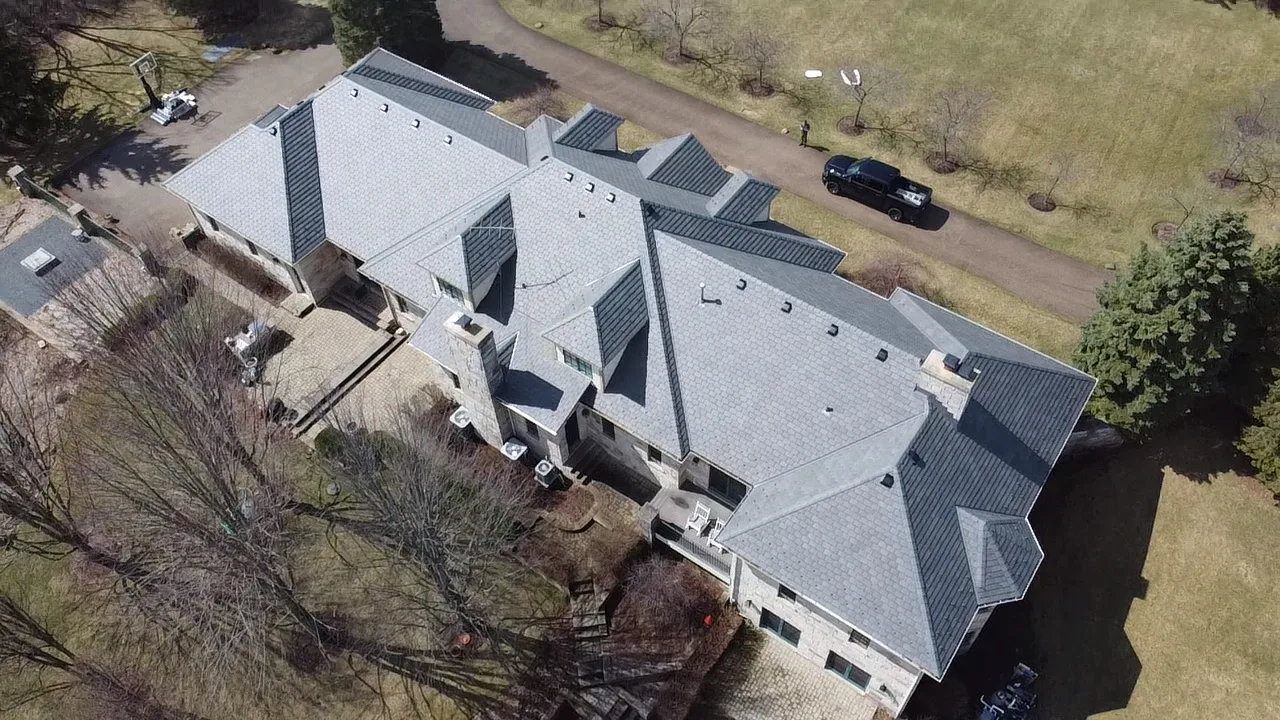






Most Chicagoland roof repairs run $400 to $1,500 for minor work like replacing wind-lifted shingles or resealing a pipe boot. Moderate repairs (flashing rework, small sections, minor decking) run $1,500 to $5,000. Major repairs run $5,000 to $9,000, and at that point a replacement quote usually deserves a look, since full replacements start around $12,000.
Not sure what your roof needs? Start with a photo.
Photograph the gutters, vents or shingles. We circle what we seem to see and say whether an inspection is worth it.
Free. 30 seconds. No signup.
This AI only looks for storm and roof damage, and it isn't perfect. Think of it as a good starting point for a conversation.
Your browser shrinks the photo and removes the location data before it leaves your device. Privacy details.
Want to check recent storms near you? Your city only.
We never ask for a street address here, and the city stays in your browser.
Want us to get an inspector over, as soon as tomorrow in most cases?
A free inspection puts someone on the roof with a hand on the shingle. The report is yours to keep.
| Repair Type | What's Involved | 2026 Price Range |
|---|---|---|
| Minor repair | Replacing a handful of blown-off or hail-hit shingles, resealing pipe boots, minor flashing touch-ups | $400-$1,500 |
| Moderate repair | Chimney or wall flashing rework, replacing a roof section, small decking repairs, valley work | $1,500-$5,000 |
| Major repair | Multiple slopes, structural decking replacement, extensive flashing and ventilation work | $5,000-$9,000 |
| Full replacement | When damage or age makes patching a bad investment, a full replacement is the better spend | $12,000-$45,000+ |
Ranges reflect typical 2026 Chicagoland pricing for asphalt shingle roofs. Steep pitches, premium materials, and access issues push toward the high end.
What Do Common Storm Repairs Cost?
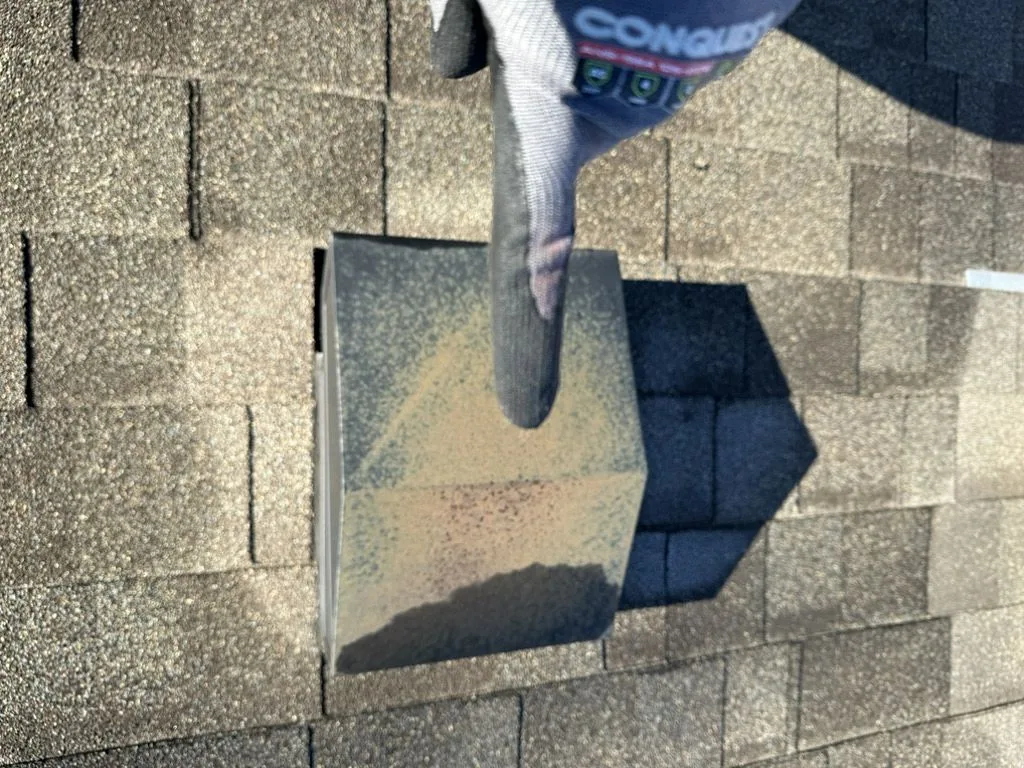
Wind-lifted or missing shingles are the most common repair we see after a storm, and a typical patch runs $400 to $900. Pipe boot replacement, the cracked rubber collar around a plumbing vent, runs $150 to $400 each when it's part of a repair visit.
Flashing is where prices climb. Chimney flashing rework runs $900 to $2,500 depending on the masonry, and valley repair runs $1,000 to $3,000 because valleys carry the most water on the roof. When water has already soaked through, decking replacement adds $2 to $5 per square foot affected.
Emergency tarping is often billed separately from the permanent fix, since it's a stop-the-bleeding visit rather than a repair. If your roof is leaking right now, start with our emergency roof repair page and get the tarp on before pricing anything else.
Why Do Small Repairs Have Minimum Prices?
A repair visit costs a roofer roughly the same whether the crew replaces six shingles or sixty. They still load a truck, drive out, set ladders, rig fall protection, and make a dump run afterward. That mobilization overhead is why per-visit minimums of a few hundred dollars are standard across the market, not a markup one company invented.
Matching shingles is the other quiet cost. Manufacturers discontinue colors, and even a current color won't match granules that have weathered on your roof for a decade. A "small" patch can read as an obvious mismatch from the street, which matters when the house goes up for sale.
So a low repair quote isn't automatically a win. It sometimes means the contractor is skipping the material sourcing that makes the patch disappear.
Find Out What You're Dealing With First
A free Haag-certified inspection documents your roof's condition with photos, and the report is yours to keep. You'll know whether you're pricing a repair or a replacement before anyone quotes you a number.
Get My Free InspectionOr call (708) 847-5095
When Does a Repair Stop Making Sense?
The repair-or-replace line shows up in patterns, not single events. Repeated repairs on a roof past 15-18 years usually mean you're paying to chase failures instead of fixing the cause, since the shingles around each patch are aging out at the same rate.
Price is the other signal. When repair quotes climb past 25-30% of replacement cost, the math starts favoring a new roof, because you're buying a large fraction of the price without the new warranty or the reset clock.
Damage spread matters too. Storm damage across multiple slopes, or widespread hail bruising, is a slope-wide condition rather than a patchable one. We walk through the full decision in our repair vs replacement guide.
When Does Insurance Pay for a Repair Instead of a Replacement?
Carriers generally pay to restore what the storm damaged, no more and no less. Isolated wind damage, a strip of lifted shingles on one slope, often prices as a repair. Slope-wide hail damage typically supports replacement of the affected slopes, because bruised shingles can't be patched one hit at a time. The Insurance Information Institute covers how these coverage decisions generally work.
The deciding evidence is documentation. Hit counts, test squares, and photo records determine whether the scope reads as repair or replacement, which is why the free inspection comes before the claim decision, not after it.
Timing matters in Illinois: your policy sets its own deadline to report a loss, and it can be short, so check your declarations page. If a storm hit this season, find out now what your policy requires.
| Out-of-Pocket Repair | Insurance-Funded Repair | |
|---|---|---|
| When it applies | Wear, age, or damage that falls below your deductible. | Documented storm damage with repair costs past your deductible. |
| What you pay | The full repair bill. | Typically your deductible. |
| Scope decision | You patch what's visible. | Everything the documented claim covers, including damage you can't see from the ground. |
| Risk | Underscoping hidden damage and paying again later. | Filing a claim that inspection doesn't support, which gains nothing and adds a claim record. |
Insurance figures assume a covered peril and an approved claim. Your policy controls what's covered and what you pay.
How Do You Avoid Overpaying for a Repair?
Get the scope in writing before anyone climbs a ladder. The quote should say what's being replaced, what's being resealed, and which materials are going on, down to the shingle line and color. A one-line quote for "roof repair" tells you nothing about what you're buying.
Be wary of quotes priced off a driveway glance. Nobody can price flashing or decking work they haven't inspected, and a number produced without going on the roof tends to grow once the crew gets up there.
One more test of a contractor's honesty: a repair below your deductible shouldn't become an insurance claim, and a legitimate contractor will say so plainly. If someone is pushing a claim on a $700 fix, they're solving their problem, not yours.
Price the verified scope, not the symptom. Minor verified damage is a few hundred dollars fixed out of pocket, slope-wide storm damage is a claim conversation, and the inspection that separates the two costs nothing.
A repair is the right call when
- Damage is isolated to one area
- The roof has healthy years left
- The cost sits below or near your deductible
- Matching shingles are available
Get a replacement quote when
- Repairs are recurring
- The roof is past 15-18 years
- Damage spans multiple slopes
- Repair quotes pass 25-30% of replacement cost
Chicago Storm Pros is a service of C&N Construction, Inc. (cnroofs.com). Reviews, project counts, certifications, and ratings shown here reflect C&N Construction's work.
Related Decisions
- Roof replacement cost in Chicagoland: the full 2026 breakdown
- Insurance claim vs paying out of pocket: which way to fund the work
- Roof repair vs replacement: how to make the call
Free Storm Damage Inspection
Haag-certified inspection with full photo documentation from a local contractor licensed in Illinois (#104.017643), with 25,400+ projects completed since 2015. The report is yours to keep, whatever you decide.
Get My Free InspectionOr call (708) 847-5095