Storm Damage Roof Repair
in Chicago
GAF Master Elite contractor. Haag-certified inspectors. 25,400+ projects since 2015. We inspect the damage, build the photo report your insurer needs, and restore your roof with in-house crews. Start with a free storm damage roof inspection.
Chicago Storm Pros is a service of C&N Construction, Inc. (cnroofs.com). Reviews, project counts, certifications, and ratings shown here reflect C&N Construction's work.
Free Storm Damage Roof Inspection
We dispatch a Haag-certified inspector to your address, same day in most cases.
Storm reports reached Chicagoland on October 16, 2026: 49 mph gust.
Your policy sets its own deadline to report the damage, so check your declarations page. We'll document the roof and walk you through what happens next, in plain English.
Source: O'Hare (ORD) airport observations, October 16, 2026: peak wind 43 knots (49 mph) at 4:53 p.m.




"I was very worried about storm chaser roofers. Matt was patient and explained the whole process. He worked with me and my insurance company throughout."
Ram P."Donte Dacres provided outstanding service. He made the call to my insurance company with TOTAL professionalism."
Judith W."They were extremely helpful, polite, timely, professional. All my neighbors are now jealous and calling C&N."
Tom V."My insurance company said they would not cover my whole roof. C&N demanded a second insurance appraisal and BINGO!"
Michael G.August 11, 2026 tornado reports. EF2 tornado, 6 reported, 97 mph gust in Cook, DeKalb, DuPage, Kane Counties. If your home was in the storm path, an inspection will show what the roof looks like.
Free storm damage inspections available now for all affected homeowners.
Your policy sets its own deadline to report storm damage, and some are shorter than homeowners expect. Check your declarations page before you wait.
We'll walk you through how a roof claim works: what the adjuster looks for, what our report documents, and what happens at each step. Get your roof documented while the damage is fresh.
This Is What a Documented Roof Looks Like
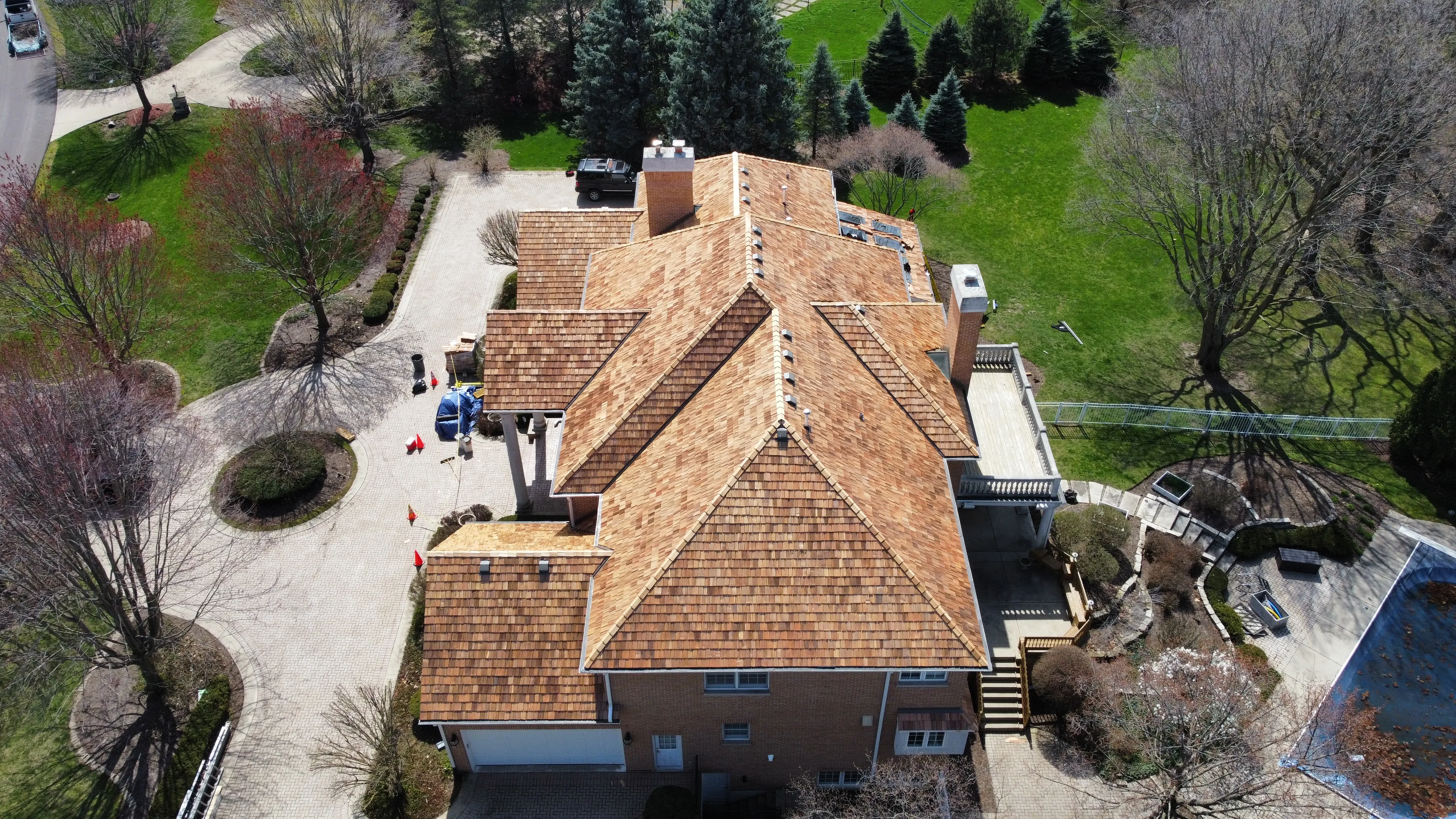
Real footage from our crews, not stock. The inspection that documents every layer for your claim, the tear-off down to the deck with new wood wherever it's needed, and the roof that goes back on built for the next storm.
- Storm damage hides at the edges. That's what gets missed.
- New decking whenever it's needed, never a layover.
- Local, licensed, and permanently here to honor the warranty.
Not sure what the storm did to your roof? Snap a photo.
Photograph the gutters, vents or shingles. We circle what we seem to see and say whether an inspection is worth it.
Free. 30 seconds. No signup.
This AI only looks for storm and roof damage, and it isn't perfect. Think of it as a good starting point for a conversation.
Your browser shrinks the photo and removes the location data before it leaves your device. Privacy details.
Want to check recent storms near you? Your city only.
We never ask for a street address here, and the city stays in your browser.
Want us to get an inspector over, as soon as tomorrow in most cases?
A free inspection puts someone on the roof with a hand on the shingle. The report is yours to keep.
Storm damage we find on real roofs
Every photo is from a real C&N job. The circles mark what our team flagged.
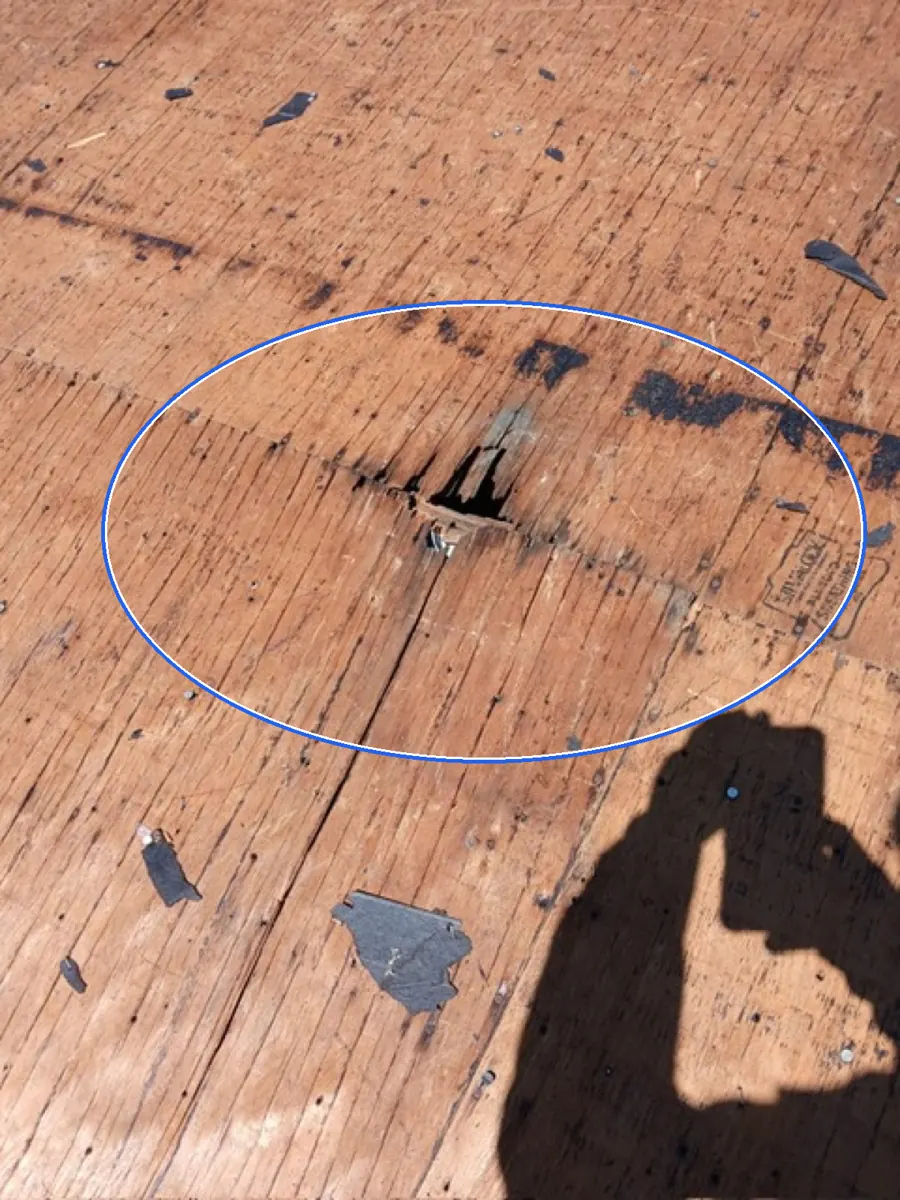
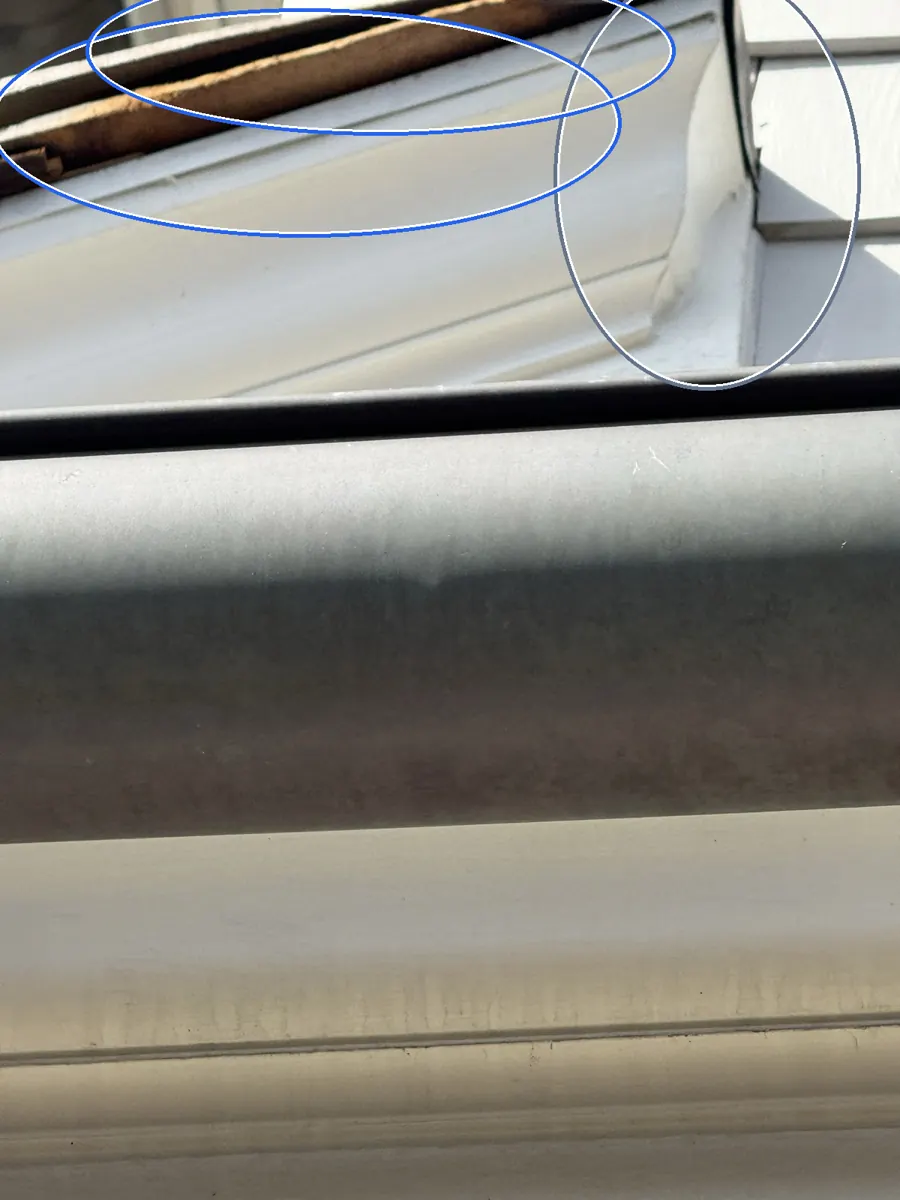
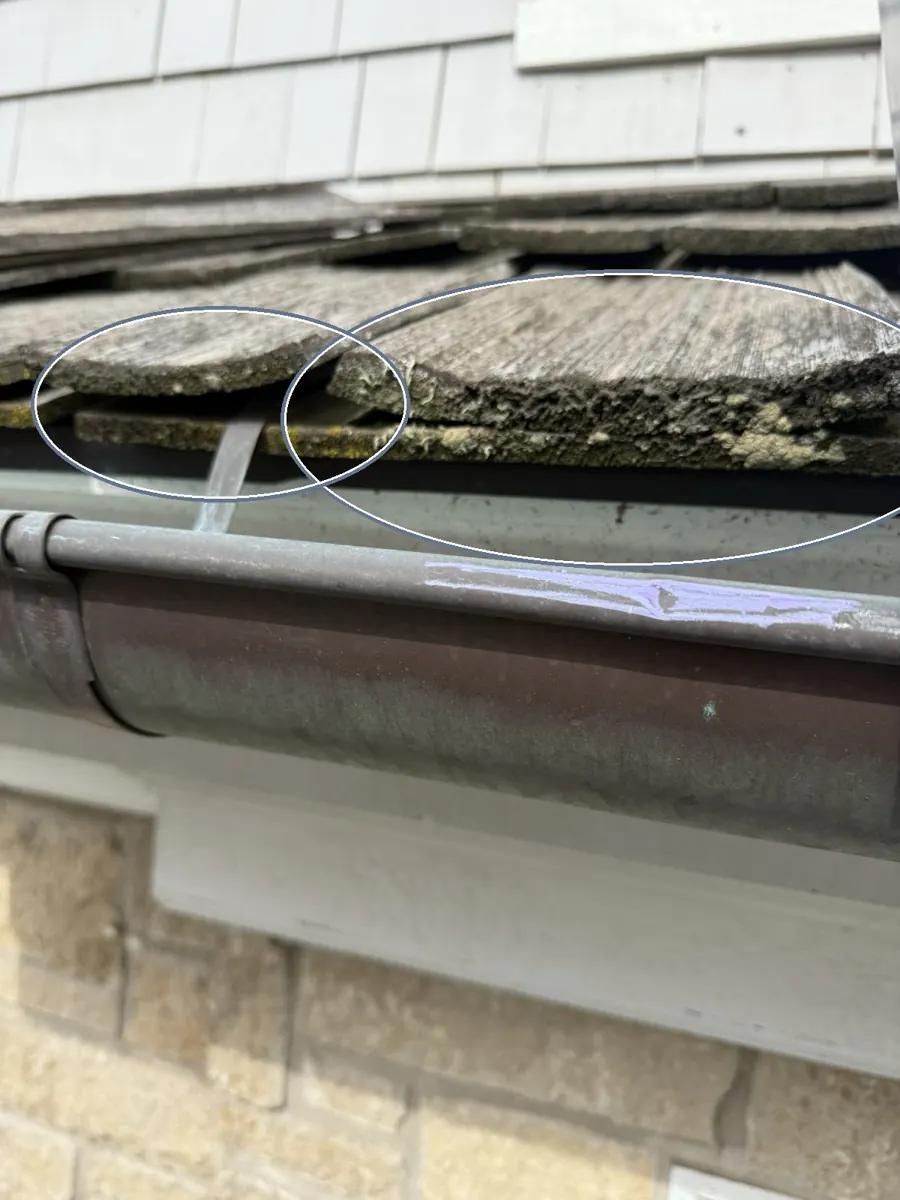
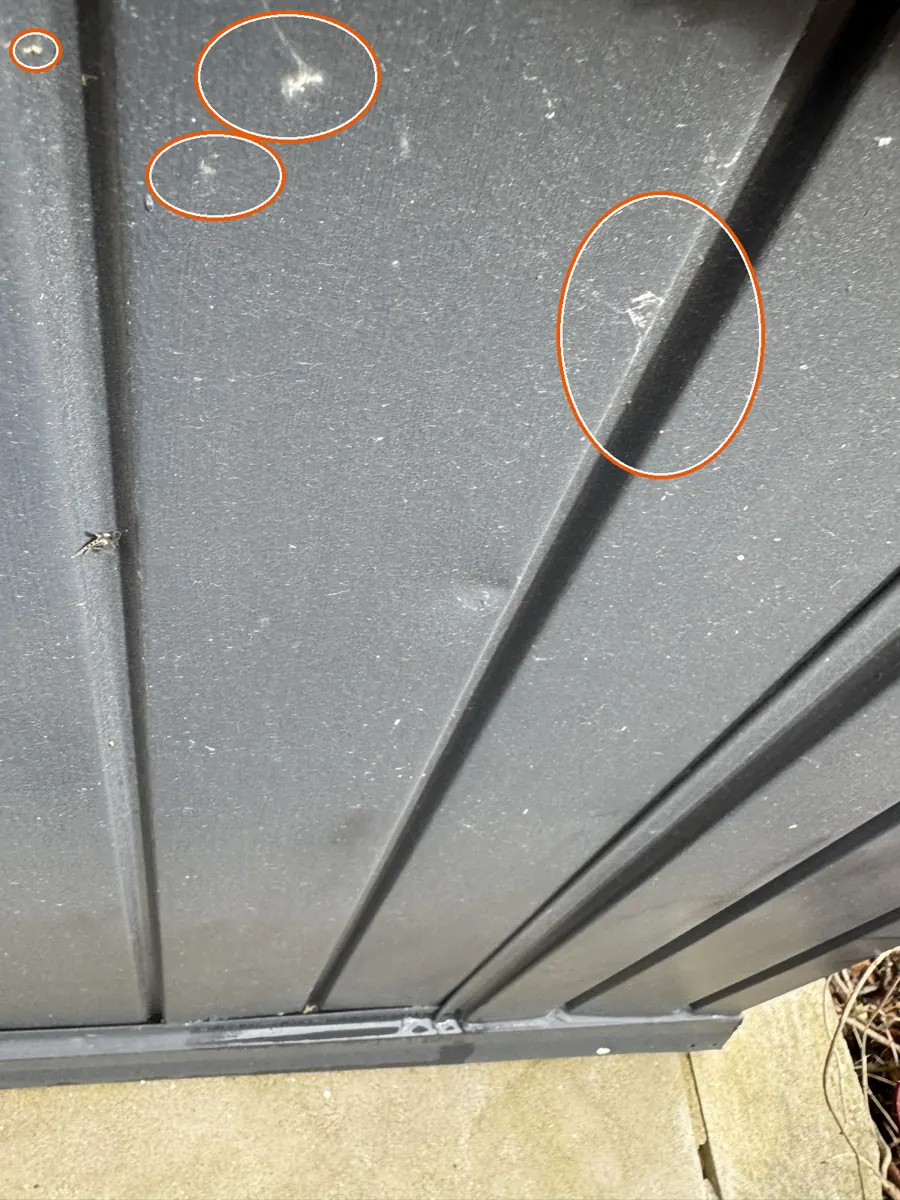
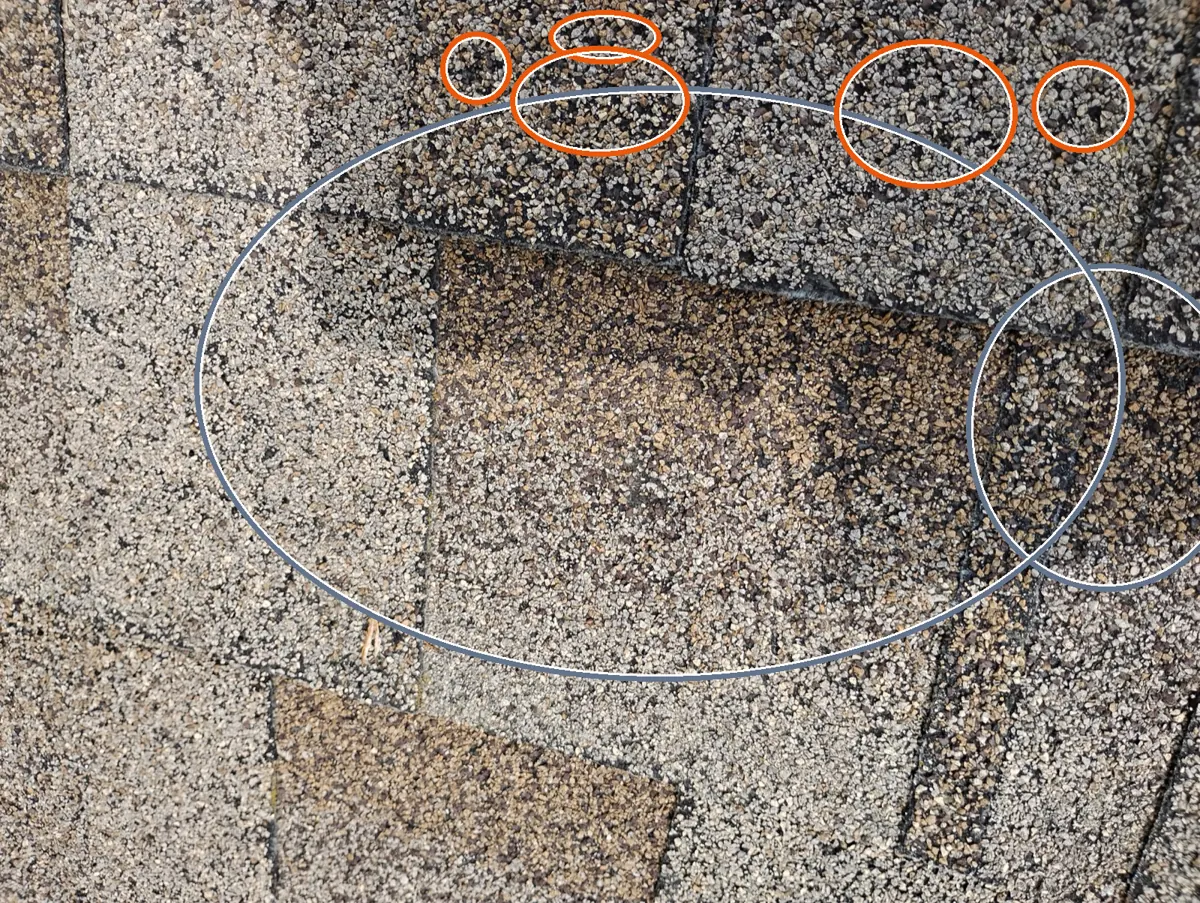
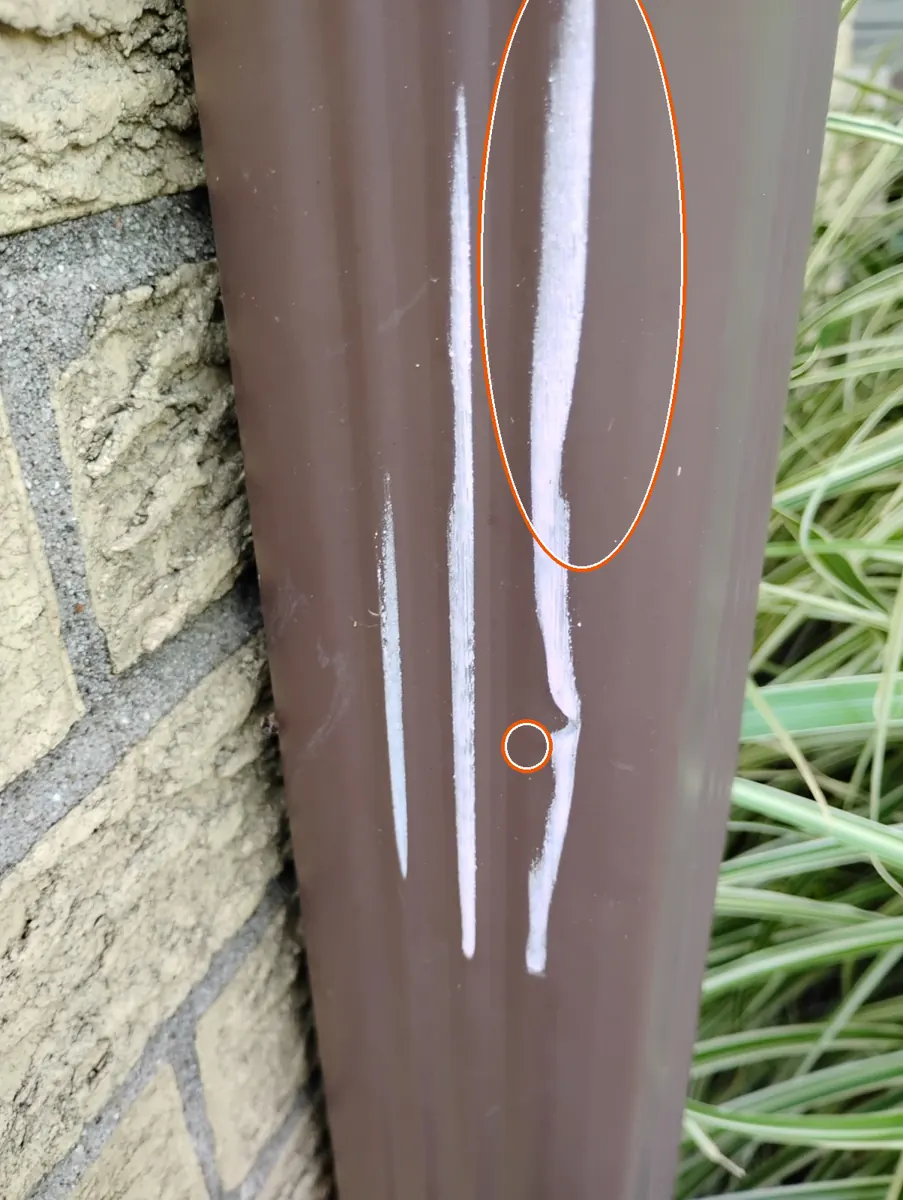
Think you have the same thing? Check your roof
Chicago Storms Hit Different
Chicago's geography makes it one of the hardest places in the country to keep a roof intact. Lake Michigan drives moisture inland and amplifies storm systems as they cross the metro. That same lake effect accelerates wind speeds along the lakeshore and funnels severe weather into the western suburbs, where DuPage and Will counties consistently rank among Illinois' most hail-damaged areas.
If the storm brought wind rather than hail, start with how to spot wind damage.
The temperature swings are just as punishing. A typical Chicago winter produces 80 or more freeze-thaw cycles, where daytime temps rise above freezing and nighttime drops back below. Every cycle expands and contracts the water trapped under shingles and in flashing seams. Over a few seasons, this loosens nails, cracks sealant strips, and creates gaps that let water reach the roof deck.
Then there are the storms themselves. The Chicagoland area gets hit by derechos, microbursts, straight-line winds, and supercell thunderstorms that produce hail large enough to puncture roofing materials on contact.
On March 10, 2026, NOAA Storm Events listed 4.8 inch hail at Darien in DuPage County, among 17 reports across Cook, DeKalb, DuPage, Kane, Kendall and Will Counties. Aurora, Bolingbrook, Joliet, La Grange and Plainfield were also named (NOAA event record).
Wind damage is deceptive because it concentrates on the back slope of the roof, the side facing away from the street.
Homeowners walk out the front door, look up, see nothing wrong, and assume they're fine. Meanwhile, shingles on the back slope are lifted, nail heads are exposed, and water is already working its way underneath.
This combination of lake-effect moisture, extreme temperature cycles, and violent storm frequency is why Chicago roofs fail faster than roofs in most other markets. A shingle rated for 30 years in Atlanta might last 18 here. Understanding that reality is the first step toward protecting your home.
“Water is coming through the ceiling and I need someone today.”
24/7 emergency repair and tarping“There's a leak and I don't know where it's coming from.”
Leak diagnosis and repair, priced honestly“There's water pooling where it never pooled before.”
Get it looked at before it comes inside“The hail damage looks terrible from the street.”
Hail inspection and the insurance pathHow active was this season? Our 2026 Chicagoland Storm Report counts every NWS-confirmed event across the eight-county area, with per-community counts and dates.
Signs Your Roof Has Storm Damage
The tricky thing about storm damage is that it rarely looks dramatic from the ground. A tree through the roof is obvious. But the kind of damage that leads to insurance claims and costly repairs is almost always subtle. Here's what to look for, and why most of it requires a professional on the roof deck to confirm.
Missing, cracked, or curling shingles are the most visible sign. Wind lifts shingle tabs and breaks the sealant strip that holds them flat. Once a tab is lifted, the next storm can rip it off entirely. Cracking usually shows up after hail impact or repeated freeze-thaw cycles, and curling edges mean the shingle has lost adhesion and is vulnerable to wind uplift.
Granule loss shows up in your gutters and downspouts after a storm. Hail knocks the protective coating off asphalt shingles and those granules wash into gutters with the next rain. If your gutters are full of coarse, sand-like material, your shingles are losing their UV and weather protection faster than normal. Our guide on what hail damage looks like on a roof shows exactly what to look for.
Dented metal flashings, vents, and gutters tell the same story. Hail that dents aluminum gutters may have damaged the shingles above them. Metal components are softer than roofing material and show hail impact more visibly. Gutter and vent dents are useful corroborating evidence when documenting hail.
Water stains on interior ceilings and walls are a late-stage warning. Brown or yellow rings on drywall mean water has been getting past the roof system long enough to saturate insulation and reach the ceiling. The longer it goes, the more likely you're dealing with mold remediation on top of roof repair.
Sagging sections of the roof line indicate structural damage to the decking or rafters underneath. Sagging means the plywood sheathing has absorbed enough water to delaminate, or that a rafter has cracked under the weight of ice or debris. This goes beyond cosmetic repair and requires immediate attention.
The most important thing to understand is that most storm damage is invisible from the ground. Hail bruises shingles without breaking them. Wind lifts shingles on the back slope where you can't see. Granule loss is gradual. A professional inspection from the roof deck is the only reliable way to know the true condition of your roof after a storm.
Quick Damage Check
Walk around your property and check what you see from the ground:
Checked 2 or more? Your roof likely has storm damage that's invisible from the ground.
Get Free InspectionWhat to Do in the First 48 Hours After Storm Damage
The first two days after a major storm are critical. What you do (and don't do) in that window directly affects the outcome of your insurance claim and the cost of repairs. Our full guide covers what to do after a storm hits your roof in detail.
Step 1: Prioritize safety. Stay away from downed power lines, even if they look inactive. Don't walk on a roof that might be structurally compromised. If you see sagging, large holes, or a tree resting on the structure, keep everyone out until a professional assesses it. Call your utility company if lines are down in your yard.
Step 2: Document everything before cleaning up. Photograph the damage from every angle using your phone. Get wide shots showing the full scope and close-ups showing specific damage. Include the street address in at least one frame.
Photograph hail on the ground if any remains, along with dented gutters, broken siding, and damaged landscaping. This documentation strengthens your insurance claim, and once debris is cleared, the evidence is gone.
Step 3: Emergency tarping for active leaks. If water is coming into your home, you need temporary protection immediately. A properly installed tarp prevents further interior damage while you wait for permanent repairs. Most homeowner policies cover emergency tarping costs as part of the claim, so keep the receipt. Don't attempt to tarp a steep or high roof yourself.
Step 4: Call a Haag-certified inspector, not just any roofer. Haag Engineering certification is the industry standard for forensic roof inspection. Haag-certified inspectors identify and document damage in the specific format insurance adjusters recognize.
A generic roofer might miss damage or document it in a way that doesn't support your claim. The inspection should be free, and the report should be yours to keep regardless of who you hire for repairs.
Think Your Roof Has Storm Damage?
Free Haag-certified inspection. We document everything for your insurance claim.
Get My Free InspectionOr call (708) 847-5095
Our Storm Restoration Process
Storm restoration isn't a single transaction. It's a sequence of coordinated steps that involves your insurance company, material suppliers, permit offices, and installation crews. Cutting corners at any step creates problems downstream. Here's exactly how we handle it.
- Free Haag-Certified Inspection. One of our certified inspectors climbs the roof and examines every shingle, vent, pipe boot, ridge cap, and piece of flashing. We check for hail bruises using a chalk test, look for lifted or creased shingle tabs from wind, and assess granule loss across the entire field. The inspection takes about 45 minutes and produces a detailed photo report.
- Detailed Documentation for Insurance. We compile the inspection findings into a damage report formatted specifically for insurance claims. This includes annotated photos, measurements, a diagram of the roof with damage locations marked, and a written scope of work. Adjusters can work from these reports because they contain the information a scope needs.
- Meeting with Your Adjuster. When your insurance company sends an adjuster, we meet them at your property. We walk the roof together, point out every area of damage, and make sure nothing gets missed. Adjusters are evaluating dozens of claims after a storm and they're moving fast. Having a Haag-certified inspector on the roof with them ensures the damage report is thorough and accurate.
- Repair Planning. Once the claim is decided, we plan the restoration. This includes selecting materials (we'll recommend options and explain the differences), pulling permits with your municipality, ordering materials from our supplier network, and scheduling your installation date. Most jobs are scheduled within 7 to 10 business days of the final scope.
- Professional Restoration by In-House Crews. Our installation crews are W-2 employees, not subcontractors. They're OSHA-certified, background-checked, and trained specifically in storm damage restoration. A project manager is on-site for the duration of the job. We handle tear-off, deck inspection and repair, ice and water shield installation, drip edge, underlayment, shingle installation, flashing, ridge vent, and cleanup.
- Final Walkthrough and Extended Warranty. After installation, your project manager walks the completed roof with you and explains everything that was done. We photograph the finished work for your records. As a GAF Master Elite contractor, we offer GAF's Golden Pledge warranty on qualifying installations, covering materials for 50 years and workmanship for 25 years.
No-Risk Contract
You sign a contingency agreement. We don't start work until your insurance company approves the claim. If the claim doesn't go through, you don't owe us anything. No deposit. No cancellation fee. The contract doesn't screw anyone.
Your Budget, Your Call
If insurance approves less than the full scope we recommended, you decide what happens. You can spec down the project to match your payout exactly. Same materials. Same warranty. You won't pay for unapproved work unless you tell us to order it before the approval.
We Call You First
We don't silently revise your project to match whatever insurance approved. If there's a gap between our recommendation and the payout, we pick up the phone. We walk through the difference and help you keep out-of-pocket as low as possible. The only reasons you'd pay extra are to fix damaged lumber our crew needs to stand on or if you want to upgrade to luxury shingles.
Storm Damage Insurance Claims
Insurance is the part of storm restoration that creates the most confusion and frustration for homeowners. Understanding how the process works in Illinois puts you in a stronger position from day one.
To file in Illinois, call your insurance company's claims line and report the damage. You don't need to know the exact extent yet. Just report that your property was affected by a storm on a specific date. They'll assign a claim number and schedule an adjuster visit. File the claim before scheduling repairs, not after. Our step-by-step guide on how to file a roof insurance claim walks through the full process.
Insurance adjusters assess damage by examining the roof from the deck level. They test shingles for hail bruising, check metal components for dents, and look for wind-related displacement. But adjusters handle a high volume of claims after major storms and may spend limited time on your roof. Subtle damage like granule loss patterns, hairline cracks in flashings, and compromised sealant strips get overlooked without your own Haag-certified inspector present.
Haag Engineering created the training program that most insurance adjusters themselves go through. When a Haag-certified inspector presents findings to an adjuster, they're speaking the same technical language. Adjusters take Haag reports seriously because they know the methodology is sound. That shared framework has a measurable impact on claim outcomes.
Your policy sets its own deadline to report a loss, and it varies and can be short, so check your declarations page or ask your agent. One year after the storm, as with the March 10, 2026 hail and March 10, 2027, is a useful outside marker, but your policy may require notice sooner. If hail or wind was reported in your area in the past year and you haven't filed, read your policy's notice terms.
Claims get denied for three main reasons: insufficient documentation, pre-existing damage attributed to the storm, and filing after the deadline. Thorough photo documentation from the day of the storm and a professional inspection report address the first two. If your claim is denied, you have the right to request a re-inspection or hire a public adjuster to advocate on your behalf. A licensed public adjuster works on contingency, typically 10% of the settlement, and specializes in getting underpaid claims corrected. We can recommend reputable public adjusters in the Chicago area if needed.
For more detail on specific damage types, see our guides on hail damage repair and emergency roof repair. If you're dealing with a specific insurance carrier, our insurance claims hub has carrier-specific guides, and our team has experience working with every major insurer in Illinois.
On an approved storm claim, your out-of-pocket cost in Chicagoland for the covered work is your deductible. Your policy sets it: often a flat amount such as $1,000 to $2,500, and for wind and hail frequently a percentage of dwelling coverage (1% to 2%). Paying cash, most residential roof replacements land between $14,000 and $25,000 depending on the size of the home, with larger or complex roofs running higher and repairs starting around $400.
What moves the number
Roof size and pitch, tear-off layers, decking condition, and material tier. Every quote is itemized line by line, so you can see which one is moving yours.
What a normal job includes
Tear-off and disposal, underlayment and ice and water shield, flashing and drip edge, ridge venting, cleanup with magnetic sweeps, the permit, and warranty registration.
Full pricing detail: replacement costs, repair costs, and how we get paid when the inspection is free. Insurance figures assume a covered peril and approved claim; your policy controls. The only out-of-pocket surprises we allow are the ones we disclose first: rotted decking and upgrades you choose.
Repair vs. Replace After Storm Damage
Not every storm-damaged roof needs a full replacement. Understanding where the line falls helps you make a smarter decision and have a more productive conversation with your insurance company.
The general industry threshold is 30% of the roof surface. When more than 30% is damaged, replacement is more cost-effective than spot repair. Patching 40 or 50 damaged shingles across a roof creates mismatched sections, leaves marginal shingles in place, and doesn't address underlying damage to the underlayment or deck. Your policy and carrier set their own thresholds for full replacement.
Age of the roof matters too. A 5-year-old roof with localized hail damage is a good candidate for repair. A 20-year-old roof with the same damage pattern is probably better replaced. Older shingles have less remaining life, and the undamaged sections are already deteriorating from age and UV exposure. Repairing a few squares on a roof that's going to need replacement in three years isn't a sound investment.
The hidden cost of deferred repairs is real. A cracked shingle or lifted tab that lets water reach the deck starts a chain reaction. The plywood swells and delaminates, moisture reaches the attic insulation and reduces its R-value, and mold colonizes within 48 to 72 hours of sustained moisture. What starts as a $500 shingle repair becomes a $3,000 deck replacement with mold remediation. Fixing storm damage quickly costs less than fixing the water damage it causes later.
If you're getting a full replacement through an insurance claim, consider upgrading your materials. Insurance pays to restore your roof to pre-storm condition, but you can upgrade by paying the difference out of pocket. Class 4 impact-resistant shingles are rated under UL 2218, a lab test that drops a 2-inch steel ball onto the shingle, and some Illinois insurers offer premium discounts for impact-resistant roofs. No shingle is hail-proof. Read our breakdown of roof replacement cost in Illinois for current pricing details.
Types of Storm Damage We Repair
Hail Damage
Hail is the most common cause of storm-related roof damage in the Chicago metro. Hailstones bruise asphalt shingles by displacing the granule layer and fracturing the fiberglass mat underneath. This damage is often invisible from the ground but shortens the shingle's life by years. Large hail, like the 4.8 inch hail NOAA Storm Events lists at Darien on March 10, 2026, can crack shingles on impact and dent metal components throughout the roof system. Our hail damage repair page covers the inspection and claims process in detail.
Wind Damage
Wind damage follows a predictable pattern. The back slope and roof edges take the worst hits because of how wind flows over a structure. Shingle tabs lift, sealant strips break, and nail heads become exposed. Once a shingle is lifted, the tab underneath it is also exposed, creating a cascading vulnerability. Ridge caps are especially susceptible because they sit at the highest point and catch the full force of the wind. Chicago regularly experiences straight-line winds of 50 to 70 mph during severe thunderstorms, more than enough to compromise a standard three-tab or architectural shingle roof.
Debris Impact
Falling tree limbs are the most visible form of storm damage, but they're not the only debris threat. Wind-driven objects like fence boards, lawn furniture, and construction materials can puncture shingles and crack flashing. Even small branches that land on a roof can scrape away granules and break sealant strips when they're dragged by wind. After any storm with significant wind, a roof inspection should include a debris impact assessment, not just a hail and wind check.
Water Intrusion
Water intrusion is usually a consequence of other damage types rather than a standalone event. A cracked pipe boot, lifted shingle, or compromised valley flashing lets water bypass the roof system and reach the deck. From there, it saturates insulation, stains drywall, and creates conditions for mold growth. Emergency tarping stops the immediate flow, but the underlying damage needs permanent repair. If your roof is actively leaking, our emergency roof repair team can respond same-day in most cases.
Ice Dam Damage
Ice dams form when heat escaping through the roof melts snow on the upper sections, and the meltwater refreezes at the cold eaves. The resulting ice ridge traps water behind it, forcing it under shingles and into the roof system. Chicago's freeze-thaw cycles make ice dams a recurring winter problem, particularly on homes with inadequate attic insulation or ventilation. Ice dam damage often doesn't reveal itself until spring, when homeowners notice stained ceilings, warped fascia, or peeling paint along the eaves.
Ready to Get Your Roof Inspected?
We've completed over 25,400 storm restoration projects since 2015. Free inspection, no obligation, detailed photo report.
Get My Free InspectionOr call (708) 847-5095
A handyman is fine when
One slipped shingle on a young roof, a gutter re-hang, or a small cash fix under a few hundred dollars. No claim involved, no documentation needed. We'd rather tell you that than sell you a truck roll.
Call us when
Storm damage, anything slope-wide, a replacement, or any job where insurance is paying, because that's a documentation job as much as a roofing job. Weighing whether to file at all? The break-even math is here.
It's urgent when
Water is inside, decking is exposed, or a tree is on the roof. Emergency tarping runs 24/7, and the tarp decision is separate from choosing your replacement contractor, so don't let anyone bundle the two at your door.
Why Chicago Homeowners Choose C&N for Storm Restoration
Illinois roofing license #104.017643. GAF Master Elite (top 2% of contractors nationwide), Haag Certified Inspectors, BBB A+, OSHA certified crews. Work carries a 2-year limited lifetime workmanship warranty plus manufacturer-backed GAF system warranty options. Crews dispatch from the Hillside headquarters and work all of Chicagoland year round. See the work itself, our crews' own photos, on the recent work page.


On a recent insurance-funded roof, the carrier's first estimate missed 292 linear feet of gutter work. Our documented supplement recovered it: a $2,928 line added to the carrier's own estimate, with photos attached. And when we didn't complete a $13.81 downspout item on another project, the final invoice showed a $13.81 credit. Itemized in both directions, every time. The actual documents are on our billing transparency page.
Chicago Storm Pros is a service of C&N Construction, Inc. (cnroofs.com). Reviews, project counts, certifications, and ratings shown here reflect C&N Construction's work.
Credentials matter in storm restoration because they directly affect your insurance claim outcome, the quality of the installation, and whether the warranty behind it means anything five years from now.
C&N holds GAF Master Elite status, a designation only 2% of roofing contractors in the country earn. GAF awards it based on proper licensing, adequate insurance, a proven reputation, and a commitment to ongoing training. Master Elite status unlocks GAF's strongest warranties, including the Golden Pledge warranty with 50-year material and 25-year workmanship coverage.
Roofing Contractor Magazine ranked us #46 on its 2025 Top 100 Roofing Contractors list, ranked by annual revenue. That's not a purchased badge or a pay-to-play directory listing. It reflects consistent performance across thousands of jobs per year.
Since 2015, we've completed over 25,400 projects across Chicagoland. Volume matters in storm restoration because experience with insurance companies translates directly to better claim outcomes. We've worked with every major insurer in Illinois and know what each one looks for, how their adjusters evaluate damage, and what documentation format gets claims processed fastest.
Our Haag-certified inspectors are trained to identify and document storm damage using the same methodology insurance adjusters rely on. That shared framework makes adjuster meetings more productive and reduces the chance of damage being overlooked or disputed. Our installation teams are W-2 employees, not subcontracted day labor. Every crew member is OSHA safety certified and trained specifically in storm damage restoration.
We're accredited by the Better Business Bureau with an A+ rating. Our complaint resolution record and customer satisfaction scores are public and verifiable. For out-of-pocket costs beyond your deductible, or for homeowners who choose not to file a claim, financing options are available. Ask about current terms during your free inspection.
Storm Damage Roof Repair FAQ
How do I know if my roof has storm damage if it looks fine from the ground?
Will my homeowner's insurance cover storm damage roof repair?
How quickly should I schedule repairs after a storm?
How long does storm damage roof repair take?
Can I stay in my home during storm damage repairs?
What should I do if I find additional damage after repairs?
How much does storm damage roof repair cost in Chicago?
Do I have to pay anything before my claim is decided?
What if insurance pays less than your estimate?
What types of storm damage are most common in Chicago?
Do you offer warranties on storm damage repairs?
What's the difference between you and a storm chaser?
Storm Restoration Across Chicagoland
Free storm damage inspections across DuPage, Cook, Will, Kane, Lake, and Kendall counties, plus the Peoria metro. Pick your town for local storm history, dates, and recent work.
DuPage County
Cook County
- Alsip
- Arlington Heights
- Bellwood
- Berkeley
- Berwyn
- Brookfield
- Burbank
- Chicago
- Cicero
- Des Plaines
- Elk Grove Village
- Elmwood Park
- Evergreen Park
- Forest Park
- Hanover Park
- Hillside
- Hoffman Estates
- La Grange
- Lemont
- Maywood
- Melrose Park
- Midlothian
- Mount Prospect
- Norridge
- Oak Lawn
- Oak Park
- Orland Park
- Palatine
- Palos Heights
- Palos Park
- Park Ridge
- River Forest
- Riverside
- Schaumburg
- Streamwood
- Tinley Park
- Westchester
- Western Springs
Will County
Kane County
Lake County
Free Storm Damage
Inspection in 45 Minutes
Haag-certified inspector on your roof. Detailed photo report. No cost, no obligation.