How to Get Insurance
to Pay forStorm Damage
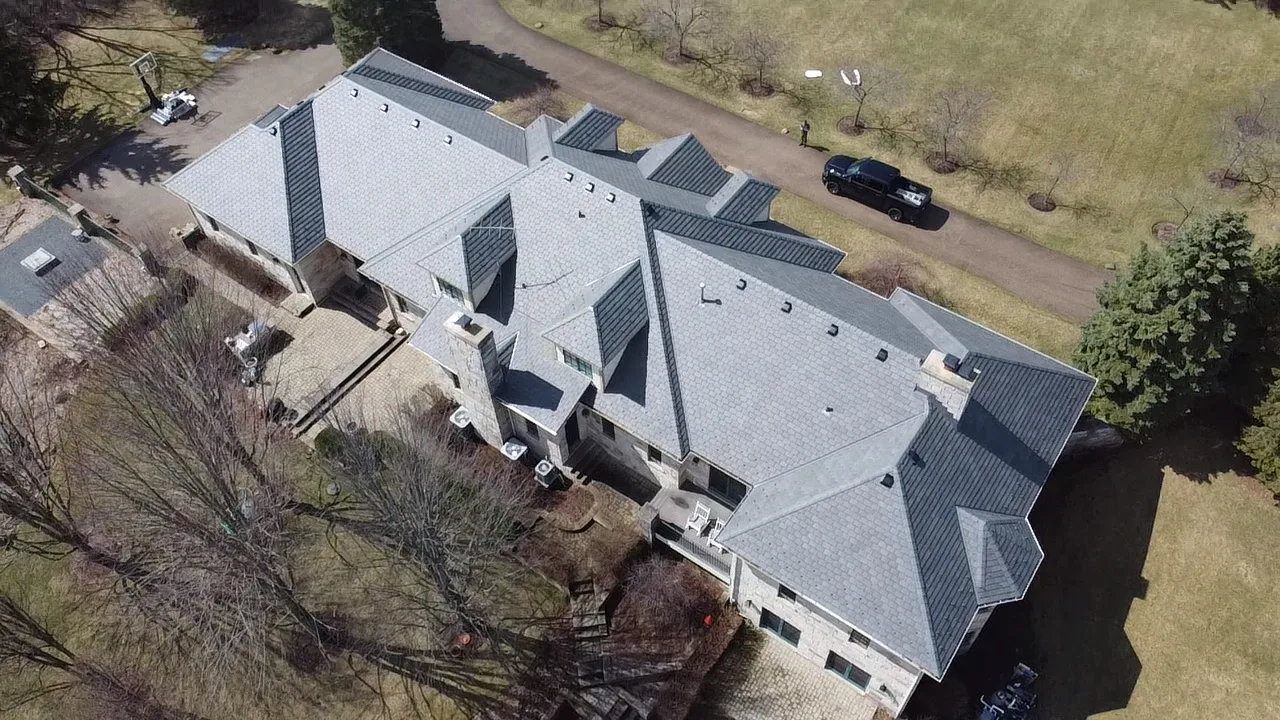
Your insurance company will pay for storm damage repairs. The question is whether they'll pay the full amount. Documentation, timing, and knowing your carrier's process make the difference. We handle all three.
Free Storm Damage Roof Inspection
We dispatch a Haag-certified inspector to your address, same day in most cases.





"Donte Dacres provided outstanding service. He made the call to my insurance company with TOTAL professionalism."
Judith W."I was very worried about storm chaser roofers. Matt was patient and explained the whole process. He worked with me and my insurance company throughout."
Ram P."My insurance company said they would not cover my whole roof. C&N demanded a second insurance appraisal and BINGO! My re-roof was approved."
Michael G."Damian was incredibly helpful, especially with navigating insurance and the appraisal. The crew was efficient and got the job done quickly."
Alicja S.The claim steps are the same with every carrier: document the roof, report the loss, review the written estimate, and answer any gap with evidence. Illinois requires a written explanation when a claim is denied or settled for less than claimed. Use a carrier guide below, or the denial guides and roof payment schedule guide if you already have a letter or a check.
Before the adjuster comes, see what your photo shows.
Photograph the gutters, vents or shingles. We circle what we seem to see, so you know what a closer look is for.
Free. 30 seconds. No signup.
This AI only looks for storm and roof damage, and it isn't perfect. Think of it as a good starting point for a conversation.
Your browser shrinks the photo and removes the location data before it leaves your device. Privacy details.
Want to check recent storms near you? Your city only.
We never ask for a street address here, and the city stays in your browser.
Want us to get an inspector over, as soon as tomorrow in most cases?
A free inspection puts someone on the roof with a hand on the shingle. The report is yours to keep.
August 11, 2026 tornado reports. EF2 tornado, 6 reported, 97 mph gust in Cook, DeKalb, DuPage, Kane Counties. If your home was in the storm path, an inspection will show what the roof looks like.
Free storm damage inspections available now for all affected homeowners.
Check your storm history in 30 seconds
Enter your zip code on our storm map tool to see every NWS warning that hit your address over the past 366 days.
Your policy sets its own deadline to report storm damage, and some are shorter than homeowners expect. Check your declarations page before you wait.
We'll walk you through how a roof claim works: what the adjuster looks for, what our report documents, and what happens at each step. Get your roof documented while the damage is fresh.
This Is What a Documented Roof Looks Like
Real footage from our crews, not stock. The inspection that documents every layer for your claim, the tear-off down to the deck with new wood wherever it's needed, and the roof that goes back on built for the next storm.
- Storm damage hides at the edges. That's what gets missed.
- New decking whenever it's needed, never a layover.
- Local, licensed, and permanently here to honor the warranty.
Why Insurance Companies Underpay Storm Damage Claims
Insurance companies aren't trying to cheat you. They're processing thousands of claims after every major storm, and their adjusters are working fast. Speed creates gaps. The adjuster spends 30 minutes on a 2,000-square-foot roof, misses the back-slope damage, doesn't press-test for shingle bruising, and writes an estimate based on what they saw. Not what's actually there.
The result is an initial estimate that covers 60% to 80% of the real damage. That's not fraud. It's the natural consequence of a system where the person writing the check has a financial incentive to write a smaller one and not enough time to find everything.
Your job as a homeowner is to close that gap. The tool that closes it is documentation. A detailed, Haag-certified inspection report with photos, measurements, and damage counts for every section of your roof. When that report sits next to the adjuster's estimate, the discrepancies become obvious and the supplement process begins.
The 7-Step Process for a Documented Storm Damage Claim
Step 1: Get a Professional Inspection Before You Call Your Insurance Company
This sequencing matters more than anything else in the process. A professional hail damage inspection gives you a complete picture of what's damaged before you file. You'll know if the damage meets your deductible threshold. You'll have specific numbers to give the claims department. And you'll have documentation ready before the adjuster arrives.
Our Haag-certified inspectors walk the entire roof deck. They press-test every section for bruising, photograph all damage with close-ups, map affected areas by roof section, and count hail hits per test square. The inspection takes about 45 minutes and the report is yours regardless of what you decide to do next.
Step 2: Understand Your Policy Before You File
Pull your declarations page. Three things matter for a storm damage claim.
Coverage type. Replacement Cost Value (RCV) pays the full replacement cost minus your deductible. Actual Cash Value (ACV) deducts depreciation. Most Illinois homeowner policies are RCV, which is what you want. ACV on an older roof can reduce your payout by thousands.
Deductible type. Flat-dollar deductibles ($1,000, $2,500) are straightforward. Percentage-based wind and hail deductibles (1% to 2% of dwelling coverage) can be significant. On a home insured for $500,000 with a 2% wind/hail deductible, you're paying $10,000 out of pocket before insurance kicks in.
Filing deadline. Your policy sets its own notice and suit-limitation terms, and they differ by carrier and form. Read yours, and don't test the deadline.
Step 3: File With Specifics, Not Guesses
When you call your carrier, have your inspection report in hand. Give them the storm date, your policy number, and specific damage findings. "We have documented hail damage to 14 of 22 roof sections with an average of 8 hits per test square, plus compromised flashing at the chimney and two cracked pipe boots" gets a different response than "I think my roof might have been damaged."
Your carrier will assign a claim number and schedule an adjuster visit, typically within 1 to 2 weeks after a major storm event. Confirm the date and time with your roofing contractor so they can be present.
Step 4: Have Your Contractor on the Roof With the Adjuster
This is where claims get won or lost. The adjuster inspects your roof and writes an estimate. Your contractor is there to walk the adjuster through every finding in the inspection report. Back-slope damage the adjuster might skip. Bruises hidden in shingle shadow lines. Pipe boots with hairline cracks. Ridge cap damage. Flashing that's pulled away from walls.
Your contractor isn't there to argue. They're there to make sure the adjuster's report reflects the full scope of damage. The items that get documented during this visit are the items that get paid. Everything else becomes a supplement fight.
Free Roof Inspection
Haag certified. Report is yours to keep.
Step 5: Compare the Adjuster's Estimate to Your Inspection Report
The adjuster's estimate arrives as a line-item document. Your contractor compares it against their independent findings. Missing line items, underestimated quantities, omitted components, and incorrect material specifications all become supplement items.
Common items adjusters miss: damaged decking hidden under shingles, starter strip and drip edge replacement, ice and water shield in valleys, code-required ventilation upgrades, and damage to secondary structures like detached garages. Every missed item is money left on the table.
Step 6: File Supplements for Everything the Adjuster Missed
Supplements are a normal, expected part of the storm restoration claims process. Your contractor submits a supplement with photos, measurements, and a revised scope to your carrier's claims department. The carrier reviews and either approves, partially approves, or requests additional documentation.
If the supplement is disputed, you have options. A re-inspection with a different adjuster, the appraisal clause in your policy (binding arbitration between independent appraisers), or involvement from a public adjuster. Most supplements resolve without escalation when the documentation is solid.
Step 7: Complete Repairs and Request Any Remaining Payment
On an RCV policy, your carrier typically issues two payments. The first covers the depreciated value (ACV portion) minus your deductible. The second payment, called recoverable depreciation, is released after your contractor submits the final invoice proving the work was completed.
Don't skip this step. The recoverable depreciation on a $25,000 roof claim can be $5,000 to $8,000. Your contractor handles the documentation, but you need to make sure that final invoice gets submitted and the second check gets issued.
Find Your Insurance Carrier's Claim Guide
Every carrier handles storm damage claims differently. Their filing methods, adjuster networks, depreciation schedules, and supplement processes all vary. We've built carrier-specific guides based on years of working with each company's claims departments across Chicagoland.
Your Insurance Company's Roof Claim Process
Select your carrier for a step-by-step guide to filing, meeting the adjuster, and getting your full payout.
State Farm
RCV vs. ACV age thresholds, Premier Service Program, Xactimate estimates, and State Farm's supplement process.
State Farm claim guideAllstate
QuickFoto Claim process, virtual inspection challenges, Allstate's vendor network, and when to push for on-site review.
Allstate claim guideAmerican Family
MyAmFam filing, American Family's roof age schedule, and navigating their depreciation holdback release.
American Family claim guideTravelers
Travelers' inspection scheduling, their roof payment schedule endorsement, and the supplement documentation process.
Travelers claim guideLiberty Mutual
Liberty Mutual's claim filing options, their inspection workflow, and how to handle the recoverable depreciation release.
Liberty Mutual claim guideFarmers Insurance
Farmers' claim filing process, their roof condition endorsement, and navigating Farmers' managed repair network.
Farmers claim guideUSAA
USAA members: claim filing, RCV vs. ACV on older roofs, MyClaimCenter managed-repair pressure, and Class 4 discounts.
USAA claim guideProgressive
Progressive's partner-underwriter structure (ASI Lloyds, Homeowners of America, Homesite), age-based payment schedules, and cosmetic exclusions.
Progressive claim guideAlready Have a Denial Letter or a Low Check?
Start with what the letter says. Illinois requires a written explanation of a denial or a lower offer that names the policy provision relied on. Our pages for the three carriers homeowners ask about most go through the Illinois rules and the policy language: Allstate denied my roof claim, State Farm denied my roof claim, and Farmers denied or underpaid my roof claim.
If the check was lower than the roof costs but the claim wasn't denied, the cause is often how the policy pays roofs. Read roof payment schedules and recoverable depreciation for how a scheduled roof payment differs from a holdback, and State Farm roof replacement requirements for what State Farm does and doesn't publish.
Common Mistakes That Kill Storm Damage Claims
Filing Without an Inspection
Calling your insurance company before you have documentation is the single most common mistake. You're filing blind. You can't tell the claims department what's damaged, how severe it is, or what the repair scope looks like. The adjuster arrives, does a quick pass, and writes a lowball estimate. Now you're fighting uphill with a supplement instead of starting from a position of strength.
Not Being Present for the Adjuster Visit
If your contractor isn't on the roof with the adjuster, the adjuster writes whatever they find in 20 to 30 minutes. They're not going to spend an hour looking for damage on your behalf. They have 15 more stops today. Your contractor directs their attention to every documented damage point and makes sure nothing gets skipped.
Waiting Too Long to File
Every month you wait degrades the evidence. UV exposure breaks down exposed shingle mat. Rain washes granules further from impact sites. New weather events make it harder to attribute damage to a specific storm. And your policy's own deadline to report a loss may be running. Get inspected within days of a storm event, not months.
Accepting the First Estimate Without Review
The adjuster's first estimate is a starting point, not a final answer. Treating it as the definitive scope is how homeowners leave money on the table. Your contractor reviews the estimate line by line and supplements anything that's missing or undervalued. This is normal. Insurance companies expect supplements and have departments dedicated to processing them.
Forgetting to Collect Recoverable Depreciation
On RCV policies, the carrier holds back a depreciation amount from the initial payment. That money is released after the work is complete and documented. If you don't submit the final invoice and request the holdback release, you forfeit thousands of dollars. Your contractor should handle this automatically, but confirm it happened.
What We Do for Your Claim
From inspection through the adjuster visit. We document damage, meet your adjuster, and file supplements so the approved scope reflects everything your policy covers.
Get My Free InspectionOr call (708) 847-5095
Claim Denied or Underpaid?
Two things, both free. First, a Haag-certified roof inspection with full photo documentation in the exact format carriers require, so any dispute starts from hard evidence. Second, our referral list of Illinois-licensed public adjusters who handle storm claims in Chicagoland, so if your claim needs a professional negotiator, you know who to call.
One line we never cross: we're roofing contractors, not public adjusters. We don't interpret your policy or negotiate your settlement, because Illinois law reserves that work for licensed public adjusters. What we do is document your damage to a forensic standard and connect you with the right licensed help. No cost, no obligation, and nothing to sign.
Full disclosure: we don't take referral fees from public adjusters, and no one on the list pays to be on it. Referrals are based on Illinois licensing and storm claim experience, and you're always free to hire any public adjuster you choose.
Get the Free Inspection + Referral ListWhen to Hire a Public Adjuster
A public adjuster works for you, not the insurance company. They are paid under a contract, usually a percentage of the claim payout, and they negotiate the claim on your behalf. For most straightforward storm damage claims where you have a knowledgeable contractor, a public adjuster may not be necessary.
Consider a public adjuster if your claim was denied, if the carrier's estimate is dramatically lower than documented damage, if you're dealing with a complex multi-structure claim, or if the dispute has escalated beyond the normal supplement process. Read our complete public adjuster guide for a detailed breakdown of when they add value and when they don't.
Why Documentation Beats Everything Else
Every step of this process comes back to one thing. Documentation. The inspection report that proves damage exists. The photos that show exact locations and severity. The measurements that quantify scope. The Haag certification that gives your inspector's findings credibility with the insurance industry.
When your documentation is thorough, the adjuster has a clear record to work from. Supplements get processed. Disputes get resolved in your favor. When it's thin or missing, you're relying on the adjuster's goodwill and a 30-minute visit to determine your payout. That's not a position you want to be in when your roof needs $25,000 in repairs.
Our free inspection builds that documentation before you file a single thing. 45 minutes on your roof. Full photo report. Yours to keep whether you hire us or not.
Local Contractor, Not a Storm Chaser
C&N Construction runs from 24 N Hillside Ave, Hillside, IL 60162. Permanent office, not a PO box. Licensed and insured in Illinois since 2015. Over 25,400 projects completed across Chicagoland with in-house W-2 crews. When we give you a warranty, we're still here to honor it.
No-Risk Contract
You sign a contingency agreement. We don't start work until your insurance company approves the claim. If the claim doesn't go through, you don't owe us anything. No deposit. No cancellation fee. The contract doesn't screw anyone.
Your Budget, Your Call
If insurance approves less than the full scope we recommended, you decide what happens. You can spec down the project to match your payout exactly. Same materials. Same warranty. You won't pay for unapproved work unless you tell us to order it before the approval.
We Call You First
We don't silently revise your project to match whatever insurance approved. If there's a gap between our recommendation and the payout, we pick up the phone. We walk through the difference and help you keep out-of-pocket as low as possible. The only reasons you'd pay extra are to fix damaged lumber our crew needs to stand on or if you want to upgrade to luxury shingles.
Sources and Date Checked
Each carrier, statute, or rule statement on this page comes from one of the sources below. We re-checked every link on the date shown. Policy wording varies by form, state, and endorsement, so your own policy controls.
- 50 Ill. Adm. Code 919.50, Required practices for all insurance companies , checked October 22, 2026
- 50 Ill. Adm. Code 919.80, Required claim practices (partial-loss estimates, actual cash value, tolling notice) , checked October 22, 2026
- 215 ILCS 5/143.1, Periods of limitation tolled , checked October 22, 2026
- 215 ILCS 5/155, Attorney fees where an action or delay is vexatious and unreasonable , checked October 22, 2026
- Illinois Department of Insurance, Understanding the Consumer Complaint Process , checked October 22, 2026
- Illinois Department of Insurance, Public Adjusters , checked October 22, 2026
- Illinois Department of Insurance, Disasters (what to do before, during and after a disaster) , checked October 22, 2026
- State Farm, Roof Claims , checked October 22, 2026
- Allstate, Wind and Hail Insurance Claims , checked October 22, 2026
- Farmers Newsroom, Hail Claims Rise During Spring Storm Season (May 13, 2026) , checked October 22, 2026
Storm Damage Insurance FAQs
Will my homeowner's insurance pay for storm damage repairs?
Should I call my insurance company or a roofer first?
How long do I have to file a storm damage insurance claim in Illinois?
What's the difference between RCV and ACV roof insurance policies?
What does a deductible mean for a roof claim?
Can the insurance company make me use their preferred contractor?
What if my insurance claim gets denied?
What is a supplement and why would I need one?
How much does storm damage roof repair cost in Illinois?
Should I hire a public adjuster for my roof claim?
What exactly does your roofing contractor do during the insurance claim process?
What DON'T you do? Where does the roofing contractor's role end?
Why does your contractor attend the insurance adjuster's inspection?
What is a property assessment report and why do I need one before filing?
Insurance Claim Help Across Chicagoland
Free inspections and full insurance claim support across DuPage, Cook, Will, and Kane counties.
DuPage County
Cook County
Will & Kane Counties
More Areas
Get the Documentation
Before You File
Free Haag-certified inspection. Full photo documentation. Insurance filing support. The report is yours to keep.