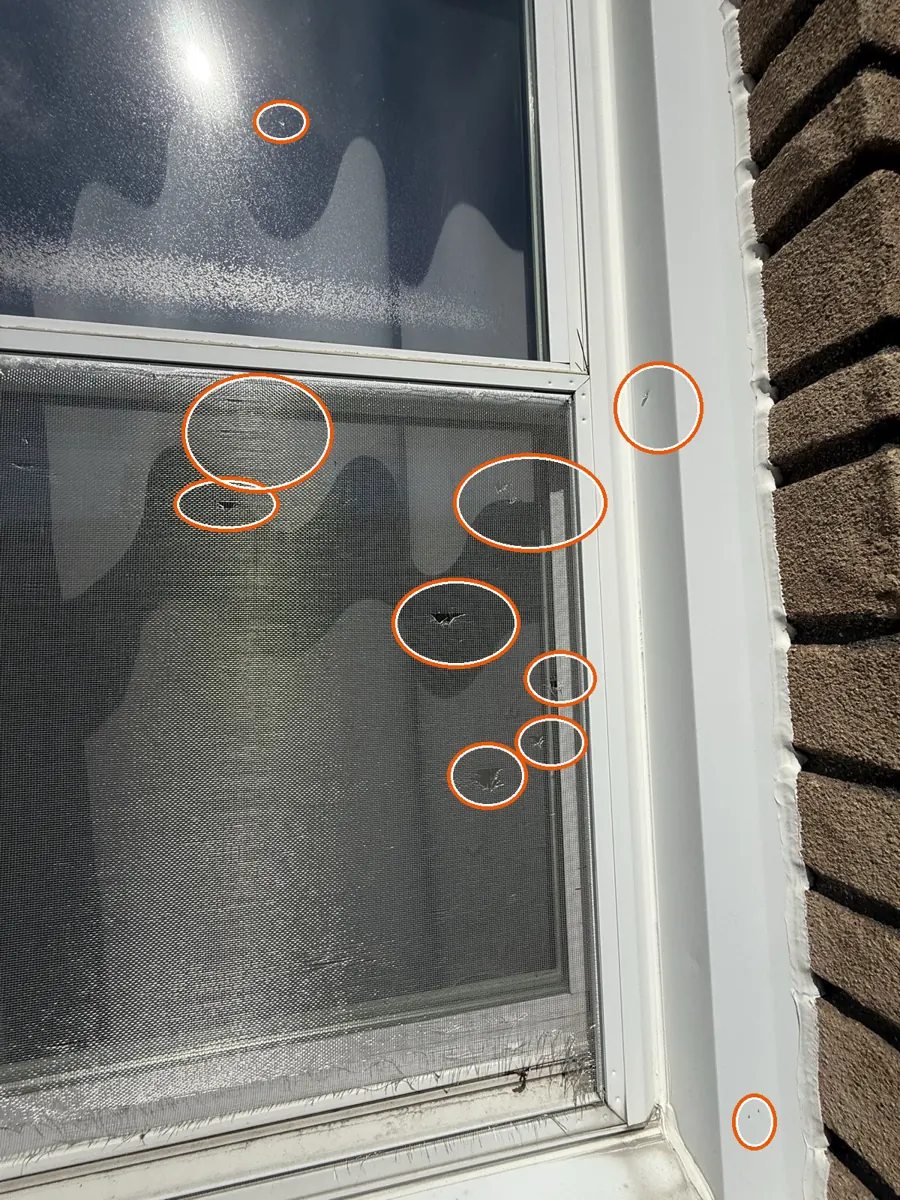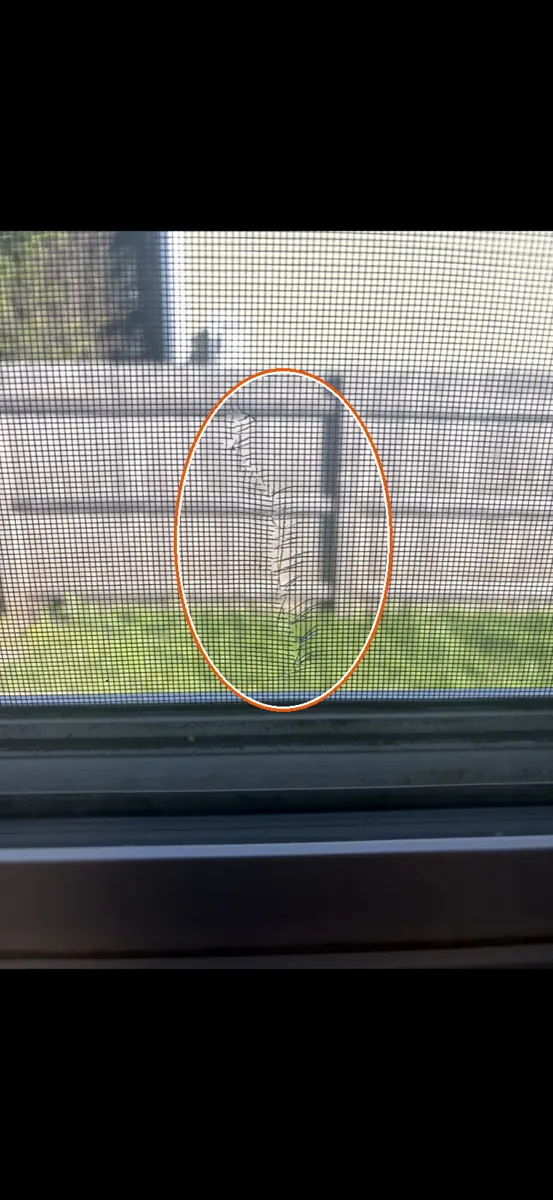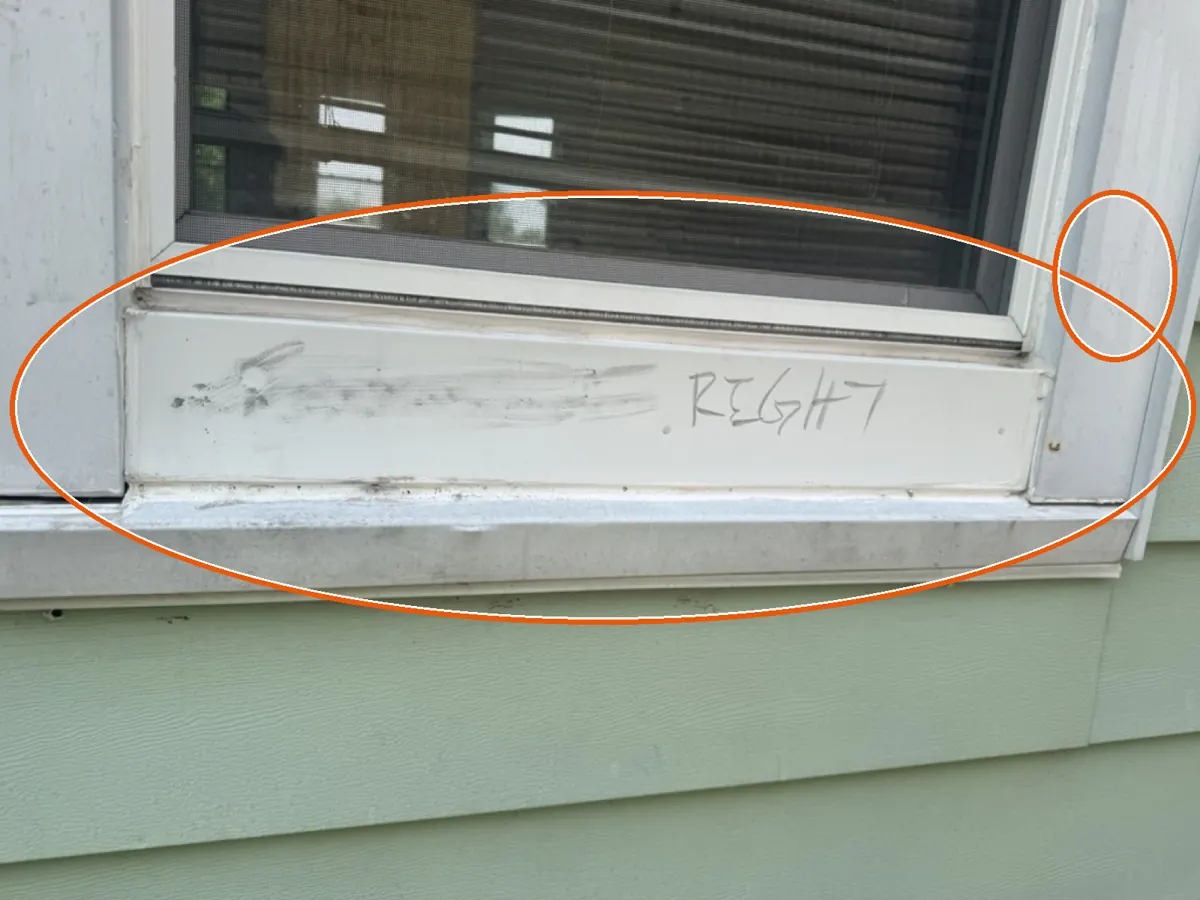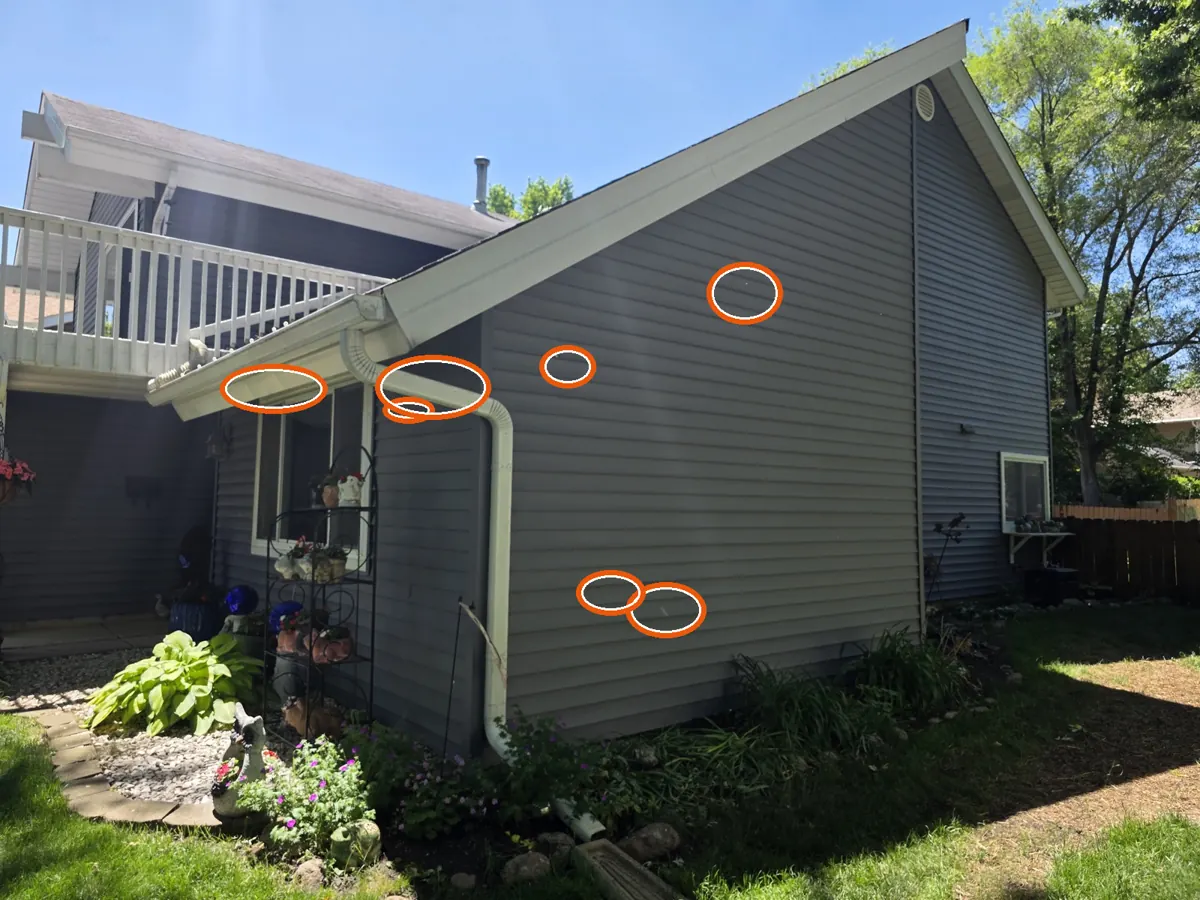






Whether your policy pays for siding damage from hail or wind is set by its own terms; check your declarations page. Siding damage belongs on the same claim as your roof because it came from the same storm on the same date. It is also the single most commonly underpaid part of a hail claim, because siding damage photographs badly and reads as ordinary aging to anyone moving quickly.
Dents or chips on the siding? Snap a photo.
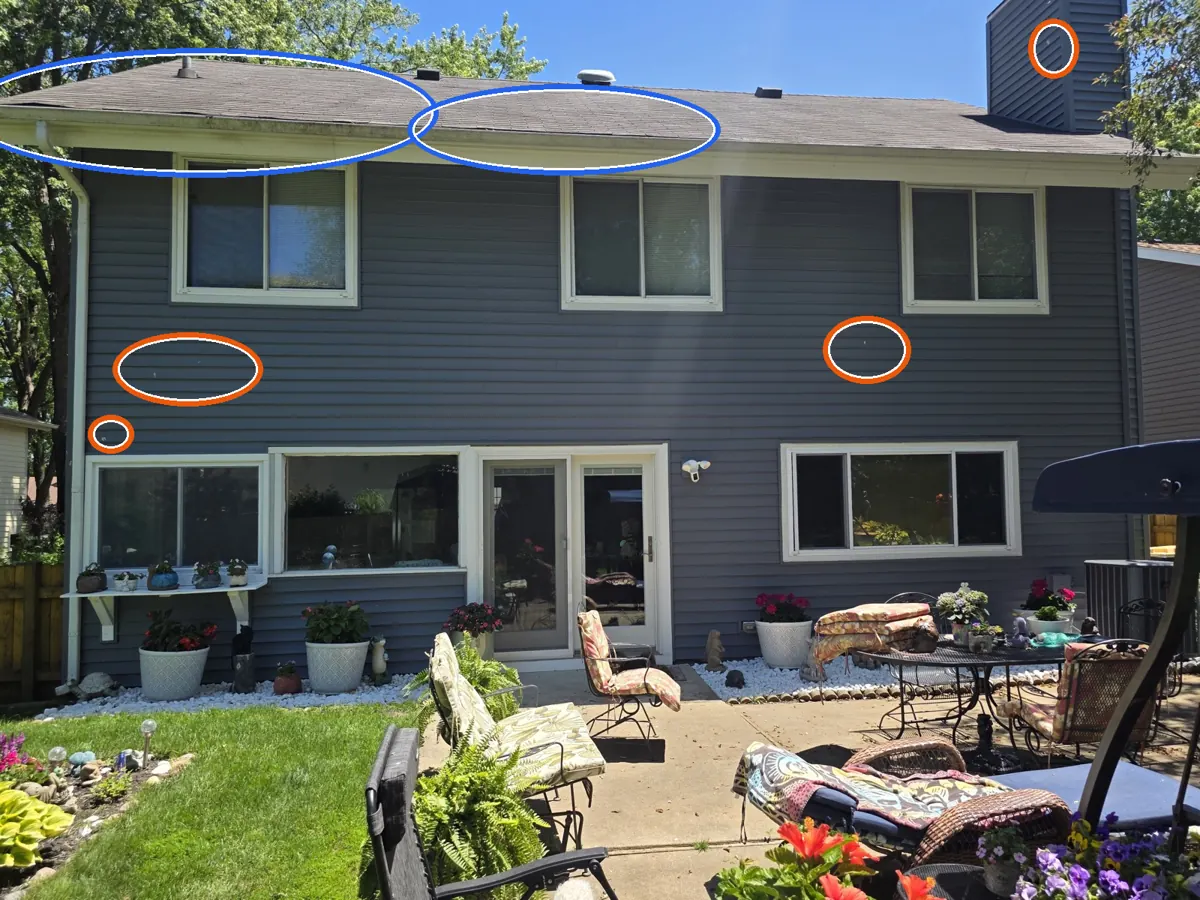
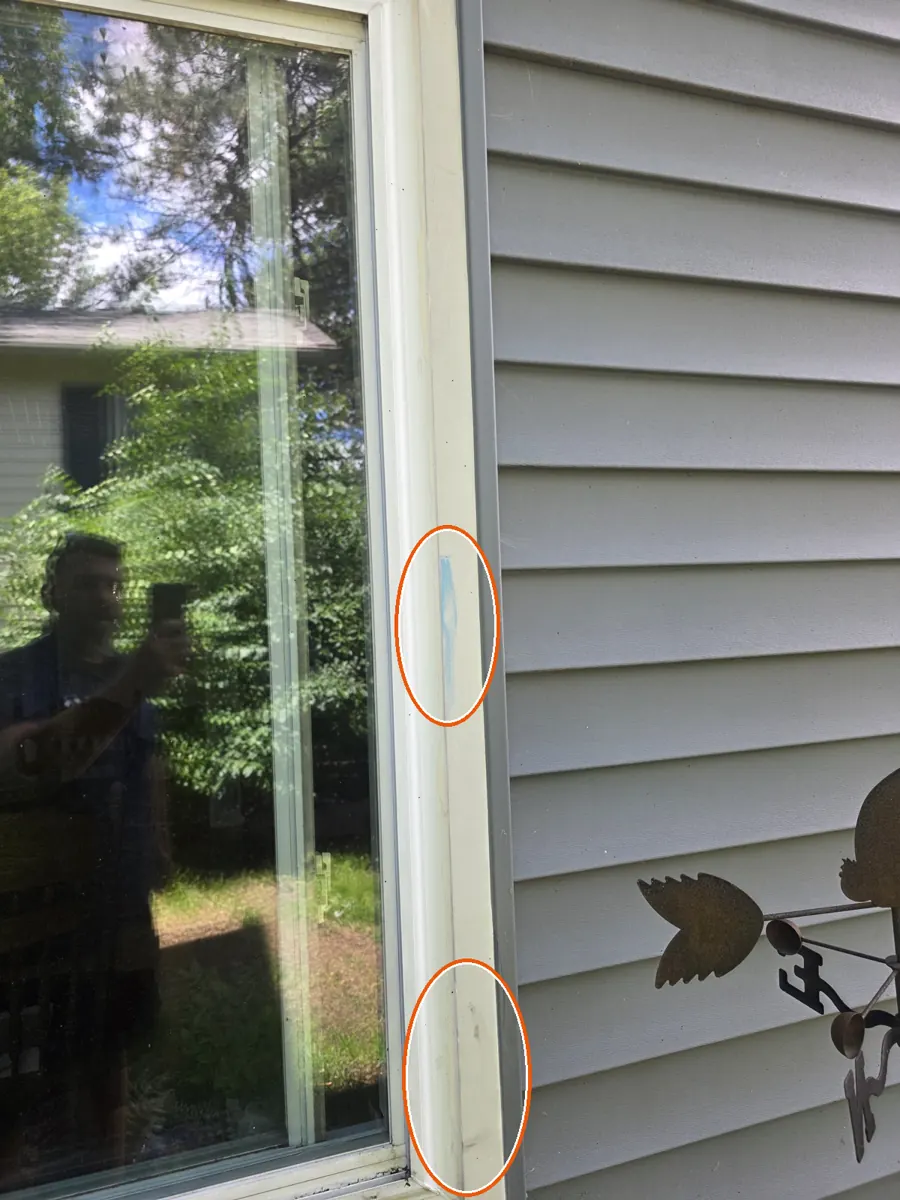
Photograph the gutters, vents or shingles. We circle what we seem to see and say whether an inspection is worth it.
Free. 30 seconds. No signup.
This AI only looks for storm and roof damage, and it isn't perfect. Think of it as a good starting point for a conversation.
Your browser shrinks the photo and removes the location data before it leaves your device. Privacy details.
Want to check recent storms near you? Your city only.
We never ask for a street address here, and the city stays in your browser.
Want us to get an inspector over, as soon as tomorrow in most cases?
A free inspection puts someone on the roof with a hand on the shingle. The report is yours to keep.
Why Siding Is the Most Underpaid Part of a Hail Claim
The reason is mundane rather than sinister. An adjuster working through a neighborhood of claims after a storm documents the roof thoroughly, because that's where the money and the attention are, and then walks the elevations quickly. Siding damage does not photograph well. A half-moon crack in a vinyl panel disappears in a photo taken from ten feet away in flat light.
So it gets left off the first estimate. And what gets left off does not disappear, it becomes your out-of-pocket cost, discovered when the roof is done and the walls still look like that. Submitting it later as a documented supplement is checkpoint four of how we work, and it is where most of the recoverable money on a hail claim actually lives.
| Storm Damage | Age and Weathering | |
|---|---|---|
| What it looks like | Chips and half-moon cracks with clean, bright edges. Holes punched through brittle panels. | Chalky surface, uniform fading, warping from heat, brittleness across every elevation equally. |
| Where it appears | Concentrated on the storm-facing elevations, usually north and west in Chicagoland. | Evenly distributed, or worst on the south elevation where sun exposure is highest. |
| Edges of the damage | Sharp and fresh, with unweathered material visible in the break. | Rounded, dirt-filled, weathered the same colour as the surface. |
| Corroborating evidence | Dented gutters, dented roof vents, torn screens, damaged window wraps, dinged AC condenser fins, all from the same event. | No soft-metal denting anywhere on the property. |
| Pattern on the wall | Random scatter matching the wind direction, denser on higher courses. | Follows fastener lines, panel seams, or areas of known water exposure. |
| How it gets treated | Your policy sets its own terms; check your declarations page. Storm damage is filed with the roof on one claim for one date of loss. | Maintenance and age wear are generally outside what storm claims address. |
Your policy sets its own terms; check your declarations page. Your carrier's determination controls.
What Hail Actually Does to Each Siding Material
Vinyl chips and cracks, usually in a half-moon shape at the impact point, and on older or brittle panels the stone punches clean through. Temperature matters more than homeowners expect: cold vinyl is far more brittle than warm vinyl, so an April or October hailstorm can shatter siding that would have shrugged off the same stone in July.
Aluminum dents and holds the dent permanently. That makes it the best evidence on the whole house, because aluminum does not dent from aging. A dented aluminum elevation, along with dented gutters and roof vents, is what establishes that a hail event happened at your address rather than that your siding looks tired.
Fiber cement chips and cracks rather than denting, often at panel edges and corners, and the damage can be subtle enough to need close inspection. Steel dents but resists cracking. Wood and engineered wood split, and like cedar roofing, the storm-versus-age question turns on whether the fracture face is fresh and unweathered.
Why the North and West Walls Take the Damage
Chicagoland's severe storms generally track from west to northwest, so wind-driven hail arrives at an angle and concentrates on the elevations facing into it. That directionality is not incidental, it is evidence. Damage concentrated on two adjacent storm-facing walls with the leeward walls clean is the signature of a hail event. Damage distributed evenly around all four elevations, or worst on the sunny south wall, points at age.
This is why an inspection has to cover all four elevations rather than the one the ladder happens to be leaning against, and why the photographs need to record which wall is which.
Get the Whole Exterior Documented, Not Just the Roof
Free Haag-certified inspection covering all four elevations, gutters, window wraps, and screens, with the photo report yours to keep whether you hire us or not.
Get My Free InspectionOr call (708) 847-5095
The Matching Problem, and Why It Decides the Scope
Here is the part that turns a small siding claim into a real one. Insurance restores like kind and quality. If three panels on your west wall are cracked and the color was discontinued six years ago, or the existing siding has weathered several shades off the original, then patching those three panels leaves a visibly repaired wall.
When a reasonable match genuinely is not available, the scope may reasonably extend to the full elevation rather than the individual panels. This is one of the most common supplement items on a hail claim and it turns entirely on documentation: what the existing product is, whether it is still manufactured, and what a match attempt actually looks like. That is a photographable, provable question, which is why it is worth doing properly rather than arguing about.
What Else the Same Storm Hit
Hail does not stop at the roofline or the walls. The same event typically dents gutters and downspouts, tears window screens, dings window wraps and fascia, damages soffit, and flattens the fins on your air conditioner's condenser. All of it belongs on one claim with one date of loss.
Our gutter storm damage guide covers that side of it, and the hail damage guide shows what each type of impact looks like so you can recognize it yourself before anyone arrives.
File siding with the roof, on one claim, for one date of loss, and document it before the first estimate rather than arguing about it after. If your siding damage is genuinely cosmetic and isolated, and your deductible is high, it may not be worth a claim at all, and we would rather tell you that.
Worth documenting and claiming when
- Damage concentrates on the storm-facing elevations
- Soft metals elsewhere on the property are dented, confirming the event
- Panels are cracked through, punctured, or missing
- The color or product is discontinued, making a clean match impossible
- The roof is already being claimed for the same storm
Probably not worth a claim when
- A couple of panels are chipped and the product is still readily available
- The repair cost is close to or below your deductible
- The siding is chalky and faded evenly on every wall, which is age, not hail
- You are planning to replace the siding for other reasons anyway
No-Risk Contract
You sign a contingency agreement. We don't start work until your insurance company approves the claim. If the claim doesn't go through, you don't owe us anything. No deposit. No cancellation fee. The contract doesn't screw anyone.
Your Budget, Your Call
If insurance approves less than the full scope we recommended, you decide what happens. You can spec down the project to match your payout exactly. Same materials. Same warranty. You won't pay for unapproved work unless you tell us to order it before the approval.
We Call You First
We don't silently revise your project to match whatever insurance approved. If there's a gap between our recommendation and the payout, we pick up the phone. We walk through the difference and help you keep out-of-pocket as low as possible. The only reasons you'd pay extra are to fix damaged lumber our crew needs to stand on or if you want to upgrade to luxury shingles.
Chicago Storm Pros is a service of C&N Construction, Inc. (cnroofs.com). Reviews, project counts, certifications, and ratings shown here reflect C&N Construction's work.
Related Decisions
- Gutter and downspout storm damage
- What hail damage looks like, by material
- The Repairing Accuracy Method: how missed items get supplemented
- How to read your adjuster's estimate
- What to do when a claim is denied or underpaid
Free Exterior Storm Inspection
All four elevations, the roof, the gutters, and the accessories, documented in the format your carrier's adjuster works in. No cost, no obligation, report yours to keep.
Get My Free InspectionOr call (708) 847-5095