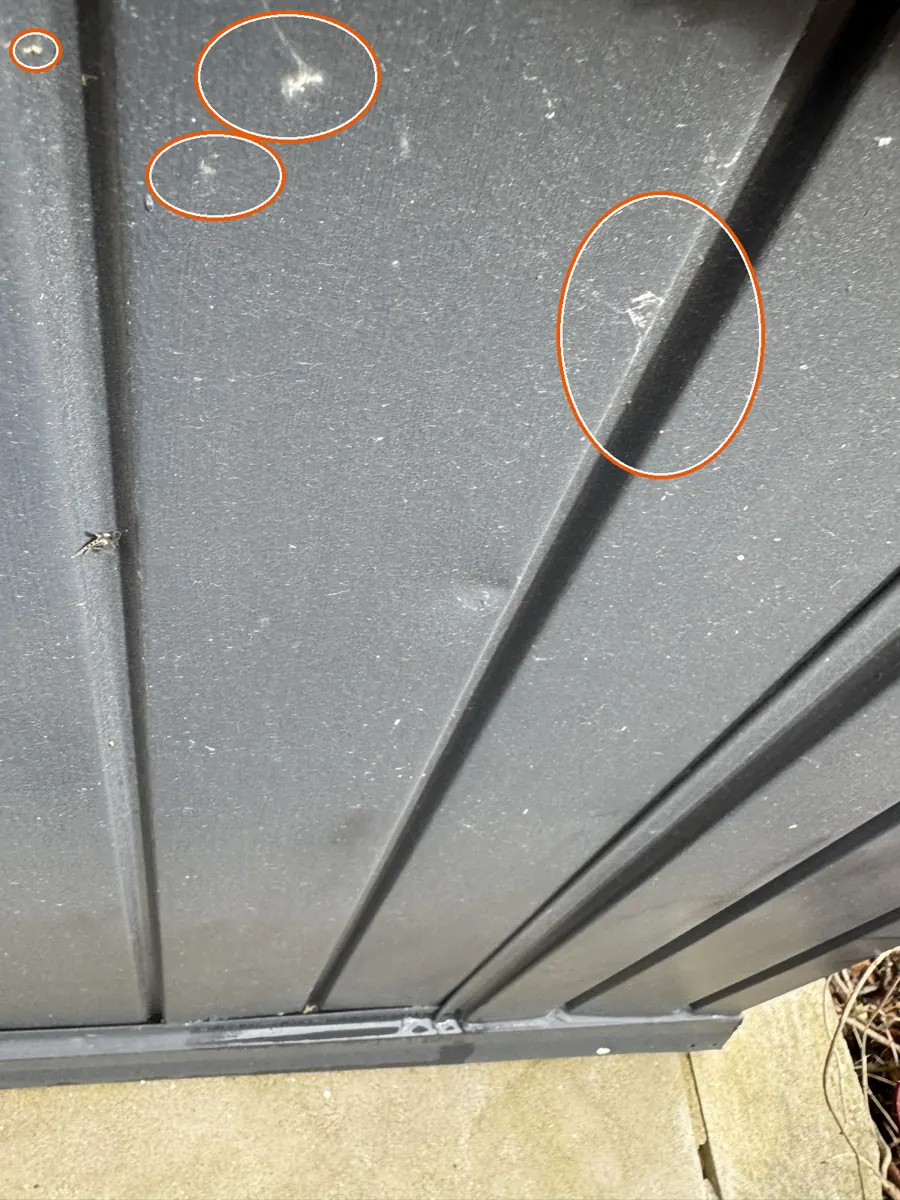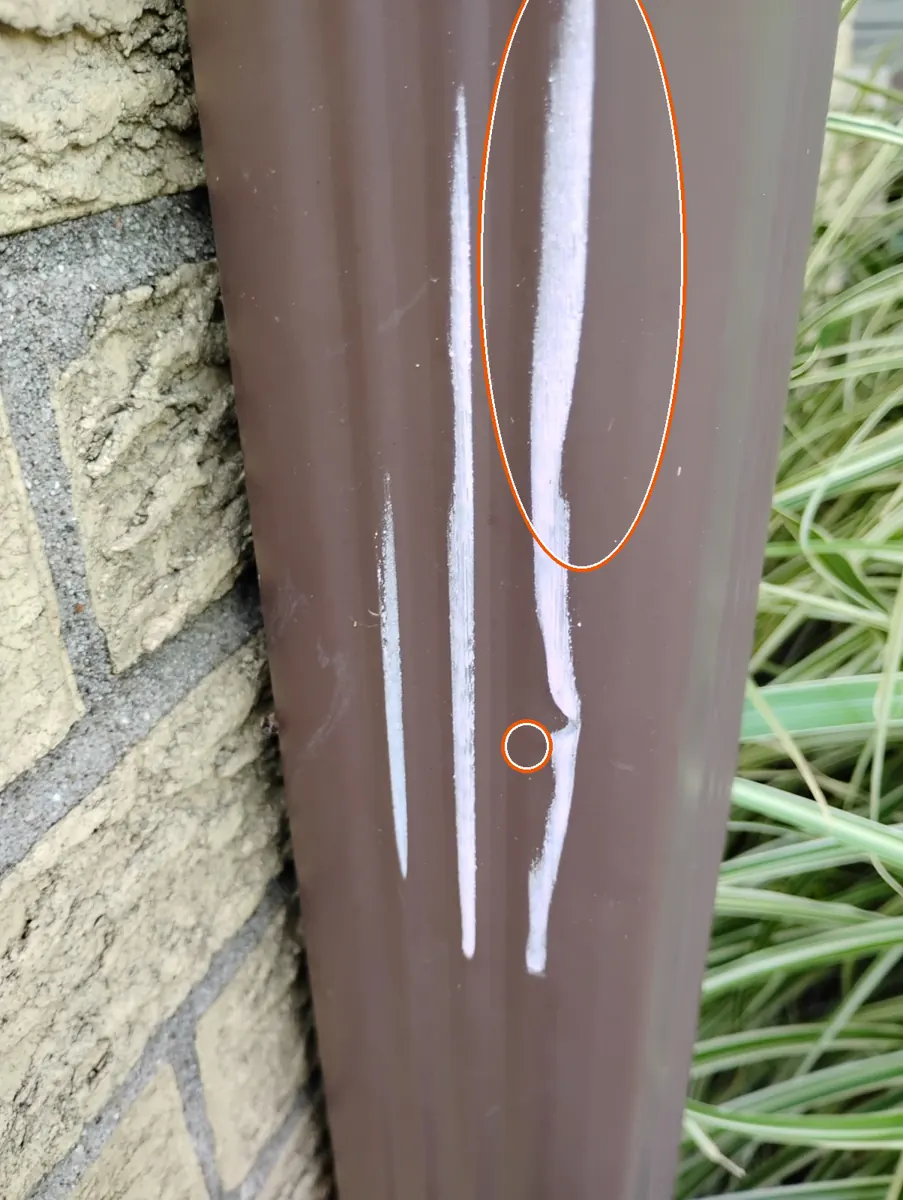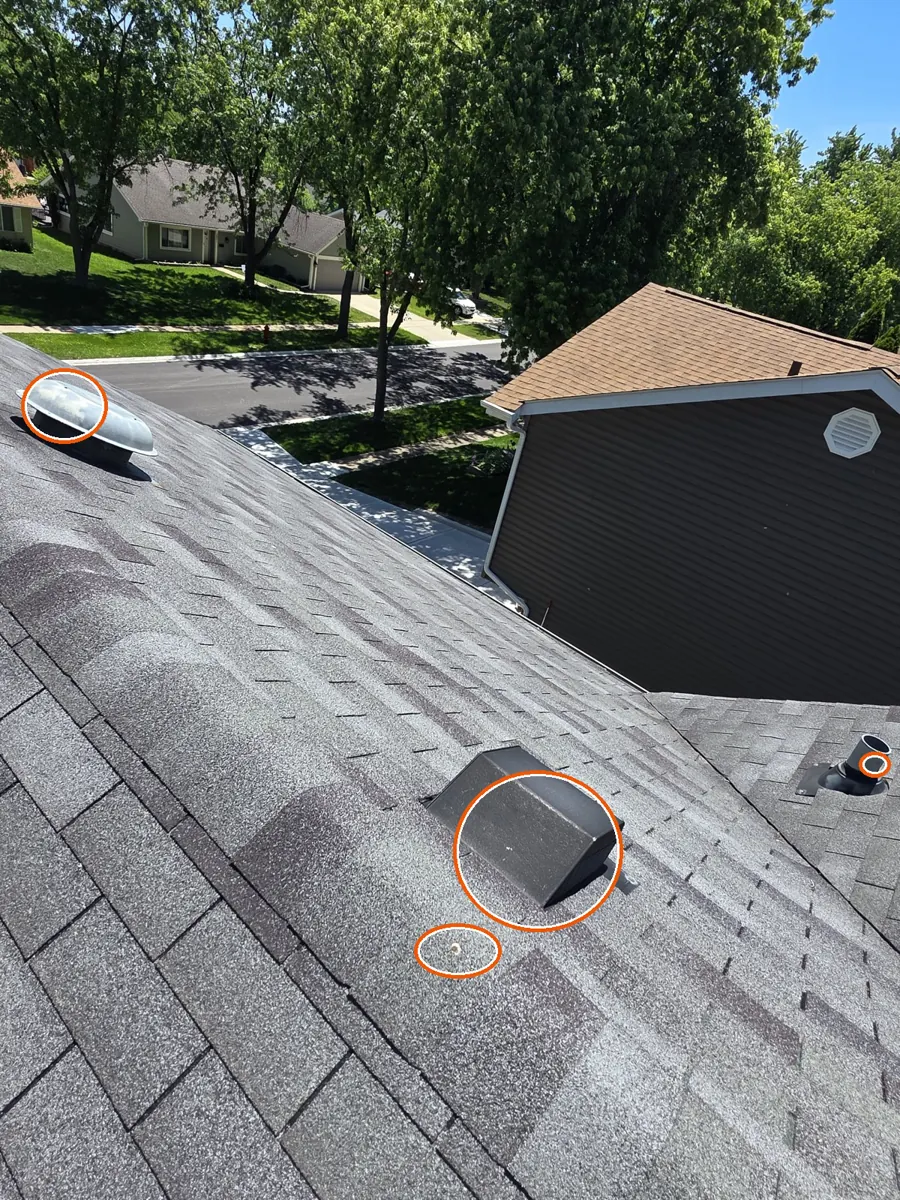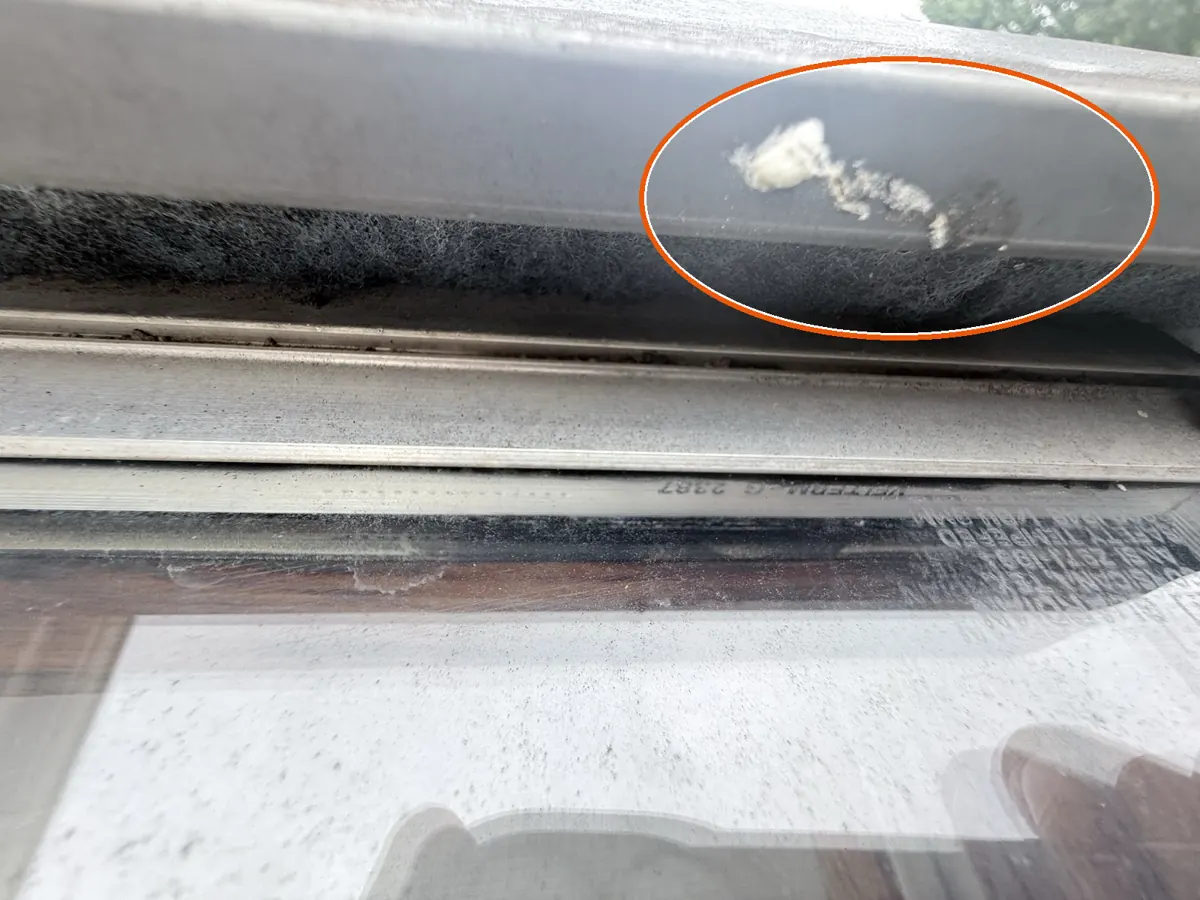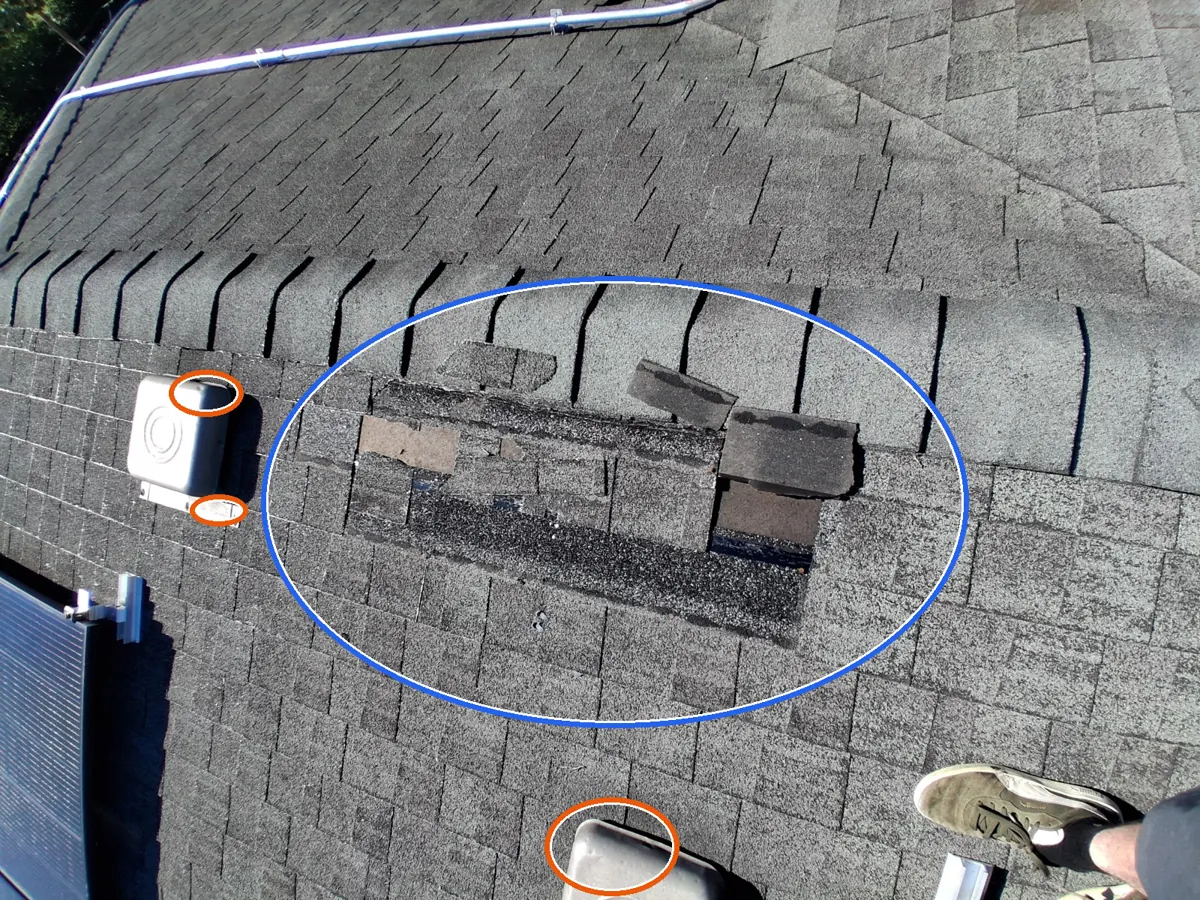





Whether your policy pays for gutter damage from hail or wind is set by its own terms; check your declarations page. Gutter damage belongs on the same claim as the roof. Gutters matter out of proportion to their cost, because aluminum does not dent from age: a dented gutter, downspout, or gutter apron is often the evidence that proves a hail event struck your address at all.
Dented gutters? Snap a photo of the run.
Photograph the gutters, vents or shingles. We circle what we seem to see and say whether an inspection is worth it.
Free. 30 seconds. No signup.
This AI only looks for storm and roof damage, and it isn't perfect. Think of it as a good starting point for a conversation.
Your browser shrinks the photo and removes the location data before it leaves your device. Privacy details.
Want to check recent storms near you? Your city only.
We never ask for a street address here, and the city stays in your browser.
Want us to get an inspector over, as soon as tomorrow in most cases?
A free inspection puts someone on the roof with a hand on the shingle. The report is yours to keep.
Why Gutters Decide Claims They Barely Cost Anything In
A run of gutter is a modest line on an estimate. Its importance is evidentiary. Shingle damage is arguable, endlessly: an adjuster can characterize bruising as manufacturing defect, foot traffic, or ordinary wear, and those arguments are the most common reason a legitimate roof claim comes back underpaid.
In winter, ice is the bigger gutter threat. Our ice dam guide explains why gutters pull away from the fascia and how to prevent it.
Soft metals end that argument. Aluminum gutters, downspouts, gutter aprons, roof vents, furnace caps, and AC condenser fins all dent on impact and none of them dent from getting older. A photographed dent of a size consistent with the reported hail is objective proof that stones of that size hit the property on that date. Once the event is established, the conversation moves from whether anything happened to what the scope should be, which is a far better conversation to be having.
This is why our inspectors photograph soft metals as carefully as the roof field, and it is why an inspection that skips the gutters has thrown away the best evidence on the house.
| Storm Damage | Age, Sag, and Neglect | |
|---|---|---|
| What it looks like | Round or oval dents in the trough, on the face, and on downspouts. Dented gutter apron along the roof edge. | Sagging, separated seams, pulled spikes, rust, and staining from long-term overflow. |
| Where it appears | Concentrated on the storm-facing elevations, matching the pattern on the roof and siding. | Wherever the gutter was under-supported or overloaded, often the longest unsupported run. |
| The dent itself | Bright, unweathered metal visible in the impression. Sharp-edged. | No impressions at all. Deformation is from load and gravity, not impact. |
| Corroborating evidence | Dented roof vents, dinged furnace and AC caps, damaged window wraps, bruised shingles, all from one event. | No soft-metal impact anywhere on the property. |
| Whether it is repairable | Dented aluminum does not return to shape. Scope is typically the full run in linear feet. | Often genuinely repairable: re-hang, re-pitch, reseal, replace hangers. |
| How it gets treated | Your policy sets its own terms; check your declarations page. Storm damage is filed with the roof on one claim for one date of loss. | Maintenance and age wear are generally outside what storm claims address. |
Your policy sets its own terms; check your declarations page. Your carrier's determination controls.
Gutter Apron: The Item Most Often Left Off
Gutter apron is the flashing that carries water off the roof edge and into the gutter rather than behind it. It sits exactly at the impact line, it is thin soft metal, and it dents plainly.
It is also routinely missing from first estimates even when the gutters themselves are on the estimate, because it is a small detail item that is easy to overlook and hard to photograph from the ground. On a full roof replacement, gutter apron has to be replaced anyway when the edge is opened up, which is why leaving it off produces a gap the homeowner ends up covering. It is one of the most common supplement items we file, and it is a documentation problem rather than a dispute.
Get the Soft Metals Photographed While the Dents Are Fresh
Free Haag-certified inspection covering gutters, downspouts, aprons, vents, and caps, in the format your carrier's adjuster works in. Report yours to keep.
Get My Free InspectionOr call (708) 847-5095
When Overflow Traces Back to the Storm
Clogged gutters are a maintenance issue, and storm claims generally don't address maintenance. But storm debris that blocks gutters and downspouts during the event itself creates a different situation: rainfall backs up under the shingle edge instead of draining, and the water that gets inside traces to the storm rather than to neglect.
The same mechanism causes basement water that most homeowners assume is flooding. Gutters or downspouts knocked out of service dump concentrated water against the foundation, and it appears in the basement hours later. Where the water started determines which policy applies, which is worth getting right the first time. Our guides on roof-caused basement water and telling roof water from flood water walk through the distinction. If your problem is genuinely rising groundwater, we will tell you that rather than sell you an inspection.
Why Dented Gutters Usually Mean Replacing the Run
Seamless aluminum gutter is formed on site in continuous lengths, which is the whole point of it. Once a section is dented, the metal does not return to shape, and there is no seam at which to swap out the damaged portion without introducing one. The practical unit of repair is therefore the run, measured in linear feet, which is how it appears on an estimate.
On a recent insurance-funded roof, a carrier's first estimate missed 292 linear feet of gutter work entirely. The documented supplement recovered it as a $2,928 line added to the carrier's own estimate, with photographs attached, and nobody argued because there was nothing to argue about. The documents from that job are published here.
What Else the Same Storm Hit
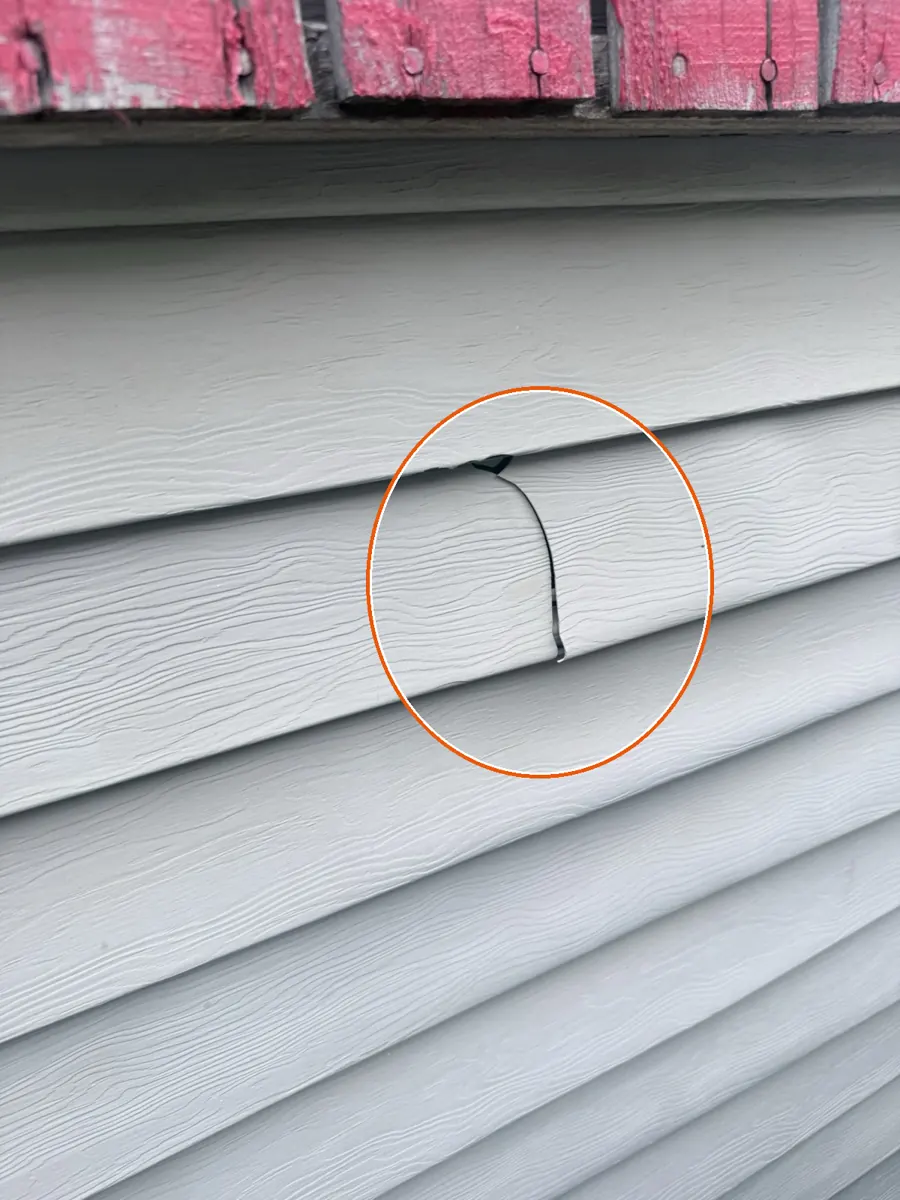
Hail is indiscriminate. The same event that dented your gutters very likely cracked siding on the storm-facing elevations, tore window screens, dinged window wraps and fascia, damaged soffit, and flattened the fins on your air conditioner's condenser. All of it belongs on one claim with one date of loss, and all of it is worth documenting before the first estimate rather than supplementing afterward.
Always get gutters documented after a hail event, even when you would not claim them on their own. The dents are the cheapest evidence you will ever have that a storm hit your address, and that evidence is what carries the expensive part of the claim.
Document and claim with the roof when
- Gutters, downspouts, or apron carry visible impact dents
- You are already claiming roof damage from the same storm
- Other soft metals on the property are dented too
- Storm debris blocked drainage and water got inside
- The roof is being replaced, since apron has to come off anyway
This is maintenance, not a claim, when
- Gutters are sagging or pulling away from the fascia with no impact dents
- Seams are leaking from age and sealant failure
- They are simply full of leaves and need cleaning
- Rust and staining have developed gradually over years
No-Risk Contract
You sign a contingency agreement. We don't start work until your insurance company approves the claim. If the claim doesn't go through, you don't owe us anything. No deposit. No cancellation fee. The contract doesn't screw anyone.
Your Budget, Your Call
If insurance approves less than the full scope we recommended, you decide what happens. You can spec down the project to match your payout exactly. Same materials. Same warranty. You won't pay for unapproved work unless you tell us to order it before the approval.
We Call You First
We don't silently revise your project to match whatever insurance approved. If there's a gap between our recommendation and the payout, we pick up the phone. We walk through the difference and help you keep out-of-pocket as low as possible. The only reasons you'd pay extra are to fix damaged lumber our crew needs to stand on or if you want to upgrade to luxury shingles.
Chicago Storm Pros is a service of C&N Construction, Inc. (cnroofs.com). Reviews, project counts, certifications, and ratings shown here reflect C&N Construction's work.
Related Decisions
- Siding storm damage and the matching problem
- What hail damage looks like, by material
- The Repairing Accuracy Method: how missed items get supplemented
- A real invoice, including the 292 feet of recovered gutter
- Granules in your gutters: what it actually means
Free Exterior Storm Inspection
Roof, gutters, downspouts, aprons, and the soft metals that prove the storm happened. No cost, no obligation, and the photo report is yours either way.
Get My Free InspectionOr call (708) 847-5095