






On April 14, 2026, O'Hare recorded 2.43 inches of rainfall, shattering the previous daily record of 1.21 inches set in 1949 and making it the 6th rainiest April day in Chicago's recorded history.
Many homeowners with a wet basement call a waterproofing company. Some get interior drain tile, sump pumps, and wall sealants installed. That work might slow the seepage. But if the actual source of the water is a roof drainage failure dumping thousands of gallons against the foundation, the basement fix is just managing symptoms while the cause stays active overhead.
Here's how to tell if your basement water problem actually starts on your roof.
How Roof Failures Cause Basement Seepage
Your roof collects every drop of rain that falls on your home's footprint. On a 2,000 square foot roof, a 2.43-inch rainfall produces roughly 3,000 gallons of water. That water is supposed to flow down the shingles, into the gutters, through the downspouts, and away from the foundation through extensions or underground drains.
When any part of that chain breaks, the water concentrates against your foundation instead of dispersing away from it. The three roof-related failures that cause the most basement seepage are gutter overflow, downspout discharge problems, and ponding that drains off the eaves.
Gutter Overflow and Foundation Saturation
Gutters are sized for typical rainfall intensity. During a 2.43-inch event, even clean gutters can struggle to keep up if the downspout capacity is undersized or the gutter runs are too long for a single downspout. Clogged gutters make it worse. Water sheets over the front edge and falls directly onto the soil at the base of the foundation wall.
That concentrated water saturates the backfill soil around the foundation faster than the soil can drain. Hydrostatic pressure builds against the basement wall and pushes water through the cove joint (where the floor meets the wall), through cracks in poured concrete, or through mortar joints in block foundations.
Walk outside during the next heavy rain and watch your gutters. If water is sheeting over the edge anywhere along the run, that section of foundation is getting hammered every time it rains. This is something we check during every roof inspection.
Free Storm Damage Inspection
Haag-certified inspectors. Full photo documentation. Adjuster meeting and supplements for documented misses.
Get My Free InspectionOr call (708) 847-5095
Ponding on Low-Slope Roof Sections
Many Chicagoland homes have at least one low-slope or flat section, often over a sunroom addition, a garage, or a bump-out. These areas are prone to ponding, which is standing water that remains on the roof surface for more than 48 hours after the rain stops.
Ponding happens when the roof membrane develops low spots from structural settling, when drains get blocked, or when the original slope was inadequate. During heavy rainfall, ponding sections hold hundreds of pounds of standing water. That weight stresses the structure, and the water finds every seam, fastener hole, and membrane defect. Even a tiny breach under standing water produces a steady leak because the water pressure is constant.
The damage from ponding often shows up far from the roof section itself. Water enters the building envelope and follows framing members, sometimes traveling 10 or 15 feet horizontally before dripping onto a ceiling or running down an interior wall into the basement. If you have a low-slope roof section and you're finding water in unexpected places after heavy rain, ponding is a likely suspect.
Flashing Failures Under Heavy Rain
Flashing is the metal and sealant system that waterproofs the joints where your roof meets walls, chimneys, skylights, and vent pipes. In light rain, marginally failed flashing might hold up because the water volume is low. Heavy rain exposes every weakness.
The most common flashing failures after heavy rain are step flashing at wall-to-roof transitions (where a lower roof meets a side wall or dormer), chimney flashing where the counter-flashing separates from the mortar, and valley flashing where two roof planes meet. Each of these allows water into the wall cavity, where it runs down studs and can emerge in the basement without ever leaving a stain on the ceiling above.
This is the leak pattern that confuses homeowners the most. The water appears in the basement, so they assume it's a foundation problem. But the entry point is two stories up at a failed flashing joint. For the full list of common causes of roof leaks, see our guide.
The Inspection Checklist After Record Rainfall
If your home took the April 14 rainfall or any similar heavy event, run through these checks before calling a waterproofing company.
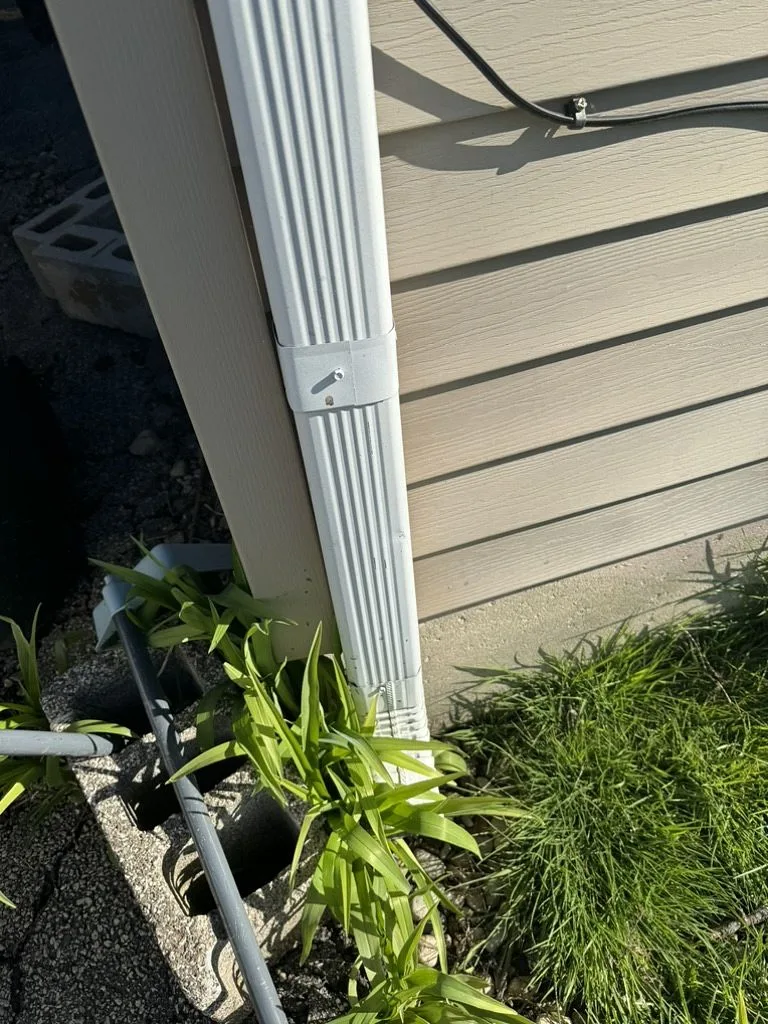
Gutters and downspouts. Walk the perimeter of your home. Look for soil erosion directly below gutter runs, which means water overflowed during the storm. Check every downspout connection. Downspouts that discharge within two feet of the foundation are a problem. Extensions should carry water at least four feet away, and underground drains need to be clear.
Attic inspection. Get into the attic with a flashlight. Check the underside of the roof sheathing for water stains, especially around chimneys, vent pipes, and where the roof meets any vertical wall. Feel the insulation. Wet insulation means water is getting in somewhere above. Even if your ceiling looks fine, the attic tells the real story. If you're not comfortable doing this yourself, our inspectors include the attic in every roof inspection.
Low-slope sections. If you can safely see any flat or low-slope roof areas from a second-story window or higher ground, check for standing water more than 48 hours after the rain stops. Active ponding means the drainage on that section needs work.
Exterior walls below roof junctions. Look for water stains, rust streaks, or efflorescence (white mineral deposits) on brick or siding below anywhere the roof meets a wall. These marks mean water is getting behind the flashing and running down the exterior wall.
Basement walls. New water stains, damp spots, or active seepage concentrated on one wall often correlate with a gutter or downspout problem directly above on the exterior. If the seepage is along multiple walls or uniform, it's more likely a groundwater or grading issue. If it's concentrated, look up.
Wet Basement After the April 14 Rainfall?
Before you spend $10,000 on interior drain tile, let us check the roof. Our free inspection covers gutters, flashing, ponding, and drainage. If the water is coming from above, we'll find it.
Get My Free InspectionOr call (708) 847-5095
Why Basement Waterproofing Alone Doesn't Fix a Roof Problem
Interior basement waterproofing systems manage water that's already inside the foundation. They work. But they're managing the symptom, not the source. If 3,000 gallons of water is pouring against your foundation every rainstorm because your gutters are overflowing or your downspouts are dumping next to the wall, the waterproofing system is fighting a losing battle.
Fixing the roof drainage first, whether that means cleaning gutters, extending downspouts, repairing flashing, or addressing ponding, often reduces or eliminates the basement seepage without any interior work at all. At minimum, it means any waterproofing investment you do make is working with the drainage system instead of against it.
The signs of a leaky roof aren't always overhead. Sometimes the first sign is water in the basement.
When Heavy Rain Reveals Existing Roof Damage
Record rainfall doesn't damage a healthy roof. What it does is expose damage that was already there. The flashing that's been slowly separating for two years. The shingle section that lost its seal after last summer's heat. The valley that's been collecting debris and backing up water under the shingles during anything heavier than a drizzle.
NOAA Storm Events lists 4.8 inch hail at Darien, DuPage County, on March 10, 2026, among 17 reports across Cook, DeKalb, DuPage, Kane, Kendall and Will Counties (NOAA event record). If hail was reported near you, your roof may have damage that has gone unnoticed. Hail fractures shingle mats and loosens flashing seals, and heavy rain can test those weak points. If you haven't had your roof inspected since the hail, an inspection can check. See our guide on what hail damage looks like and our overview of what to expect from the post-storm process.
If your basement took water, if your gutters overflowed, or if you found damp insulation in the attic, a roof inspection can show where the water came from. The inspection is free and the report is yours regardless of what you decide to do next.
If the inspection reveals storm damage, we document it and can meet your adjuster at the inspection if you file a claim. If it reveals maintenance issues, we'll give you a straight answer about what needs repair and what can wait. Either way, you'll know whether your basement problem starts on the roof or in the ground.