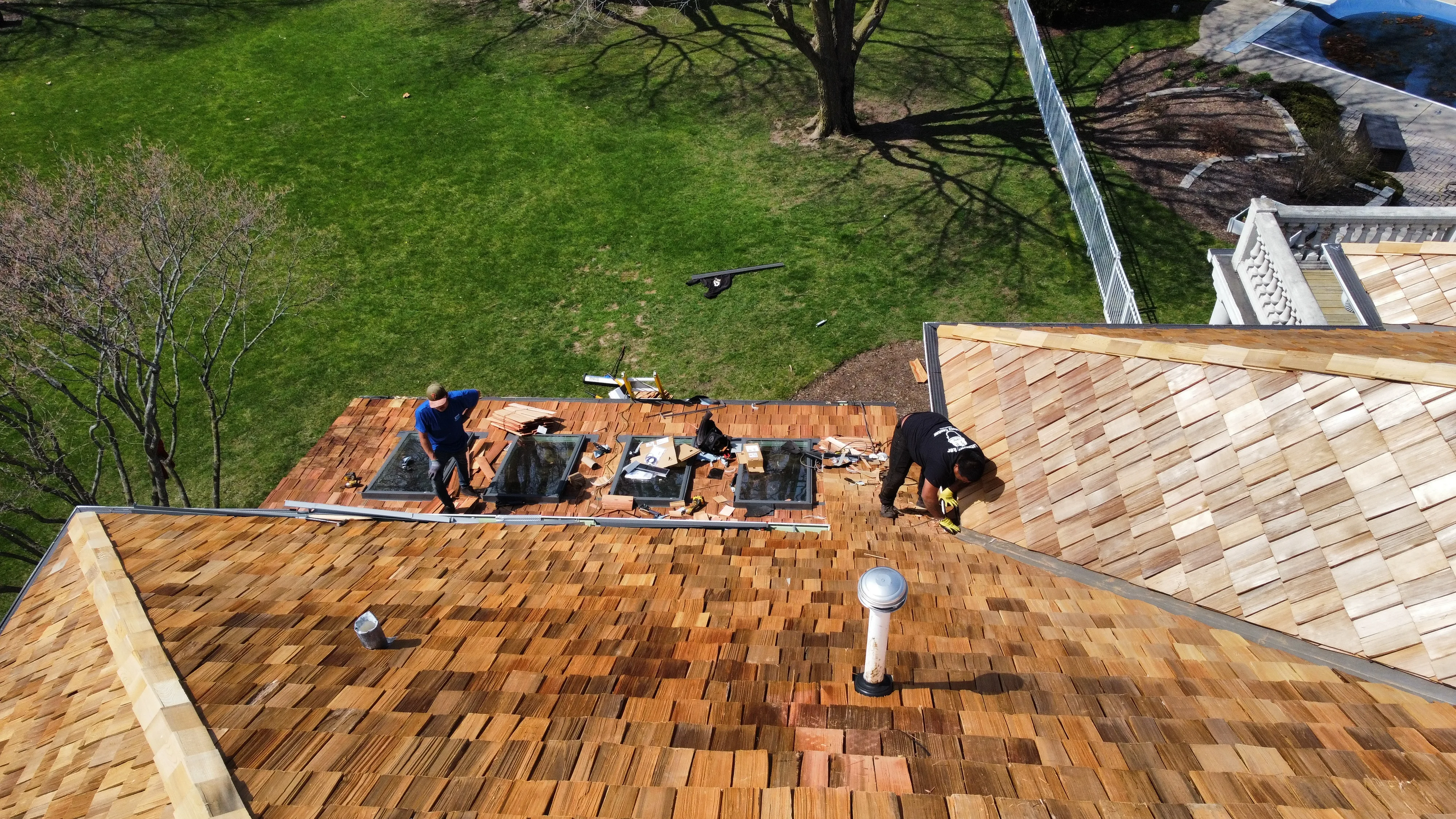






You're cleaning out your gutters and notice a thick layer of dark, sandy grit in the trough. Or maybe you spot a pile of what looks like coarse sand at the base of a downspout. That material is the granule coating from your asphalt shingles, and the amount you're finding tells you something important about your roof's condition.
Not all granule loss is a problem. But some of it means your roof is either reaching end of life or took damage in a recent storm. Knowing the difference can save you from an expensive surprise, or help you catch an insurance claim before your policy's deadline to report passes.
What Roof Granules Are and Why They Matter
Asphalt shingles aren't just asphalt. They're a layered system: a fiberglass mat for structure, asphalt coating for waterproofing, and a dense layer of ceramic-coated mineral granules on the surface. Those granules are the shingle's first line of defense. They block UV radiation from breaking down the asphalt binder, provide fire resistance, and give the shingle its color.
When granules are intact, the asphalt underneath is protected and the shingle can perform for its full rated lifespan, typically 25 to 30 years for architectural shingles like GAF Timberline HDZ. When granules are missing, the exposed asphalt deteriorates rapidly. UV breaks down the binder, rain erodes the weakened surface, and what would have lasted decades can fail in just a few years.
Normal Granule Loss: When Not to Worry
Brand-new shingles shed granules for the first year or two after installation. During manufacturing, excess granules are embedded in the asphalt surface, and the loosely attached ones wash off with the first several rains. This is completely normal. You might see a noticeable amount of grit in your gutters during this break-in period, and it doesn't mean anything is wrong.
After the initial shedding phase, a thin film of fine sediment in your gutters after a heavy rain is also normal. Granules don't last forever, and some gradual loss over the life of the roof is expected. The key word is gradual. If you've been cleaning your gutters for years and the amount of grit is consistent and light, your shingles are aging normally.
Free Storm Damage Inspection
Haag-certified inspectors. Full photo documentation. Adjuster meeting and supplements for documented misses.
Get My Free InspectionOr call (708) 847-5095
Abnormal Granule Loss: When to Pay Attention
The warning signs are sudden increases in volume, heavy accumulations after a single storm, and granule piles at your downspout discharge points. If you can scoop granules out of your gutter with your hand, or if the sediment layer is thick enough to obstruct water flow, something has changed.
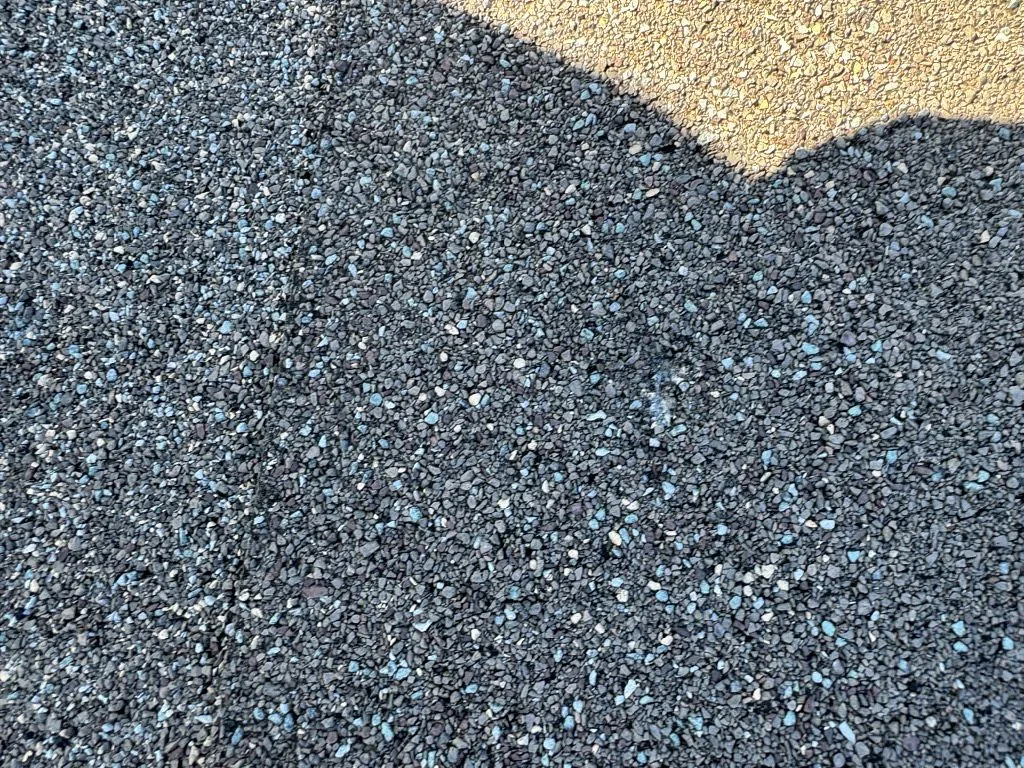
A sudden spike in granule loss after a storm almost always means hail damage. Hailstones strike the shingle surface and blast granules off at the point of impact. A single storm can strip thousands of granules across the entire roof. If your neighbors are reporting hail damage, or if you noticed dented car hoods, cracked siding, or pockmarked window screens after the same storm, your gutter granules are confirming what the other evidence suggests.
Hail Damage vs. Aging: How to Tell the Difference
This distinction is critical because it determines whether insurance covers your roof work.
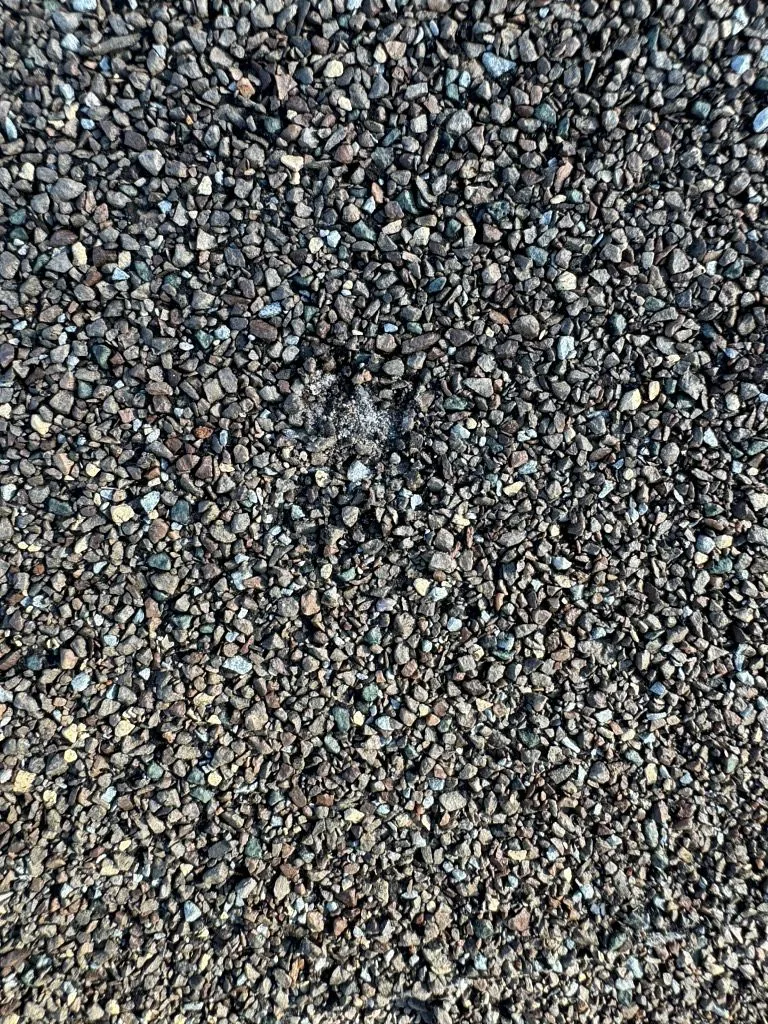
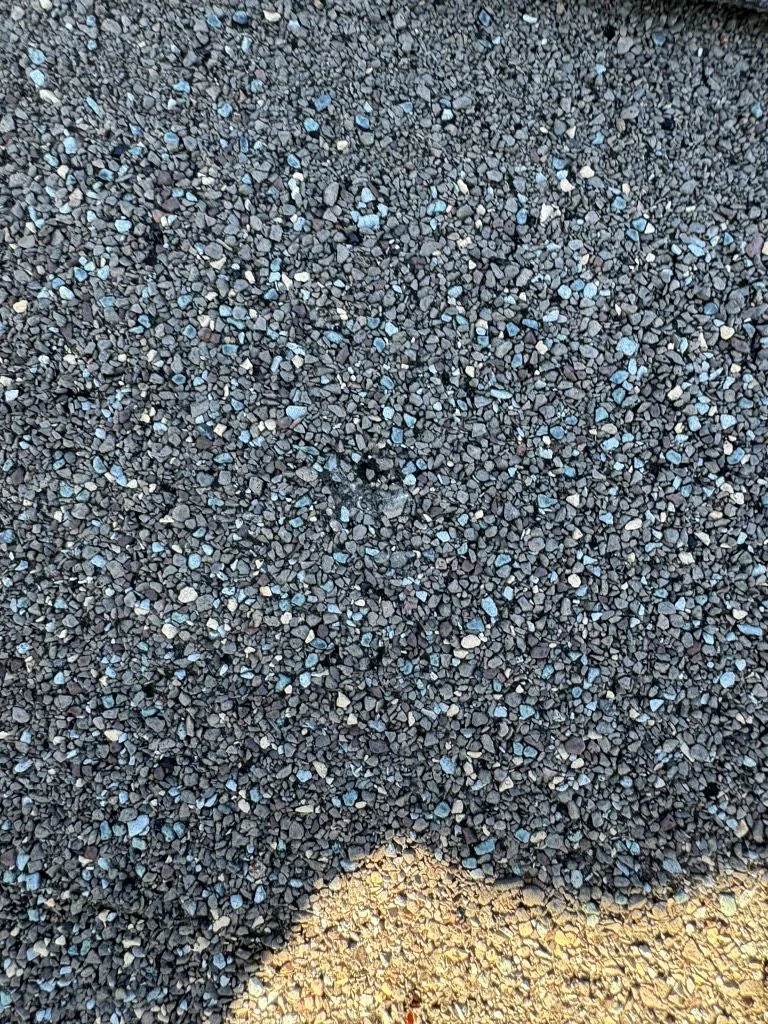
Hail damage granule loss is random and concentrated at impact points. If you look at the shingle surface, you'll see distinct spots where granules are missing, often circular or oval, with the surrounding area intact. The exposed asphalt mat at these spots may look shiny or show bruising where the mat was compressed by the impact. Hail damage hits the roof faces that were exposed to the storm direction, so you may see heavy granule loss on one slope and minimal loss on the opposite side.
Aging granule loss is uniform. The entire roof surface gradually becomes lighter in color as granules wear away evenly over years. There are no distinct impact spots, no concentrated areas. The shingles may also show curling, cracking, and general brittleness alongside the granule loss. This pattern indicates the shingles are reaching end of life through normal wear.
Heavy Granules After a Storm?
If a recent storm left your gutters loaded with granules, your shingles took hits. A free Haag-certified inspection documents the damage for your insurance claim.
Get My Free InspectionOr call (708) 847-5095
How to Check Your Roof for Granule Loss
Start at the gutters. Look at the volume and distribution of granule sediment. Check your downspout discharge points for piles of grit on the ground. Then step back and look at the roof surface from the ground. Severe granule loss shows up as dark, blotchy patches where the black asphalt mat is visible through the lighter granule surface.
Binoculars help. Our guide on checking your roof from the ground covers exactly what to look for. From across the street or from your driveway, scan the shingle surface for inconsistencies in color and texture. Bald spots, streaky areas, and sections that look noticeably darker than the rest are all signs of granule loss. Pay attention to the roof faces that were most exposed to recent storms.
Don't climb on the roof to check. A professional with fall protection can do a thorough inspection safely. If your ground-level observations suggest a problem, that's enough reason to schedule a professional inspection.
What to Do If You Find Heavy Granule Loss
If the granule loss corresponds to a recent storm event, schedule a Haag-certified inspection as soon as possible. Your policy sets its own deadline to report a loss and it can be short, so check your declarations page, and waiting makes the process harder. UV and weather continue degrading the exposed shingle mat, and it becomes more difficult to attribute the damage to a specific storm as time passes.
Document what you see before anything changes. Photograph the granules in your gutters, the piles at your downspouts, and any visible bald spots on the shingles. These photos help establish a timeline for your insurance claim.
If your roof is older than 20 years and the granule loss appears uniform rather than storm-related, it may be time to start planning for a replacement. Our repair vs replacement guide walks through how to make that decision. Talk to a contractor about the roof's remaining useful life and your options. Even if the current loss isn't storm-related, the next hailstorm hitting a weakened roof could be the event that triggers a covered claim.
The Connection to Bigger Problems
Granule loss is the first domino. Once the granule layer is compromised, the exposed asphalt degrades, the shingle weakens, and water eventually penetrates. That water saturates the underlayment, soaks into the decking, and shows up as the stains, mold, and musty smells that send homeowners scrambling for help.
Catching granule loss early, before it progresses to active leaks and interior damage, is the cheapest point in the repair timeline. A full roof replacement after a storm is covered by insurance. Mold remediation, rotted decking, and damaged interiors add complexity and cost that could have been avoided.