



After a storm rolls through the Chicago suburbs, every homeowner with damage faces the same question: can this be repaired, or does the whole roof need to go? The answer isn't always obvious, and the wrong decision can cost you thousands.
We inspect roofs across Naperville, Downers Grove, and the surrounding suburbs every week. Here's how we help homeowners make this call, and the factors that actually matter.
When Repair Is the Right Call
Roof repair makes sense when the damage is contained and the rest of the roof still has years of service left. If a windstorm tore off shingles on one slope, or hail cracked flashing around a single vent, there's no reason to replace 2,500 square feet of roofing for a problem that affects 200 square feet.
Repair is typically the better option when your roof is less than 10 years old and the damage affects less than 30% of the total surface. Architectural shingles like GAF Timberline HDZ or CertainTeed Landmark carry 30-year warranties. If you're only a third of the way through that lifespan and the damage is localized, a targeted repair preserves the remaining value.
Budget constraints also play a role. If you're paying out of pocket (damage below your deductible, or the claim was denied), a $1,200 repair is obviously preferable to a $25,000 replacement when the repair will genuinely solve the problem.
When Replacement Makes More Sense
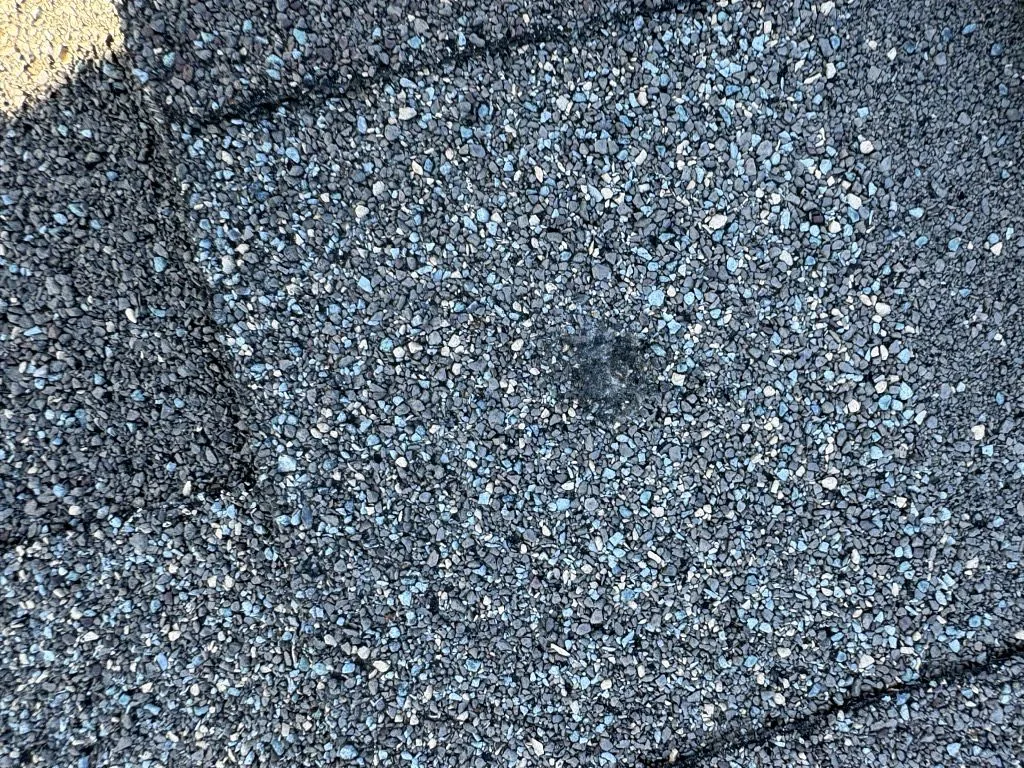
Replacement becomes the better option once damage crosses certain thresholds. The industry standard is the 30% rule: if more than 30% of the roof surface shows damage, replacement typically costs less per year of service than a repair that leaves you with an aging roof underneath.
Age matters just as much as damage extent. A 15-year-old three-tab shingle roof with storm damage on two slopes is a replacement candidate even if the damaged area is technically under 30%. Those shingles are past their functional prime, and repairing them just delays an inevitable replacement by a year or two.
Multiple active leak points are another clear signal. Knowing the common causes of roof leaks helps you understand whether you're dealing with isolated failures or systemic breakdown. One leak from a cracked pipe boot is a repair. Three leaks on different slopes after a hailstorm means the roof's integrity is compromised across the board. Patching individual leaks won't address the underlying damage to the shingle mat and underlayment that you can't see from ground level.
Free Storm Damage Inspection
Haag-certified inspectors. Full photo documentation. Insurance claim support from filing to final payment.
Get My Free InspectionOr call (630) 414-9160
How Insurance Claims Change the Decision
Here's where the repair-vs-replacement math shifts dramatically. If your insurance company approves a full storm restoration, your out-of-pocket cost is your deductible. That's the same whether they approve a $4,000 repair or a $30,000 replacement. The financial argument for choosing repair over replacement disappears when insurance is covering the work.
This is exactly why proper insurance documentation matters so much. A Haag-certified inspector who finds and photographs damage across all slopes gives your adjuster the evidence needed to approve full replacement. A quick visual check that only notes the obvious damage on one slope might get you a repair approval that leaves money on the table.
Insurance adjusters use Xactimate software to calculate repair vs replacement thresholds. When documented damage crosses their replacement criteria, the full scope gets approved. When it doesn't, they'll authorize repairs only. The quality of the initial inspection directly determines which outcome you get.
Not Sure If You Need Repair or Replacement?
Our Haag-certified inspectors document every square foot of your roof and give you a straight answer. If your insurance should cover a full replacement, we'll make sure the documentation supports it.
Get My Free InspectionOr call (630) 414-9160
What "Repairable" Means to an Insurance Adjuster
Understanding how adjusters think helps you understand your options. To an insurance company, "repairable" means the damaged area can be fixed without affecting the function or warranty of the surrounding roof. They're looking at three things: the percentage of damaged surface, whether matching materials are available, and whether a partial repair would void the manufacturer's warranty on the rest.
Material matching is a bigger deal than most homeowners realize. Shingle colors are manufactured in batches, and a shingle installed five years ago won't match the same product line today. If the color mismatch would be clearly visible from street level, many carriers will approve replacement of the entire slope or roof to maintain uniform appearance. Illinois regulations also require that repairs don't create a patchwork that reduces the home's value.
Repair Costs vs Replacement Costs in Chicagoland
Localized repairs in the Chicago suburbs typically range from $300 to $1,500 for simple fixes like replacing blown-off shingles, resealing flashing, or patching a small damaged area. Larger section repairs that involve tearing off and replacing a full slope can run $3,000 to $8,000.
Full replacement costs in our market run $12,000 to $45,000 depending on the home. A 1,800-square-foot ranch in Downers Grove with a simple gable roof might come in around $14,000 to $18,000 with standard architectural shingles. A 3,500-square-foot two-story in Naperville with dormers, valleys, and a steep pitch could reach $35,000 or more. For a detailed breakdown, see our Illinois roof replacement cost guide.
Labor costs in the Chicagoland market run higher than the national average. Union presence, licensing requirements, permit fees, and the short optimal season (April through October) all contribute. When you see online calculators quoting national averages, add 15 to 25% for a realistic Chicago-area number.
The Real Cost of Choosing Wrong
The most expensive mistake we see is homeowners who repair a roof that should have been replaced. They spend $3,000 to $5,000 patching storm damage, then two years later another storm hits and now they need a full replacement anyway. They've spent the repair money on top of the replacement cost, and the first repair isn't worth anything at that point.
The second most expensive mistake is paying out of pocket for a replacement that insurance would have covered. Homeowners who file claims without professional documentation, or who don't file at all because they assume the damage isn't covered, leave tens of thousands of dollars in coverage unused. If your roof was damaged by hail, wind, or a fallen tree, you owe it to yourself to get a professional inspection before making any decisions.
How to Get an Honest Assessment
A legitimate contractor will give you a straight answer on repair vs replacement because their reputation depends on it. Be cautious of anyone who pushes hard for replacement on a 5-year-old roof with minor damage, and equally cautious of anyone who wants to patch a 20-year-old roof that was hammered by hail across every slope.
The inspection should include measurements of the damaged area as a percentage of total roof surface, documentation of the shingle condition in undamaged areas, photos of decking condition where shingles are removed, and a clear recommendation with reasoning. If you decide on replacement, see our guide on how long a roof replacement takes to plan your timeline. That documentation serves double duty: it helps you make the right decision, and it supports your insurance claim if one is warranted.
How It Works When You Say Yes
No-risk contract. You sign a contingency agreement. Work starts after insurance approves the claim. If it doesn't go through, you owe nothing.
Your budget, your call. You can spec down the project to match your insurance payout exactly. You won't pay for unapproved work unless you tell us to order it before the approval.
We call you first. If there's a gap between our recommendation and insurance, we call you. The only reasons you'd pay extra are damaged lumber or a luxury shingle upgrade.