





When you've got a tarp on your roof and a claim in progress, the only thing you want to know is how long this is going to take. If you're still deciding between a patch and a full tear-off, our repair vs replacement guide covers how to make that call. The short answer: 1 to 3 days of actual work on the roof, and 2 to 6 weeks from your first phone call to the final nail. Here's what fills that timeline and what controls the pace.
The On-Site Work: 1 to 3 Days
A crew of 5 to 8 experienced roofers can tear off and replace a standard residential roof in a single day. A typical 1,800-square-foot ranch in the Chicago suburbs with one layer of architectural shingles, a straightforward gable or hip roof, and sound decking underneath is a one-day job in good conditions.
Planning a winter job? See winter roof replacement for what changes in the cold.
Two-day jobs are more common for homes over 2,500 square feet, roofs with multiple layers that need to come off, steep pitches above 8/12 that slow the crew down, and complex layouts with dormers, skylights, and intersecting rooflines. Three-day jobs are reserved for the largest homes or roofs that need significant decking replacement after the tear-off reveals rot or storm damage to the sheathing.
What Happens Each Day
On tear-off day, the crew shows up early. In our crews' case, that means 7:00 to 7:30 AM. The dumpster is positioned in the driveway, tarps go down around the foundation perimeter to catch debris, and the old roof comes off. Shingles, underlayment, and compromised decking get stripped down to the bare sheathing. This is the noisiest part of the entire process. If you're planning to stay in the house, know that tear-off day is the loudest.
Once the deck is exposed, the crew inspects every inch for rot, soft spots, and damage. Any compromised sections of OSB or plywood get cut out and replaced. Then the ice-and-water shield goes along the eaves, valleys, and penetrations. Synthetic underlayment covers the rest. If time allows, the crew starts shingling before they wrap up for the day.
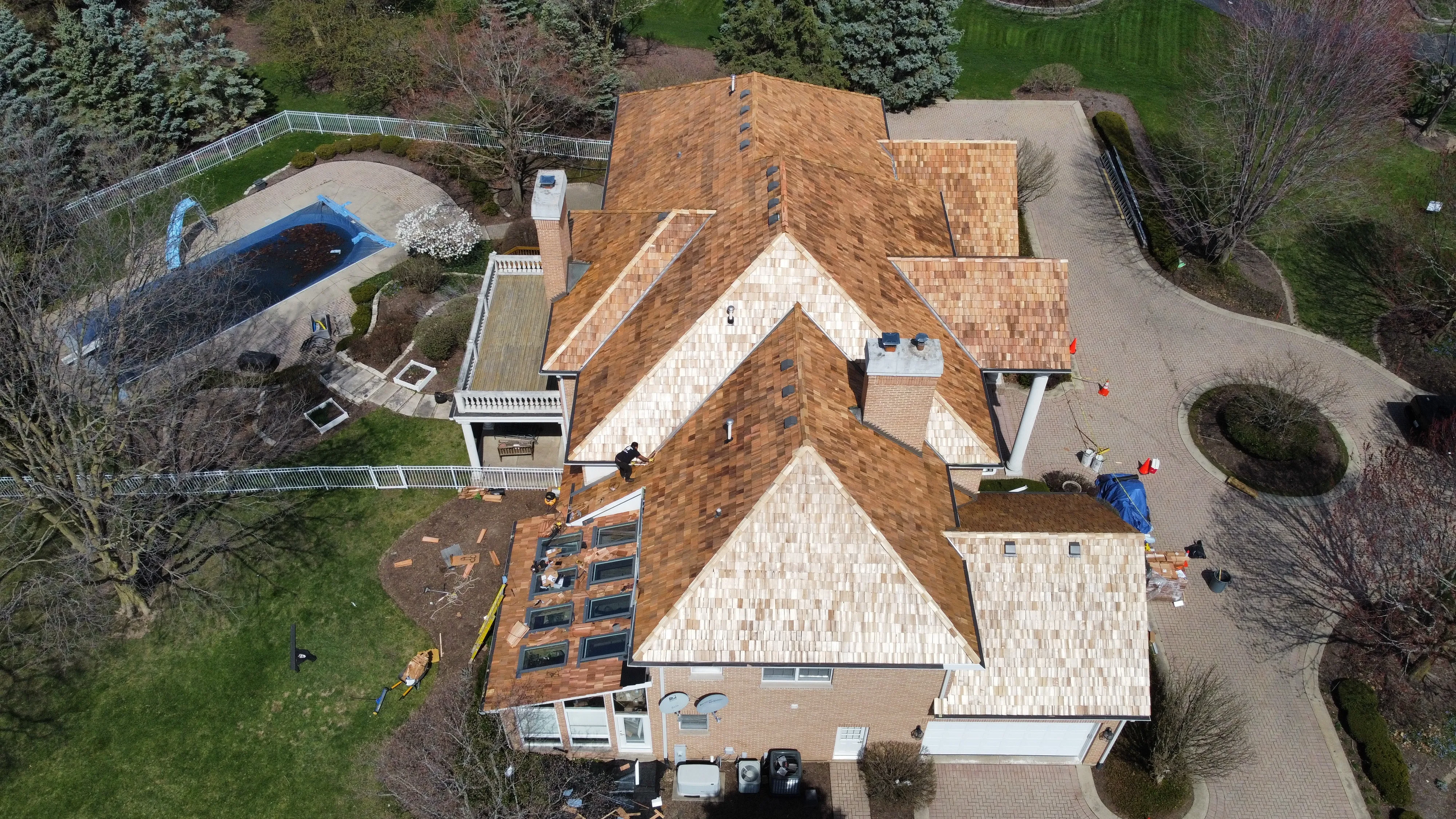
Day two is all shingling. Starter strips go along the eaves and rakes, then the field shingles are laid from the bottom up. Ridge cap, pipe boots, step flashing, and drip edge get installed. A crew that started shingling on day one might finish by early afternoon on day two. The final hours are cleanup: magnetic nail sweeps across the yard and driveway, debris removal, and a ground-level walkthrough with the homeowner.
Free Storm Damage Inspection
Haag-certified inspectors. Full photo documentation. Adjuster meeting and supplements for documented misses.
Get My Free InspectionOr call (708) 847-5095
The Full Project Timeline
The on-site work is actually the fastest part of the process. The weeks before and after are where the real timeline lives.
Week one typically involves the initial inspection. A Haag-certified inspector examines the roof, documents the damage, and provides a report. This report is the foundation of your insurance claim. For storm damage jobs, the homeowner files the claim with our report, and we meet the adjuster at the inspection.
Weeks two through three are the insurance window. Your carrier assigns an adjuster, who schedules their own inspection. Adjuster availability varies wildly. After a quiet month, you might get one in 3 to 5 days. After a major hail event that hit all of DuPage County, the wait can stretch to 2 to 3 weeks because every adjuster in the region is booked solid.
Once the adjuster's report is filed and the scope is agreed upon, materials get ordered and a crew date is set. We operate over a dozen roofing crews and get people onto your roof as soon as insurance starts paying your job. Material lead times for standard architectural shingles like GAF Timberline HDZ are usually just a few days since distributors stock them locally. Specialty materials, certain colors, or synthetic slate can take 1 to 2 weeks. For a detailed breakdown of material and labor pricing, see our Illinois roof replacement cost guide.
Ready to Get Your Roof Replaced?
We handle the entire timeline from inspection to cleanup, including the adjuster meeting. Most projects are completed within 3 to 4 weeks of your first call.
Get My Free InspectionOr call (708) 847-5095
What Causes Delays
Weather is the number one delay in the Chicago market. You can't tear off a roof or install shingles in rain, and work stops when sustained winds exceed 25 mph or lightning is within 10 miles. Chicagoland's storm season runs April through September, which is also prime roofing season. Afternoon thunderstorms can push a one-day job into two without warning.
Insurance disputes are the second most common delay. If the adjuster's scope doesn't match your contractor's assessment, a supplement needs to be filed and negotiated. This back-and-forth can add 1 to 3 weeks. It's frustrating, but getting the scope right means your roof gets done properly instead of cutting corners to fit an underfunded approval.
Decking surprises add time on the day of installation. When the old shingles come off and the crew finds more rotted or damaged decking than expected, the replacement work adds hours. On a badly deteriorated roof, re-decking can turn a one-day install into a two-day job. This is one of the few things that can't be fully assessed until the tear-off is underway.
Chicago Seasonal Considerations
The optimal roofing window in the Chicagoland area runs from late April through mid-October. Shingle adhesive strips need sustained temperatures above 40 degrees Fahrenheit to activate and form a proper bond. Summer heat actually helps because the sun's warmth seals the shingles to each other after installation.
Winter replacements are possible for emergency situations, but they carry trade-offs. Hand-sealing each shingle tab with roofing cement adds labor time and cost. The cold makes shingles brittle and more prone to cracking during installation. And snow on the ground complicates the tear-off process significantly.
The busiest scheduling period is typically June through August, when summer storms create a surge in demand. If your roof was damaged in a spring hailstorm, getting into the queue early in the season means shorter wait times and more flexibility on crew dates. Waiting until midsummer often means competing with everyone else who had the same storm damage.
How to Keep Your Project on Track
The fastest path from storm damage to a finished roof starts with a prompt inspection. Get a Haag-certified inspector out within days of the storm, file the claim immediately, and be responsive when the adjuster calls to schedule. Every day of delay at the front end pushes the whole timeline back.
Choose a contractor who documents the damage and meets your adjuster at the inspection. Chasing your adjuster, arguing scope, and writing supplements on your own adds weeks of delay because you're learning the process in real time. A contractor who does this daily knows the carrier's process, speaks their language, and can resolve scope questions in a fraction of the time.
Be flexible on crew dates if you can. The fastest timeline goes to homeowners who can accommodate whatever date opens up first. If you need a specific day of the week, it may add a few extra days to the schedule. For details on what the experience is like at home, see our guide on staying in your house during a replacement.