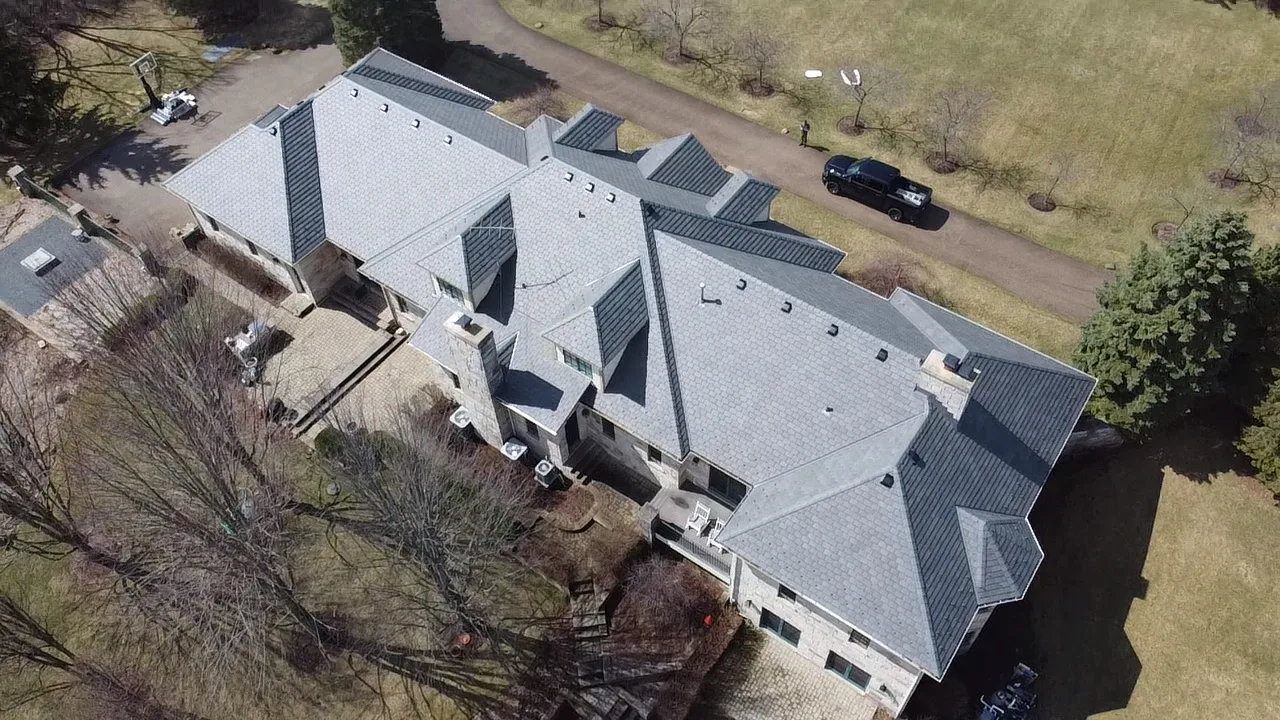





Most homeowners can absolutely stay in their house during a roof replacement. If you're still weighing what a new roof costs in Illinois, we've published a full pricing breakdown. The work happens on the exterior, your walls and structure stay intact, and basic utilities keep running. That said, it's not a quiet or comfortable day at home. Knowing what to expect makes the difference between a stressful experience and one you shrug off.
What It's Actually Like Inside
The dominant feature of roof replacement day is noise. It starts early, typically around 7:00 AM, and it's loud in a way that's hard to fully prepare for. The tear-off phase sounds like sustained hammering directly above your head because that's essentially what it is. Pry bars scraping under old shingles, bundles of debris sliding down the roof into the dumpster, nail guns firing in rapid succession. If you work from home, plan to do it somewhere else that day.
Vibration comes with the noise. You'll feel it in the ceiling, the walls, and sometimes the floor. Picture frames can shift. Items on shelves can walk toward the edge. Hanging light fixtures may sway. The vibration is most intense during tear-off and subsides during the shingling phase, which uses nail guns rather than pry bars.
Dust is the third factor. Old shingle granules, wood particles from decking, and general construction dust will settle in your attic space. Some of it may filter through recessed light fixtures or ceiling penetrations into your living space, especially in older homes without a good air barrier between the attic and the rooms below. Running your HVAC fan can help filter airborne dust, though your furnace filter will need replacing afterward.
Preparing Your Home Before the Crew Arrives
A little preparation the night before saves headaches during the work. Start with the attic. If you store anything up there, cover it with plastic sheeting or old bed sheets. Debris from the tear-off falls between decking gaps, and dust settles on everything. Christmas decorations, stored clothes, and boxes of documents all deserve protection.
Walk through your upper-floor rooms and take down wall hangings, especially anything heavy or fragile. Mirrors, framed artwork, and mounted shelves on upper-floor walls are the most vulnerable to vibration. Loose items on bathroom shelves and medicine cabinets can also shift and fall. It takes 15 minutes and prevents broken glass.
Move all vehicles off the driveway and park them at least 15 to 20 feet from the house. The dumpster needs driveway space, and debris falls around the perimeter during tear-off. Even with tarps and careful work practices, keeping vehicles clear protects them from stray nails, shingle fragments, and the occasional tool.
Secure your outdoor furniture, grills, and decorations. The crew will lay protective tarps around the foundation, but they work best on clear ground. Moving patio furniture, potted plants, and grill covers out of the work zone before the crew arrives helps them protect your landscaping more effectively.
Free Storm Damage Inspection
Haag-certified inspectors. Full photo documentation. Adjuster meeting and supplements for documented misses.
Get My Free InspectionOr call (708) 847-5095
Day by Day: What to Expect
On a typical one to two day replacement, here's how it unfolds.
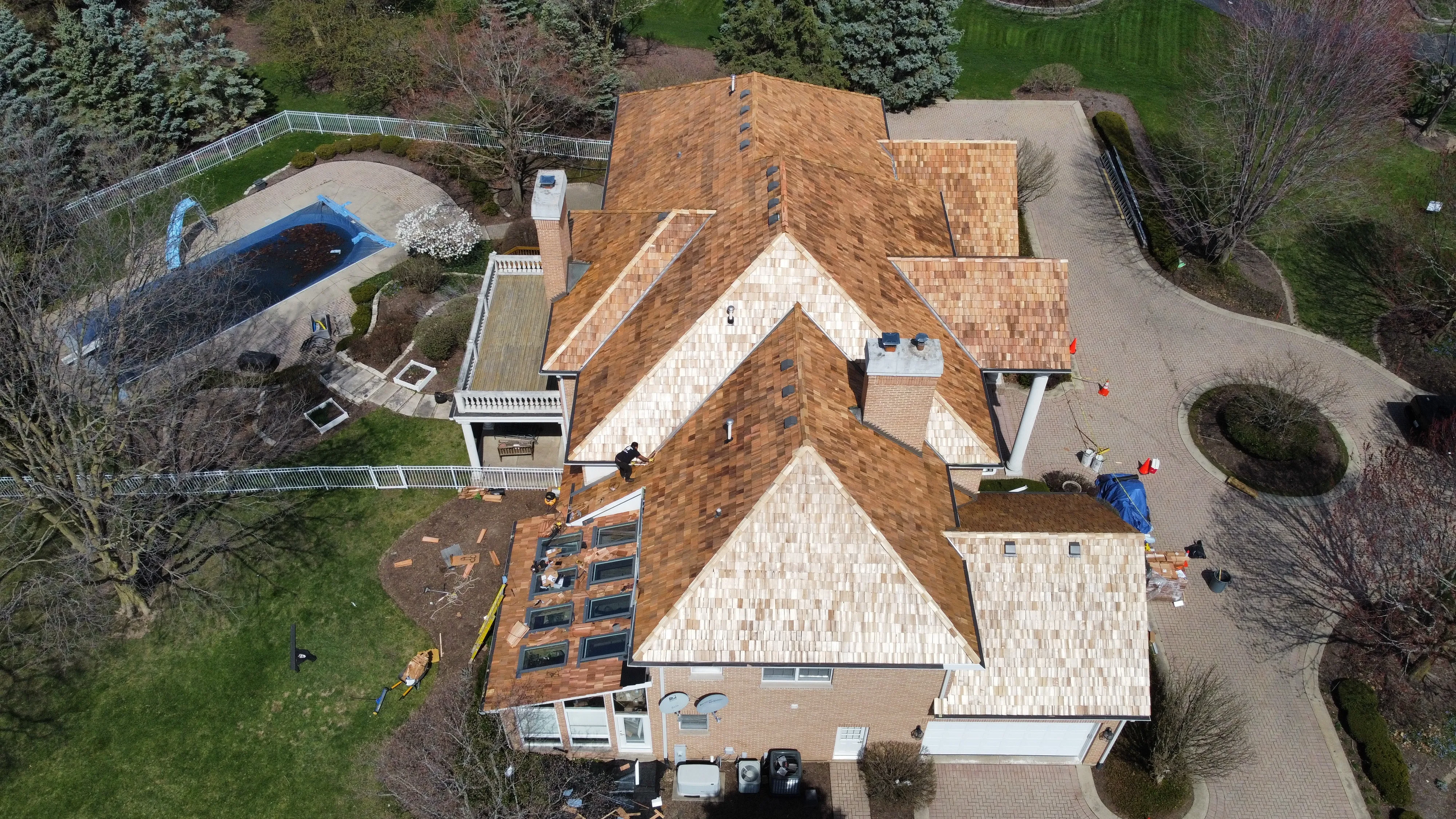
The morning of day one is all setup and tear-off. The crew positions the dumpster, lays tarps, sets up ladders and safety equipment, and starts stripping the old roof. This is the loudest, dustiest, most disruptive phase. By midday, much of the old material is off and the crew is inspecting decking and beginning underlayment installation. The afternoon quiets down somewhat as underlayment and ice-and-water shield go on, though nail guns are still in steady use.
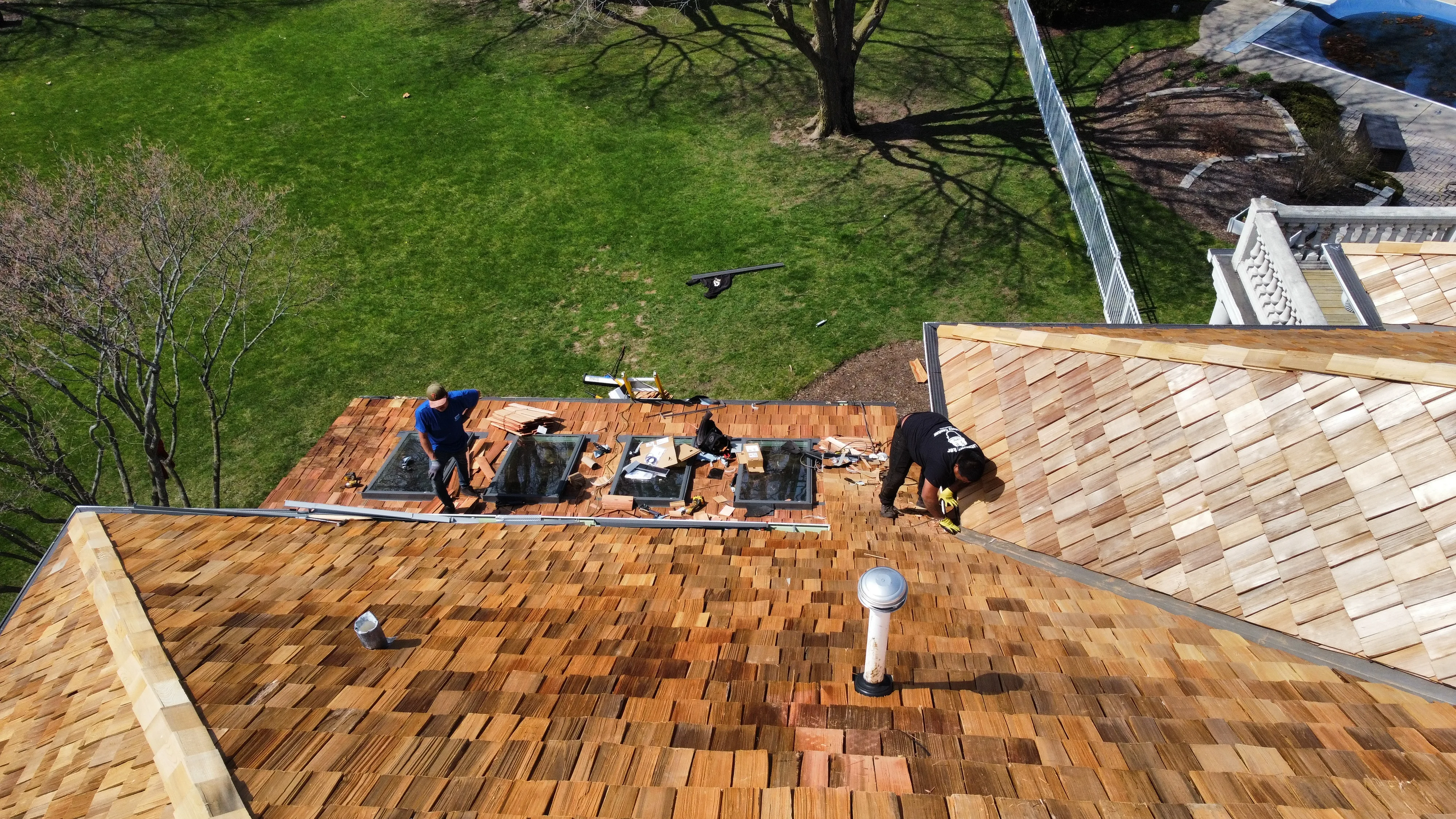
Day two (if needed) is primarily shingling. It's still noisy, but the sustained banging of tear-off is replaced by the rhythmic pop of nail guns, which most people find more tolerable. The afternoon of the final day includes ridge cap installation, flashing work, cleanup, and the magnetic nail sweep across the yard, driveway, and sidewalks. The crew does a final walkthrough with you at the end.
Getting a New Roof Soon?
We walk every homeowner through exactly what to expect before our crew shows up. No surprises on installation day.
Get My Free InspectionOr call (708) 847-5095
Practical Tips for Surviving the Day
If you have dogs, make arrangements for them to be elsewhere. The noise and vibration stress most dogs significantly, and the constant activity around the house keeps them barking all day. A friend's house, doggy daycare, or even a long outing to a park across town is far better for them than eight hours of construction overhead. Cats typically hide and manage better, but keep them indoors and away from any doors the crew might use.
Small children present similar challenges. If you have an infant or toddler, nap time is not happening during a tear-off. Plan to be out of the house with young kids, at least for the morning hours when the noise peaks. School-age kids who are home during summer break will probably think the whole thing is fascinating, but keep them well away from the work zone where nails and debris are actively falling.
Your HVAC system will work throughout the process, but the crew may temporarily seal or remove roof vents during the transition. This can affect airflow briefly. On a hot summer day in Chicagoland, the upper floor may get warmer than usual while vents are being relocated or re-flashed. It's temporary and resolves once the new vents are installed.
When You Can't Stay Home
There are a few scenarios where staying isn't practical or safe. If the inspection reveals extensive decking damage that requires replacing large sections, the crew may need to remove enough sheathing that the ceiling below is temporarily exposed to the elements. This is uncommon on a standard storm damage replacement but can happen on severely neglected roofs.
Mold discovery during tear-off is another scenario. If the old roof was leaking for an extended period and mold has spread into the attic framing, remediation may need to happen before the new roof goes on. Mold remediation in an occupied home requires sealing off the affected area and running negative-pressure equipment, which is a larger disruption than the roofing itself.
Full structural re-decking is the third. If the entire roof deck needs replacement rather than spot repairs, the home is essentially open to the sky in stages during the process. This is rare on homes built after 1960 but happens occasionally on older Chicagoland homes with original skip-sheathing that has deteriorated beyond repair.
After the Crew Leaves
Once the job is complete and the crew has done their cleanup, do your own walkthrough of the yard and driveway with a magnet. Even after a thorough magnetic sweep, an occasional nail hides in grass or mulch. A cheap magnetic sweeper from the hardware store is worth the $20 investment to protect your tires and your kids' feet.
Check your attic space within a day or two of completion. Look for any debris that fell through gaps, confirm the ventilation is working (you should feel air movement near soffit vents and ridge vent), and verify that no daylight is visible through the roof deck. If everything looks clean and sealed, you're good. Your new roof is ready for whatever Chicagoland's next storm season throws at it. For tips on keeping it that way, see how to prepare your roof for spring storms.