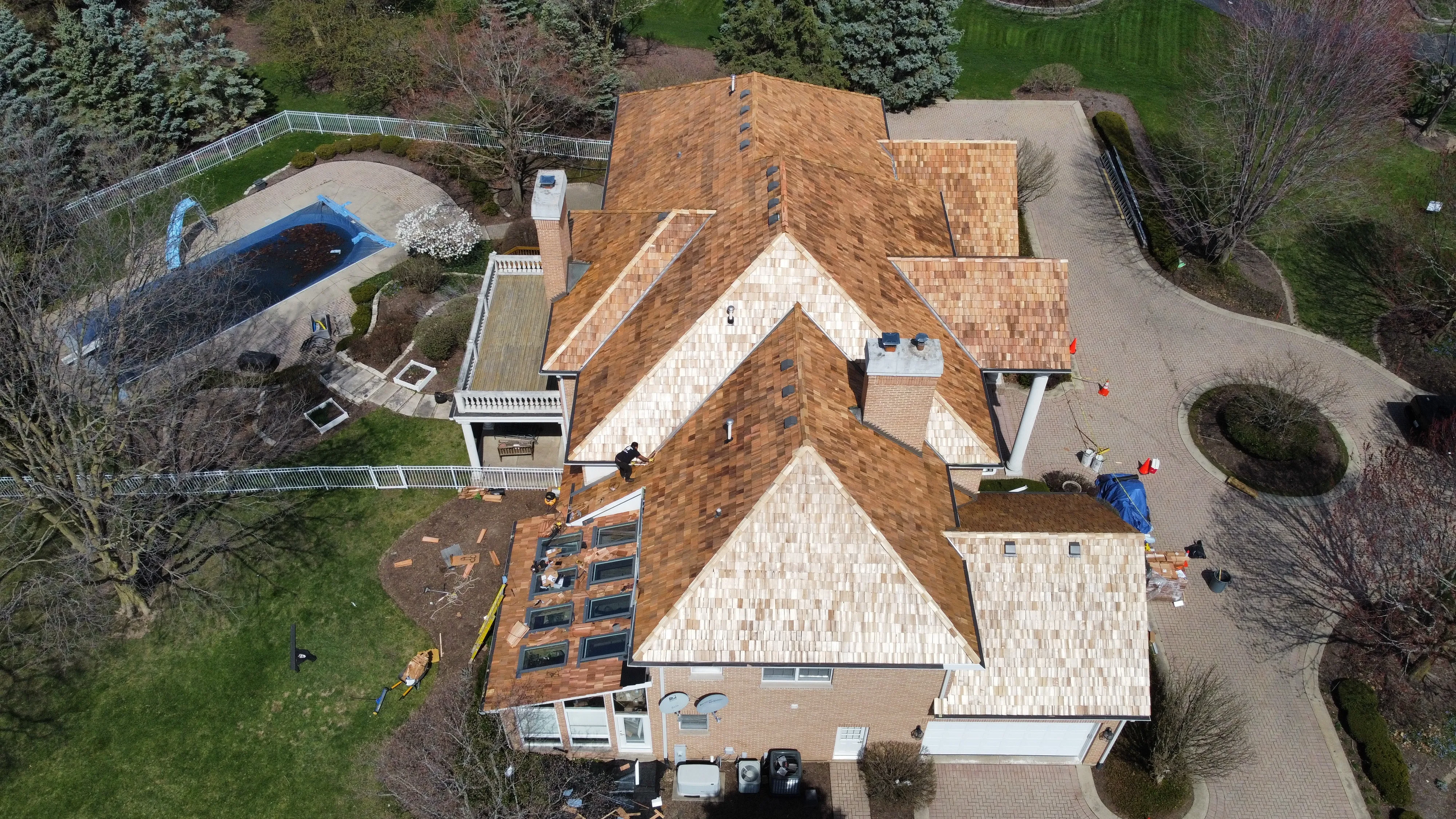






Illinois severe storm season runs from April through September, but the worst hail and wind events tend to cluster in May and June. If you're reading this in early spring, you've got a narrow window to find and fix roof vulnerabilities before the first major cell rolls through.
The March 10, 2026 hail is a reminder of what can happen. NOAA Storm Events lists 4.8 inch hail at Darien in DuPage County, among 17 reports across Cook, DeKalb, DuPage, Kane, Kendall and Will Counties, with Naperville, Downers Grove, Woodridge and Lisle among the places named (NOAA event record). Here's how to make sure your roof is as ready as it can be.
Start With What Winter Left Behind
Chicago winters are hard on roofs. Freeze-thaw cycles work moisture into every small gap. Ice dams form at the eaves and push water under the shingle edge. Snow load stresses the decking. By March, your roof has endured four to five months of conditions that loosen fasteners, crack sealant, and degrade flashing joints.
Before winter, run through our pre-winter roof checklist.
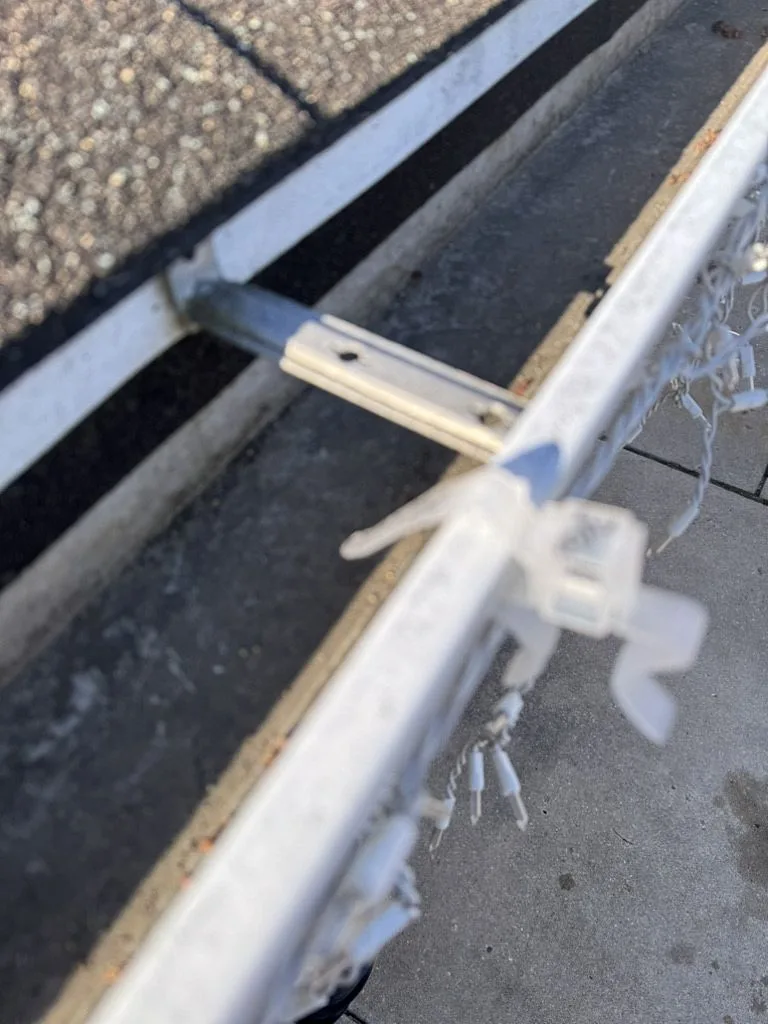
Walk your property and look up. From the ground with binoculars, you can spot missing shingles, curling edges, exposed flashing, and sagging sections. Check your gutters for heavy granule deposits, which signal that your shingles are shedding protective material faster than normal. Our guide on granules in your gutters explains what's normal and what's a warning sign. A handful of granules is typical on an aging roof. A gutter full of them means the shingles are deteriorating and won't hold up well in a hailstorm.
Look at the ridgeline from both sides of the house. Ridge cap shingles take a beating from winter wind, and a missing or cracked ridge cap is an open path for water. If you can see daylight through the ridge from your attic, that's a problem that needs fixing before April.
Clean Your Gutters and Downspouts
Clogged gutters are one of the most common causes of preventable roof damage during spring storms. When gutters can't drain, water backs up under the roof edge and saturates the fascia board, the soffit, and eventually the decking. During a heavy downpour, a single clogged section of gutter can send water cascading behind the gutter into the wall cavity.
Clear out all debris from the winter months: leaves, twigs, shingle granules, and anything else that's accumulated. Run water through each downspout to confirm it drains freely. Check that downspout extensions direct water at least 4 feet away from the foundation. Pooling water at the foundation during a spring thunderstorm creates basement flooding on top of any roof issues.
Free Storm Damage Inspection
Haag-certified inspectors. Full photo documentation. Adjuster meeting and supplements for documented misses.
Get My Free InspectionOr call (708) 847-5095
Trim Overhanging Branches
Trees that overhang your roof are a triple threat during storm season. Branches scraping the shingle surface strip granules with every gust. Fallen leaves and seed pods clog valleys and gutters. In a severe storm, branches become projectiles that can puncture decking and tear off entire shingle sections.
Any branch within 6 feet of your roof surface should be trimmed back. Pay particular attention to large limbs that extend directly over the roof. A 4-inch diameter oak branch falling from 30 feet hits with enough force to crack the decking and sheathing underneath, turning a wind event into a structural repair.
If you have mature trees close to the house, have an arborist assess them before storm season. Dead or dying branches that are still attached ("widow makers" in the tree industry) are the most dangerous because they'll drop in far less wind than a healthy limb.

Check Your Attic Ventilation
Proper attic ventilation protects your roof from the inside. In summer, an unventilated attic can reach 150 degrees, which bakes the underside of the decking and accelerates shingle deterioration from below. In winter, inadequate ventilation traps moisture that causes mold growth on the decking and rusts roofing nails from underneath.
Your attic should have both intake vents (usually soffit vents at the eaves) and exhaust vents (ridge vent, turbine vents, or powered attic fans near the peak). Check that soffit vents aren't blocked by insulation. A common issue in older Chicagoland homes is blown-in attic insulation that's migrated over the soffit vents, cutting off intake airflow entirely.
Good ventilation also reduces the risk of ice dams the following winter, so fixing this now pays dividends in both directions.
Inspect Previous Repairs
If your roof has had repairs in the past, especially patch jobs after previous storms, those areas need extra scrutiny. Repaired sections sometimes fail first because the patch material doesn't bond as well as the original installation, or because the underlying damage was more extensive than the repair addressed.
Look for lifting edges around repaired areas, cracking caulk or sealant around flashing patches, and discoloration that might indicate moisture trapped beneath the repair. If a previous contractor used mismatched shingles, the different material may weather at a different rate than the surrounding roof, creating a weak point.
Not Sure What You're Looking At?
Our Haag-certified inspectors will assess your roof's storm readiness, identify weak points, and recommend fixes before the season hits. The inspection is free.
Get My Free InspectionOr call (708) 847-5095
Consider Impact-Resistant Shingles
If your roof is due for replacement or you're filing an insurance claim for storm damage, upgrading to Class 4 impact-resistant shingles is worth serious consideration. These shingles are rated under UL 2218, which tests them by dropping a 2-inch steel ball from 20 feet. To earn a Class 4 rating, the shingle can't crack or split from the impact.
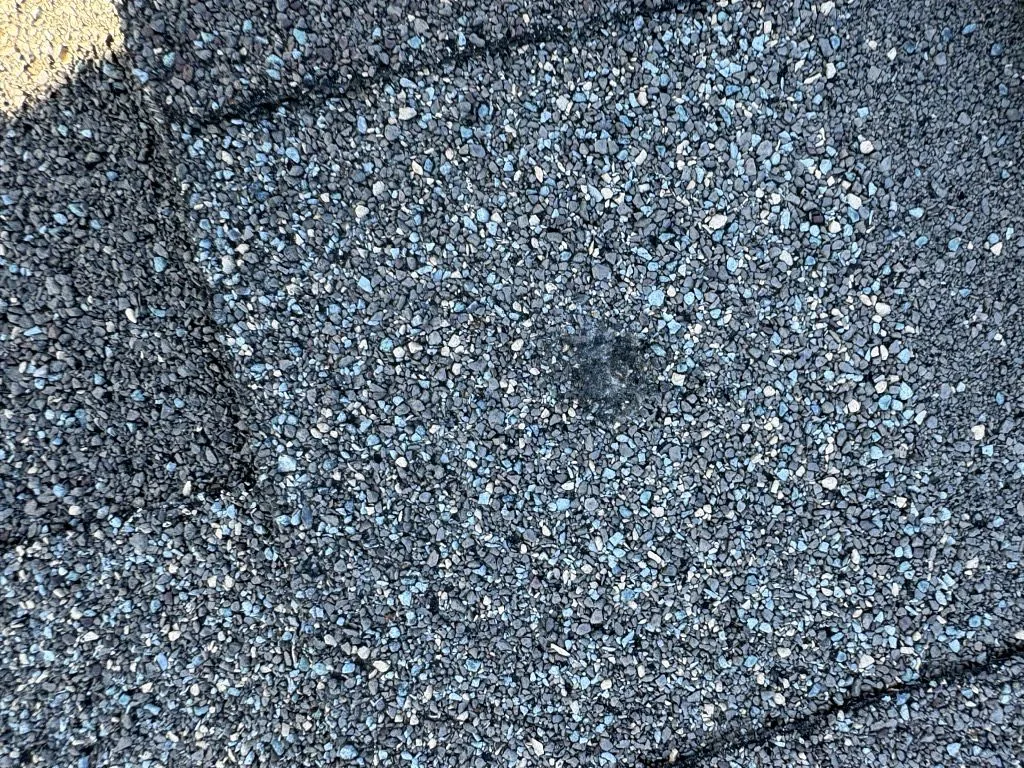
Our guide on what hail damage looks like shows the kind of cracking the test looks for. Timberline HDZ is our standard architectural shingle, and the impact-rated option is GAF Timberline UHDZ with UltraMat, which GAF rates UL 2218 Class 4 when sold in the marked packages (GAF, checked October 2026). No shingle is hail-proof, and GAF's own warranty does not cover hail damage.
Illinois insurance carriers reward the upgrade. Some insurers offer a premium discount for a UL 2218 Class 4 roof, and the amount varies by carrier and policy, so ask your agent before you choose. The discount and its terms vary by carrier and policy. Class 4 lines include Owens Corning Duration FLEX, CertainTeed NorthGate, and GAF Timberline UHDZ with UltraMat.
Get Your Insurance File in Order
Storm preparation isn't just about the roof itself. When a severe storm hits, the homeowners who file successful insurance claims are the ones who had their documentation ready before the storm, not the ones scrambling to find their policy number while water's coming through the ceiling.
Find your homeowner's insurance declarations page and confirm your coverage limits, deductible amount, and any exclusions related to roof age or material type. Some carriers in Illinois have moved to actual cash value (ACV) coverage on roofs older than a certain age, which means they'll depreciate the payout based on the roof's remaining life. Your policy sets its own terms; read them before you need to use it.
Save your insurance agent's direct phone number in your phone. Save your roofing contractor's number too. After a major storm event, wait times for both can stretch to hours. Having the numbers ready and knowing exactly who to call saves critical time.
Take "Before" Photos Now
This is one of the simplest and most valuable things you can do. Walk around your house and photograph every side of the roof from ground level. Get shots of the gutters, the siding, the ridge line, and any soft metals (AC condenser, mailbox, metal fencing). Store these photos in cloud storage with the date in the file name.
If a storm damages your property, before-and-after photo comparisons make your insurance claim dramatically stronger. Your adjuster can see exactly what changed. Without "before" photos, the carrier can argue that the damage was pre-existing. With them, they can't.
Schedule a Professional Inspection
A ground-level self-assessment catches the obvious problems, but the real vulnerabilities are on the roof surface where you can't see them. Sealant adhesion, mat integrity, flashing condition at wall junctions, and the state of your pipe boots all require a hands-on inspection.
Schedule your professional inspection in March or early April, before storm season demand makes every roofing contractor in the western suburbs booked out for weeks. A 45-minute inspection now can identify the $300 repair that prevents a $15,000 claim in June.
If the inspection finds issues, you'll have time to address them before the weather turns. If a storm hits before you get repairs done, see our guide on what to do after a storm hits your roof for the right response sequence. If it finds your roof in good shape, you'll have peace of mind and documentation of your roof's pre-storm condition that strengthens any future claim.