






After a Chicagoland hailstorm or severe thunderstorm, your first instinct might be to climb up and check the roof. Don't. Damaged decking, wet surfaces, and loose debris make post-storm roofs dangerous for anyone without fall protection training. The good news is that your property gives you plenty of clues from ground level. If you know where to look, a walk around your yard can tell you whether you need a professional on the roof.
Start with Your Gutters and Downspouts
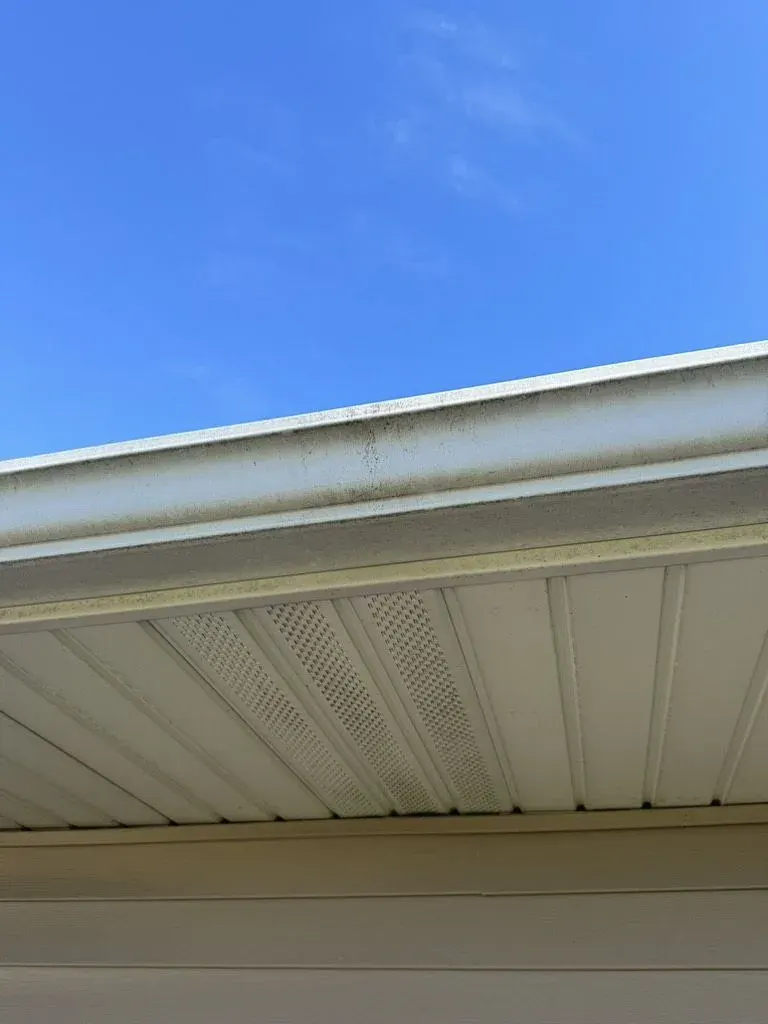
Your gutters are the easiest place to spot hail damage because they're at eye level (or close to it) and hail hits them at a direct angle. Walk the perimeter of your house and look at the horizontal gutter runs. Hail dents show up as round, concave dings in the metal. Multiple dents across a single gutter section confirm that the storm dropped hailstones large enough to deform aluminum, which means they were large enough to damage your shingles too.
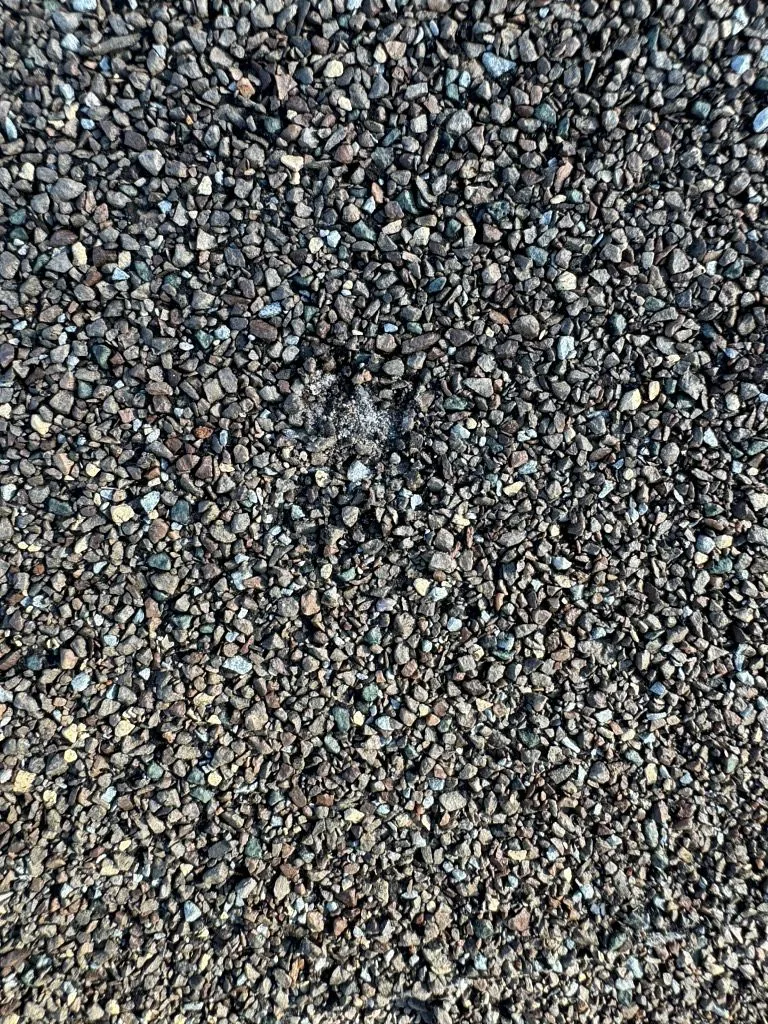
Check downspouts for the same denting pattern. Then look at the ground where your downspouts discharge. After a hailstorm, you'll often find piles of dark, gritty material that looks like coarse sand. That's the granule coating from your shingles, knocked loose by hail impacts and washed down through the gutter system. A heavy granule deposit at downspout exits after a storm is one of the strongest ground-level indicators of roof damage.
Check the Soft Metals
Soft metals around your property are excellent hail indicators because they dent at lower impact thresholds than your shingles. Check these targets:
Your AC condenser unit sits outside and takes the full force of any hailstorm. Look at the top panel and the aluminum fin coils on the sides. Dents on the top panel confirm the size and intensity of the hail. Bent fins on the side coils confirm the direction the storm was traveling.
Metal vent covers, chimney caps, and exhaust hoods on your roof are visible from the ground with binoculars. Dents in these fixtures confirm hail struck the roof surface directly. Since these metals are softer than shingle granules, they dent from smaller stones, which means damage to these items is often accompanied by damage to the shingles nearby.
Your mailbox, metal fence posts, outdoor light fixtures, and even your car can tell the same story. Any exterior metal surface that was exposed during the storm is a data point. The more soft-metal damage you see, the more certain you can be that the roof was hit.
Free Storm Damage Inspection
Haag-certified inspectors. Full photo documentation. Adjuster meeting and supplements for documented misses.
Get My Free InspectionOr call (708) 847-5095
Look at Your Siding
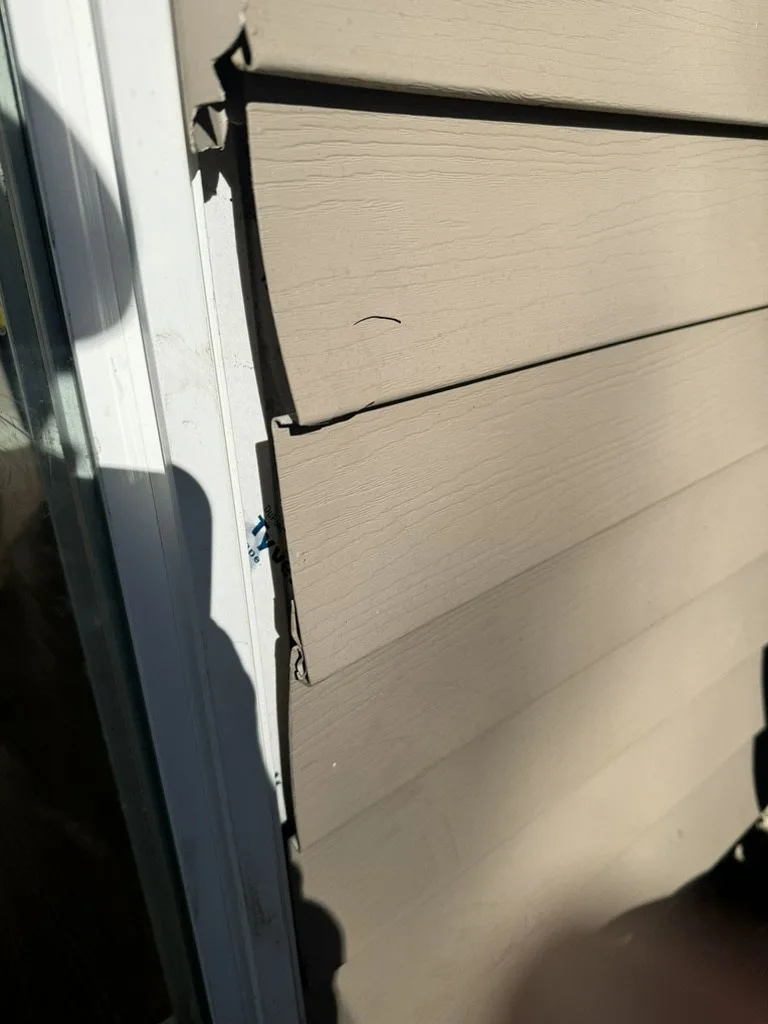
Vinyl and aluminum siding both show hail damage that's easy to spot from the ground. On vinyl siding, hail creates circular cracks or fractures, sometimes with a small hole at the center of the impact. On aluminum siding, you'll see round dents similar to gutter damage. These marks are typically concentrated on the side of the house that faced the storm.
Siding damage is significant for two reasons. First, it confirms hail was large enough to damage building materials, not just plant foliage. Second, siding damage is part of the overall damage record, so documenting it alongside the roof gives the adjuster a fuller picture. Your policy sets its own terms; check your declarations page.
Seeing Dents and Damage Around Your Property?
If the ground-level evidence points to hail, your roof may have taken hits. Schedule a free Haag-certified inspection and we'll document everything.
Get My Free InspectionOr call (708) 847-5095
The Binocular Inspection
A pair of binoculars turns a ground-level walkthrough into a surprisingly detailed roof assessment. Stand across the street or at the far end of your driveway so you can see the roof surface at a low angle. The best time for this is early morning or late afternoon, when the low sun creates shadows that highlight surface irregularities.
Scan for these specific issues:
Missing shingles show up as dark rectangular gaps in the roof pattern. These are obvious even without binoculars on most roofs. A missing shingle means the underlayment and possibly the decking are exposed to the next rain.
Lifted or folded shingles appear as edges standing up from the surface, catching light differently than the flat shingles around them. This is a hallmark of wind damage on your roof. Wind lifts shingles from their leading edge, breaking the seal strip that holds them down. Once the seal is broken, the shingle is vulnerable to further wind lift and rain infiltration.
Dark, blotchy patches on the shingle surface indicate areas where granules are missing and the darker asphalt mat is exposed. A few dark spots can be normal wear. Widespread dark patches across a roof face, especially on the storm-facing side, indicate hail damage to your shingles.
Ridge cap damage is visible from the ground as irregular or shifted caps along the peak of the roof. Ridge caps are particularly vulnerable to both hail and wind because they sit at the highest point and catch the most exposure.
Check What Your Neighbors Are Doing
After a major storm in Chicagoland, look at your neighbors' roofs. If you see roofing crews working on houses within a few blocks of yours, those homeowners may have had storm damage. Hail doesn't always skip houses. If the homes on either side of you have confirmed damage, yours may too.
The March 10, 2026 hail is an example. NOAA Storm Events lists 4.8 inch hail at Darien in DuPage County, among 17 reports across Cook, DeKalb, DuPage, Kane, Kendall and Will Counties, with Downers Grove, Woodridge and Naperville among the places named (NOAA event record). If hail was reported near you and you haven't had an inspection, an inspection can show whether your roof was affected.
Window Screens and Deck Staining
Two often-overlooked indicators: window screens and painted deck surfaces. Hail punches small holes or creates stretched dimples in window screen mesh. Pull a screen out and hold it up to the light. Any dents or punctures confirm hail struck the house.
Painted or stained horizontal surfaces like deck boards, porch rails, and outdoor furniture show spatter marks where hail hit and chipped the finish. These marks are circular and concentrated, distinct from general wear patterns. They confirm hail hit your property with enough force to chip paint, which means it hit your shingles with the same force.
When Ground Signs Mean You Need a Pro on the Roof
If your ground-level walkthrough turns up even two or three of the indicators above, you have enough evidence to justify a professional roof inspection. Dented gutters plus granule piles at downspouts is a strong combination. Add cracked siding or dented AC condenser housing, and it's nearly certain the shingles are damaged.
Here's what matters: most hail damage to shingles is invisible from the ground. The granule displacement, mat bruising, and hairline fractures that a Haag-certified inspector identifies at roof level can't be seen with binoculars. Ground-level indicators tell you the storm was severe enough to cause damage. The roof-level inspection tells you exactly how much damage there is and whether it warrants an insurance claim.
Your policy sets its own deadline to report a loss, and it can be short, so check your declarations page. Getting an inspection sooner gives you better documentation and the ability to schedule repairs before secondary damage sets in. If a leak has already appeared, see what to do after a storm hits your roof for the full response playbook.