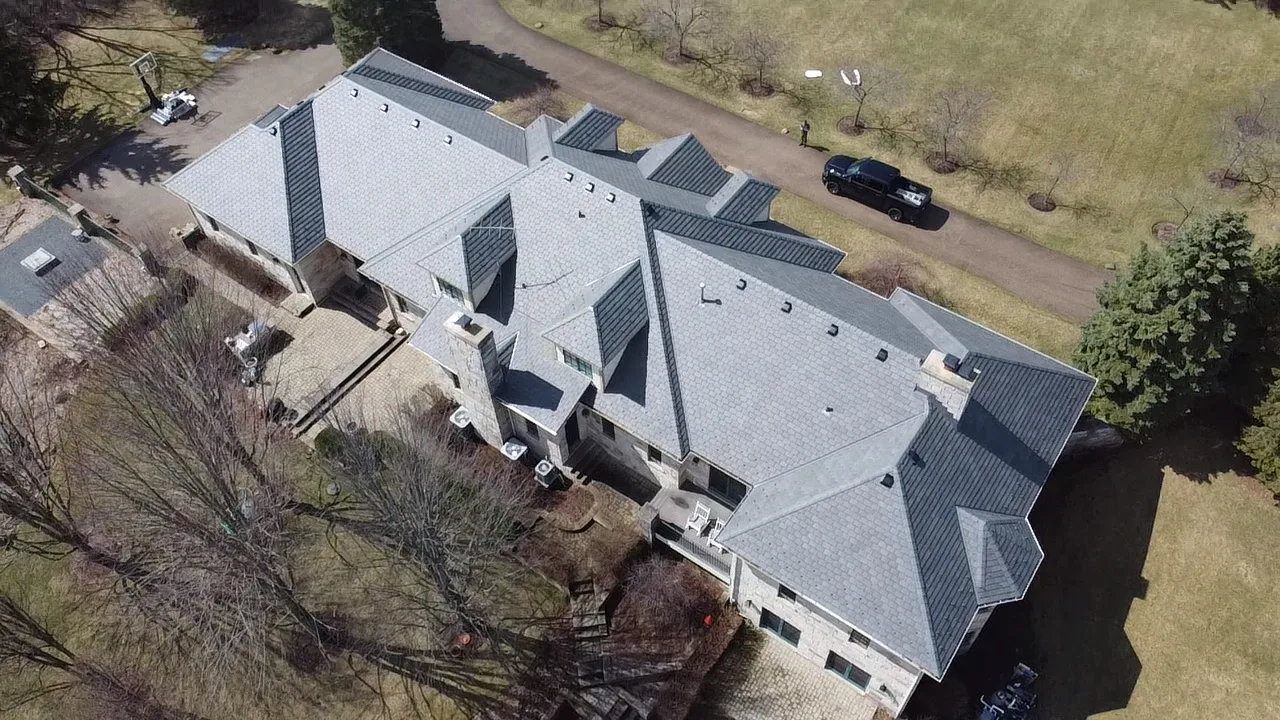





Wind doesn't hit a roof evenly. It accelerates over ridges, creates suction on leeward slopes, and tears hardest at edges and corners. That's why wind damage shows up in predictable patterns, and knowing those patterns helps you figure out whether your roof needs attention after a storm.
Chicagoland gets severe thunderstorms with straight-line winds of 60 to 80 mph multiple times each summer. Tornadoes grab headlines, but ordinary thunderstorm winds cause far more cumulative roof damage across the suburbs every year.
Types of Wind Damage on Asphalt Shingles
Lifted tabs are the most common wind damage. The adhesive seal strip that bonds one shingle tab to the one below it fails under wind pressure, and the tab lifts. Once lifted, it stays lifted. The seal strip won't re-bond on its own. A lifted tab is a direct entry point for wind-driven rain.
For the full picture, with local wind events and what the photo check looks for, see wind damage on a roof.
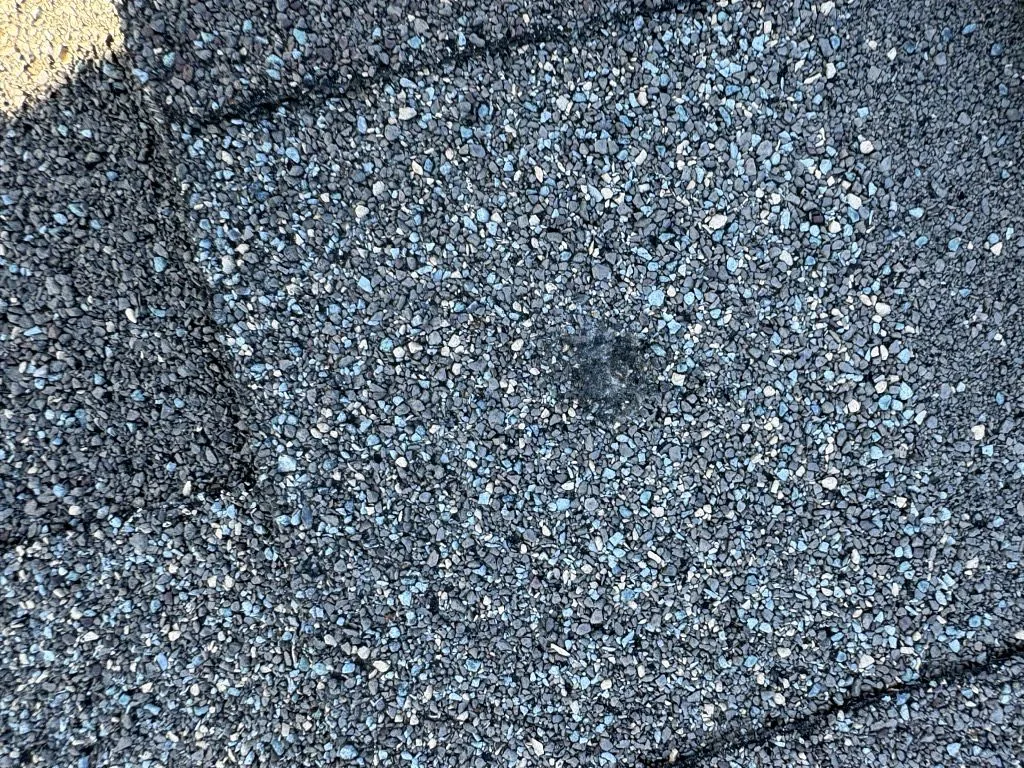
Creased shingles happen when wind lifts a tab far enough to bend it past its flex point. The shingle gets a permanent crease line running across it. Even if the tab settles back down, the crease has cracked the fiberglass mat inside, creating a weak point that will eventually leak. Creased shingles need to be replaced, not just re-sealed.
Missing shingles are the damage most people recognize. When the seal strip fails and the wind keeps pushing, it rips the shingle right off the roof. You'll find them in the yard, the neighbor's yard, or halfway down the street. Missing shingles expose the underlayment or bare decking, and that exposure needs to be covered quickly.
Blown-off ridge caps are common because ridge cap shingles sit at the highest, most wind-exposed point of the roof. They're typically secured with two nails each and a seal strip. Strong winds hit them from both sides simultaneously. When they go, they leave the ridge board and the top edges of the field shingles exposed.
Wind Speed Thresholds
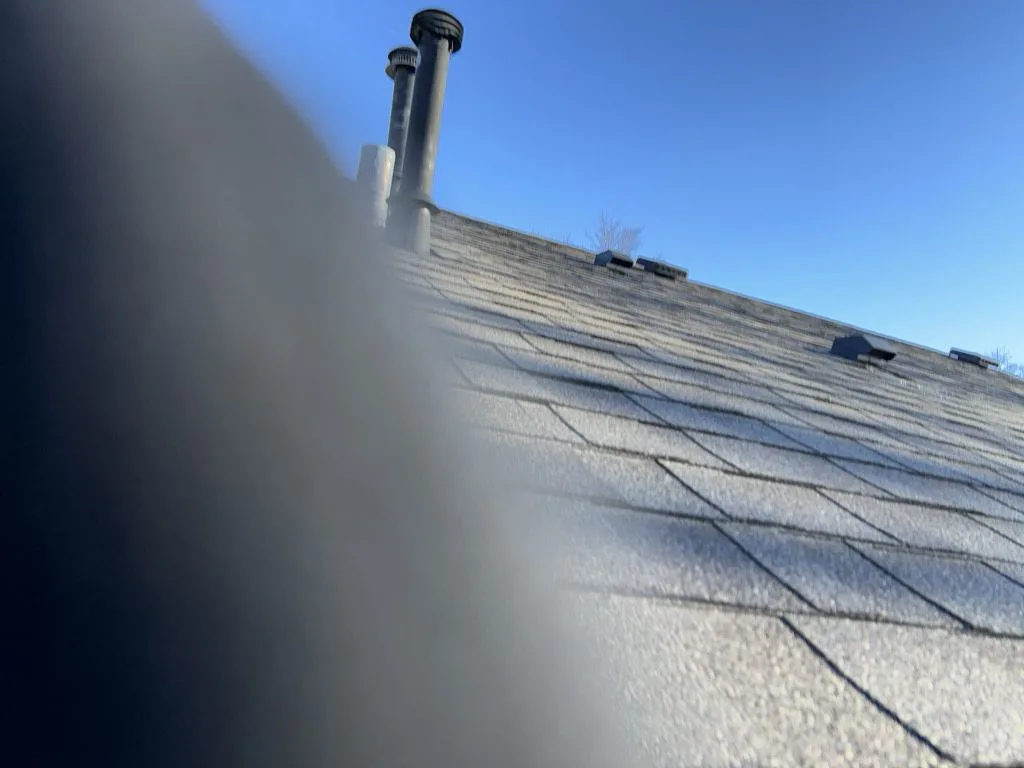
Standard 3-tab shingles are rated for 60 mph winds when properly installed. Architectural (dimensional) shingles generally rate for 110 to 130 mph. Those are manufacturer ratings under ideal conditions, though. In practice, age, improper nailing, and previous storm damage all lower the threshold.
A 15-year-old 3-tab roof with weathered seal strips can start losing shingles at 45 mph. That's a common summer thunderstorm, nothing extraordinary. Roofs on the leeward side of open fields or at the end of long fetch areas (wind has room to build speed) take worse hits than sheltered roofs in dense neighborhoods.
The Beaufort scale gives a practical reference: 39 to 46 mph breaks twigs, 47 to 54 mph causes minor structural damage, and 55 to 63 mph tears off shingles and damages siding. If your area recorded gusts in those ranges, an inspection is warranted.
Free Storm Damage Inspection
Haag-certified inspectors. Full photo documentation. Adjuster meeting and supplements for documented misses.
Get My Free InspectionOr call (708) 847-5095
Directional Damage Patterns
Wind damage is directional. If the storm blew from the southwest (the most common direction for severe thunderstorms in the Chicago area), you'll find the worst damage on the south and west-facing slopes. Ridges and edges facing the wind take the brunt.
Corners of the roof experience the highest wind pressures because air accelerates as it wraps around them. That's why you'll often see the first shingle failures at the corners and along the rake edges. If your inspection shows damage concentrated on one or two slopes while the opposite slopes look fine, that's a classic wind damage pattern.
This directional pattern is actually helpful for insurance claims. It distinguishes wind damage from general aging, which would show uniform deterioration across all slopes. A knowledgeable inspector documents which slopes are damaged and correlates that with recorded wind direction from the storm event.
How Wind Damage Differs from Hail Damage
Wind and hail often arrive in the same storm, but they produce different damage signatures. Hail damage appears as random circular impacts scattered across all roof surfaces. Wind damage follows directional patterns and primarily affects edges, ridges, and windward slopes.
Hail causes bruises, granule loss, and mat fractures at the point of impact. Wind causes mechanical failure of the seal strip and physical lifting, creasing, or removal of the shingle. An inspection after a severe storm often reveals both types, and they're documented separately because insurance adjusters evaluate them differently.
Storm Blow Through Your Area?
We'll inspect your roof for wind and hail damage, document everything with photos, and give you a clear answer on what your insurance should cover. Free inspection, no obligation.
Get My Free InspectionOr call (708) 847-5095
Checking for Wind Damage from the Ground
You can catch some wind damage without climbing a ladder. Walk around your property and look up at the roof edges and ridge line. Missing shingles are usually visible. Flapping tabs catch sunlight at odd angles that make them stand out. Blown-off ridge caps leave a visible gap along the peak.
Check your yard and gutters for shingle debris. If you see heavy granule buildup in your gutters, that's a separate warning sign. Look for nail-shaped holes in any shingles you find on the ground, which tells you they were torn off rather than simply discarded during a previous installation. Check your siding, fencing, and window screens for impact damage that would indicate severe wind speeds.
That said, the damage you can see from the ground is only the obvious stuff. Creased shingles, partially lifted tabs, and compromised seal strips are invisible from below. If you spot any ground-level evidence of high winds, get a professional on the roof. What you see from the ground is always the tip of the iceberg.
Insurance Coverage for Wind Damage in Illinois
Wind damage falls under the dwelling coverage section of standard homeowner insurance policies in Illinois. It's covered just like hail, fire, or any other named peril. You'll pay your deductible, and the policy covers repair or replacement costs up to your coverage limits.
Some newer Illinois policies have introduced percentage-based wind/hail deductibles instead of flat dollar amounts. A 2% deductible on a $300,000 dwelling means you're paying $6,000 out of pocket before coverage kicks in. Check your declarations page so you know what you're working with before you file.
The key to a successful wind damage claim is documentation. Your contractor should provide a detailed inspection report showing the damage pattern, photos of every affected area, and an itemized scope of work. Having your storm restoration contractor present during the adjuster's visit helps ensure nothing gets missed.
If a claim is underpaid or denied, Illinois homeowners have the right to request a re-inspection. You can also work with a public adjuster who represents your interests rather than the insurance company's. These options exist specifically because initial adjustments sometimes undercount damage.
Next Steps After Finding Wind Damage
If you've spotted any of the signs above, the process is straightforward. Get a professional inspection to document the full extent of the damage. Don't call your insurance company until you have that documentation in hand. Our step-by-step insurance claim filing guide covers the process from inspection to payout.
If shingles are missing or underlayment is exposed, ask about emergency tarping to prevent water intrusion while the claim and repair process plays out. A temporary tarp costs far less than repairing water damage to your attic, insulation, and ceilings.
Avoid signing anything with contractors who show up at your door unsolicited after a storm. Legitimate local contractors don't canvas neighborhoods from out-of-state trucks. Check for a permanent business address, Illinois licensing, and manufacturer certifications before you agree to any work.