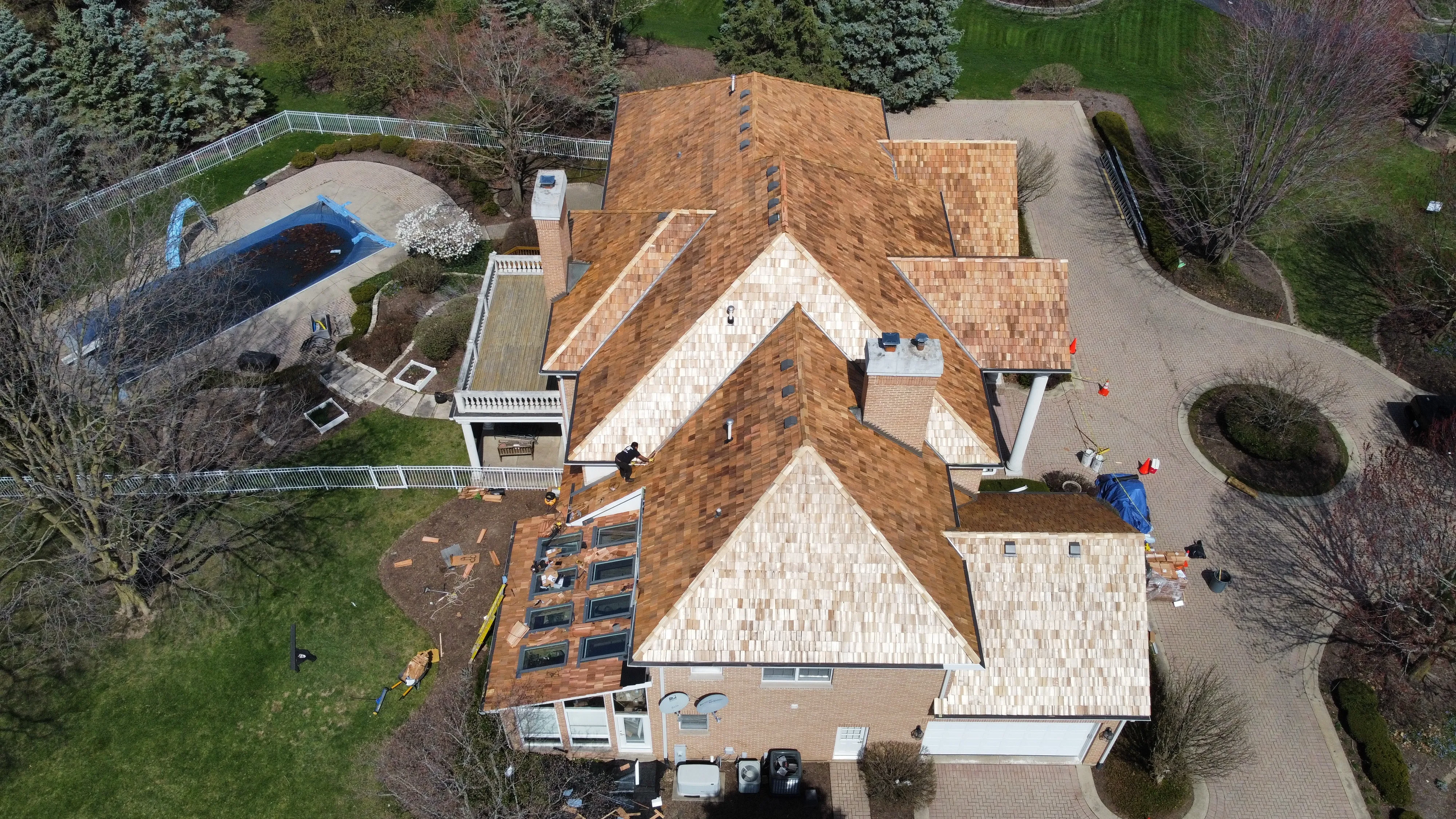






Flood water and wind or hail damage to a roof are separate questions. Your policy sets its own terms for each; check your declarations page. Where the water started decides which one you have.
What the Weather Service Has Out Right Now
The storm record lists flooding reported August 14 and 15 in Cook, Will, DuPage and Kankakee Counties, with Thornton, Calumet City, Naperville, Homewood, Lansing, Tinley Park and Orland Park among the places named. Check the current products at NWS Chicago before you act on anything here.
We're a roofing contractor, so let's be straight about the limits of what we do: if your problem is rising water, we are not the company you need, and your homeowner policy may not be the policy you need either. Check your declarations page.
Why Wind Damage Can Show Up Later
The August 11 derecho had a highest gust of 97 mph at Sugar Grove in Kane County (NWS local storm report). Strong wind can break the seal strips holding shingles down without tearing the shingles off.
A roof in that condition looks completely normal from the ground and stays watertight through ordinary rain. Then a heavy, wind-driven rain can get underneath the unsealed course. If you're seeing roof water for the first time after a storm, the wind event may be the cause. One year after the storm is August 11, 2027, a useful outside marker, but your policy may require notice sooner.
| Roof-Origin Water | Flood Water | |
|---|---|---|
| Where the water starts | Ceilings, attic, top of walls, around vents, chimneys, and skylights | Floor level, basement, window wells, floor drains, doorways |
| What caused it | Wind, hail, or debris damaged the roof, then rain came through the opening | Rainfall overwhelmed drainage, creeks, or sewers, and water rose from outside |
| Policy terms | Your policy sets its own terms; check your declarations page | Your policy sets its own terms; check your declarations page, and ask about a separate flood policy |
| Who handles it | A roofing contractor documents and repairs the damage; the claim runs on your homeowner policy | Water mitigation and restoration, and your flood carrier if you have one. This is not roofing work. |
| What to document | Interior stains with timestamps, attic moisture, the exterior damage in daylight, plus the storm date | Water depth marks, affected belongings, and the timeline of the rise |
Coverage descriptions are general. Your policy language controls, and only your carrier or a licensed public adjuster can interpret it. Both types can occur in the same storm; document them separately.
What to Do Tonight
Safety first, and this isn't boilerplate: stay out of standing water near outlets or electrical panels, and do not climb onto a wet roof for any reason. Roofs kill people in exactly these conditions.
Then document, because tonight's evidence is worth more than anything reconstructed later. Photograph ceiling stains, drips at light fixtures, wet insulation, streaks at the tops of walls, and any water at floor level, all with timestamps. If water is actively coming through the roof, put a container under it and photograph the container. Note the time it started.
If the roof is genuinely open to weather, emergency tarping runs 24 hours. Tarping is a separate decision from choosing who eventually repairs the roof, so don't let anyone bundle the two while you're standing in your hallway at 2 AM.
Get It Documented Once It's Light
Free Haag-certified inspection with photo documentation tied to the storm date. Same-day appointments are available in many suburbs.
Get My Free InspectionOr call (708) 847-5095
What Happens Monday
If the water came from the roof, get the roof documented, file with the photo report attached if you choose to file, and meet the adjuster with your contractor present. Our claims process guide walks the whole sequence, and the claim vs out-of-pocket math tells you whether filing is even worth it.
If the water rose from the ground, your path runs through a water mitigation company and your flood carrier if you have one. We'll tell you that on the phone. And if it turns out to be both, the two get documented separately.
One case worth flagging: basement water that actually starts at the roofline. Gutters clogged or downspouts damaged in a storm can dump water against your foundation instead of carrying it away. The symptom looks like flooding; the cause is roof drainage.
Chicago Storm Pros is a service of C&N Construction, Inc. (cnroofs.com). Reviews, project counts, certifications, and ratings shown here reflect C&N Construction's work.