




Repair when the damage is isolated and the roof has healthy years left. Replace when the roof is past 15 to 18 years, damage spans multiple slopes, or repair quotes pass 25 to 30% of replacement cost (the industry's 30% rule). If the damage came from a storm, insurance changes the math entirely, since an approved claim typically costs you the deductible your policy sets.
| Repair | Replacement | |
|---|---|---|
| Typical cost | $400 to $9,000 for most Chicagoland repairs. | $12,000 to $45,000+ for a full tear-off and replacement. |
| Best for | Isolated damage on a roof with healthy years left. | Aging roofs, or damage spread across multiple slopes. |
| Lifespan effect | Buys years on a roof that's otherwise sound. | Resets the clock: 25 to 50 years depending on material. |
| Warranty | Workmanship warranty on the repaired area only. | Full system warranties covering materials and installation. |
| Insurance treatment | Isolated wind damage often gets priced as a repair scope. | Slope-wide hail damage typically supports a replacement approval. |
| Resale | Visible patches can read as mismatched to buyers and inspectors. | A newer roof gives you a clean inspection story at listing. |
Cost ranges reflect typical Chicagoland projects. Insurance outcomes depend on your policy and what the adjuster documents on your specific roof.
When Is a Repair the Right Call?
Repair makes sense when the damage is contained and the rest of the roof still has years of service left. If a windstorm tore shingles off one slope, or hail cracked the flashing around a single vent, there's no reason to replace 2,500 square feet of roofing for a problem that affects 200.
Repair is typically the better option when your roof is under 10 years old and the damage covers well under a third of the surface. Architectural shingles like GAF Timberline HDZ carry 30-year warranties, so if you're a third of the way through that lifespan with localized damage, a targeted repair preserves the remaining value.
Budget matters too when you're paying out of pocket, whether the damage came in below your deductible or the claim didn't go your way. A $1,200 repair beats a $25,000 replacement any day, provided the repair genuinely solves the problem instead of postponing it.
When Does Replacement Win?
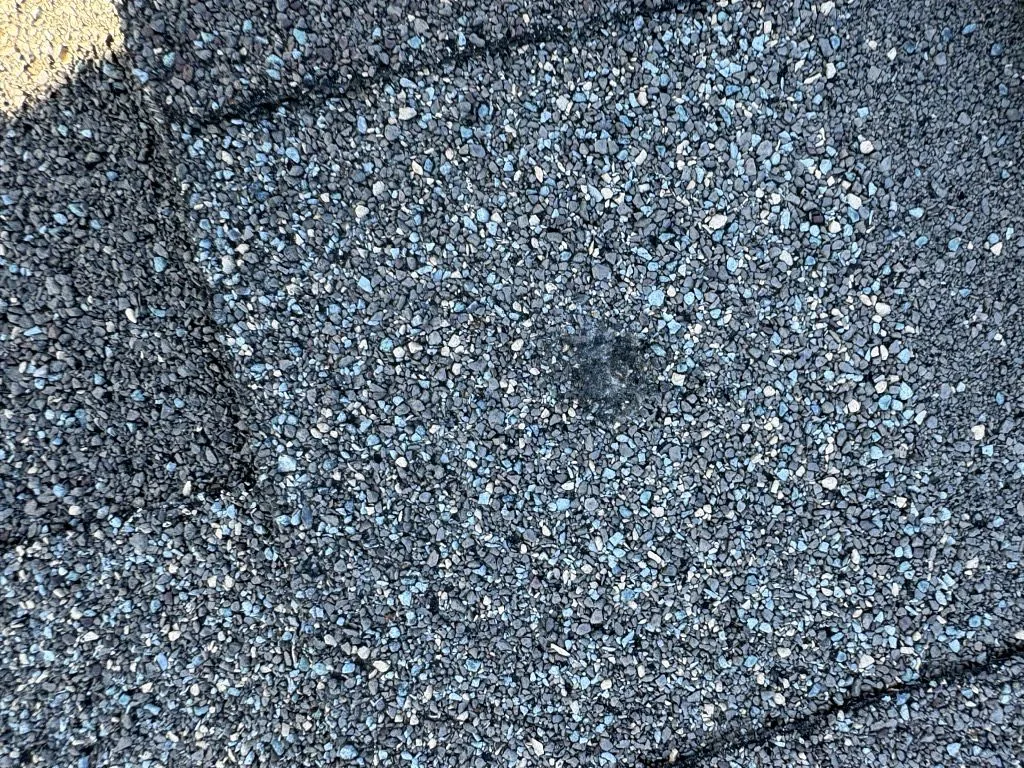
Replacement pulls ahead once damage crosses certain thresholds. The industry shorthand is the 30% rule: when repair quotes reach 25 to 30% of replacement cost, or damage covers roughly 30% of the surface, replacement costs less per year of service than a repair that leaves an aging roof underneath it.
Age counts as much as damage extent. A roof past 15 to 18 years with storm damage on two slopes is a replacement candidate even if the damaged area technically sits under 30%. Those shingles are past their functional prime, and repairing them delays the inevitable by a year or two at full repair price.
Then there's the repeated-repair spiral, the most expensive mistake we see. A homeowner spends $3,000 to $5,000 patching storm damage, another storm hits two years later, and now they need the full replacement anyway. The repair money is gone, stacked on top of the replacement cost, with nothing to show for it.
Multiple active leak points send the same signal. One leak from a cracked pipe boot is a repair. Three leaks on different slopes after a hailstorm mean the shingle mat and underlayment are compromised in ways you can't see from the ground, and patching each leak one at a time won't fix that.
Not Sure Which Side of the Line You're On?
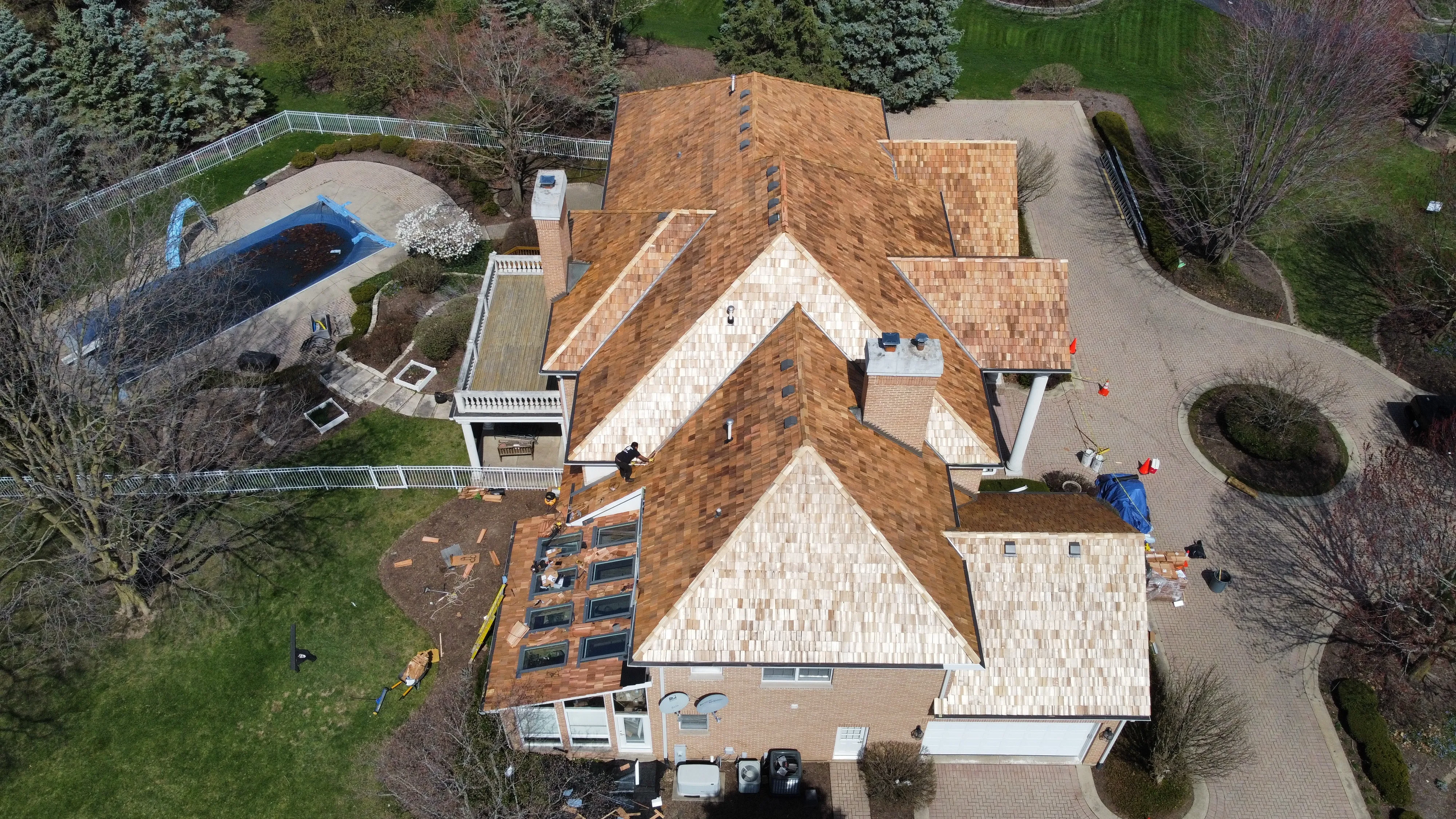
A free Haag-certified inspection measures the damaged area against your total roof surface and gives you a straight repair-or-replace answer, with photos to back it up.
Get My Free InspectionOr call (708) 847-5095
How Does Insurance Change the Decision?
Here's where the math shifts. If your carrier approves a full replacement after storm damage, your out-of-pocket cost is typically the deductible your policy sets, the same as it would be for an approved repair. With insurance approving replacement, there's no reason to patch a roof for the same deductible you'd pay to get a new one.
That's why documentation quality matters so much. An inspector who finds and photographs damage across every slope gives your adjuster the evidence that typically supports a replacement approval. A quick look that only notes the obvious damage on one slope tends to produce a repair-scope approval that leaves the rest of the damage unaddressed. The Insurance Information Institute is a solid neutral resource on how homeowners policies generally treat wind and hail claims.
Approved replacement claims usually pay out in two checks. The first, typically around 55% of the approved amount, comes after approval so work can begin, and the second, roughly 45%, is the recoverable depreciation released once the job is completed and invoiced. Your deductible usually gets split between the two rather than landing all at once.
One more option worth knowing: if the approved scope specs a premium shingle, some homeowners choose a lower-cost material within the approved scope to offset part of their deductible. Whether that trade makes sense depends on the roof and the numbers, and it's a conversation to have before the contract gets signed, not after.
What Does Each Path Cost?
Localized repairs in the Chicago suburbs typically run $400 to $1,500 for smaller fixes like replacing blown-off shingles or resealing flashing. Larger section repairs that involve tearing off and redoing a full slope can reach $3,000 to $9,000. Our roof repair cost guide breaks the ranges down by job type.
Full replacement in our market runs $12,000 to $45,000 and up depending on the home. A 1,800-square-foot ranch with a basic gable roof might land around $14,000 to $18,000 in standard architectural shingles, while a 3,500-square-foot two-story with dormers, valleys, and a steep pitch can pass $35,000. The full breakdown lives in our roof replacement cost guide.
Chicagoland labor runs higher than national averages thanks to union presence, licensing, permit fees, and a working season that compresses into April through October. When an online calculator quotes you a national number, add 15 to 25% for a realistic local figure.
What About a Partial Replacement or Overlay?
Two middle paths come up in almost every conversation. Partial replacement, redoing one full slope, can work when damage stops cleanly at a ridge or valley, though color matching between old and new sections is never exact and carriers weigh that when setting scope.
An overlay, nailing new shingles over the old layer, is legal in Illinois up to the code maximum of two layers. It's usually a poor Chicagoland investment anyway: freeze-thaw cycles work harder on doubled layers, hidden decking damage stays hidden, and the eventual tear-off costs more because there are two layers to haul away. We're putting together a full guide to replacement alternatives that covers these trade-offs in depth.
Let the roof's age and the damage pattern decide, not the sticker prices. A sound roof under 10 years old with isolated damage should be repaired, and a roof past 15 to 18 years or damaged across multiple slopes should be replaced. And if a storm caused the damage, get the roof documented before you choose either path, because an approved insurance claim typically means the deductible costs you the same whether the scope is a patch or a new roof.
Repair is the right call when
- The damage is contained to one slope or a small area
- The roof is under 10 years old with life left in the surrounding shingles
- You're paying out of pocket and the fix genuinely solves the problem
- Repair quotes stay well under 25 to 30% of replacement cost
Replacement is the right call when
- The roof is past 15 to 18 years, whatever the damaged percentage
- Damage or active leaks span multiple slopes
- Repair quotes pass 25 to 30% of replacement cost, the 30% rule
- Insurance has approved a full replacement, since patching saves you nothing
Chicago Storm Pros is a service of C&N Construction, Inc. (cnroofs.com). Reviews, project counts, certifications, and ratings shown here reflect C&N Construction's work.
Related Decisions
- What roof repairs cost in Chicagoland, by job type
- Illinois roof replacement cost guide
- Insurance claim vs paying out of pocket: which makes sense
Free Storm Damage Inspection
Haag-certified inspectors document every slope with photos, measure the damage against your full roof surface, and give you a repair-or-replace answer you can hold up to any adjuster.
Get My Free InspectionOr call (708) 847-5095