


Don't sign anything today. A legitimate contractor doesn't need a same-day signature to inspect your roof. Take the card, verify the Illinois license and local address, and get an independent inspection first. If you already signed under pressure, the FTC Cooling-Off Rule generally gives you three business days to cancel a contract signed at your home.
Why Are Roofers Knocking on My Door?
Because canvassing hit neighborhoods after a confirmed hail event is how roofers of every kind find damage homeowners can't see from the ground. Storm chasers do it, and so do established local contractors, our reps included after confirmed events. The knock itself is neutral. What happens in the next ten minutes isn't.
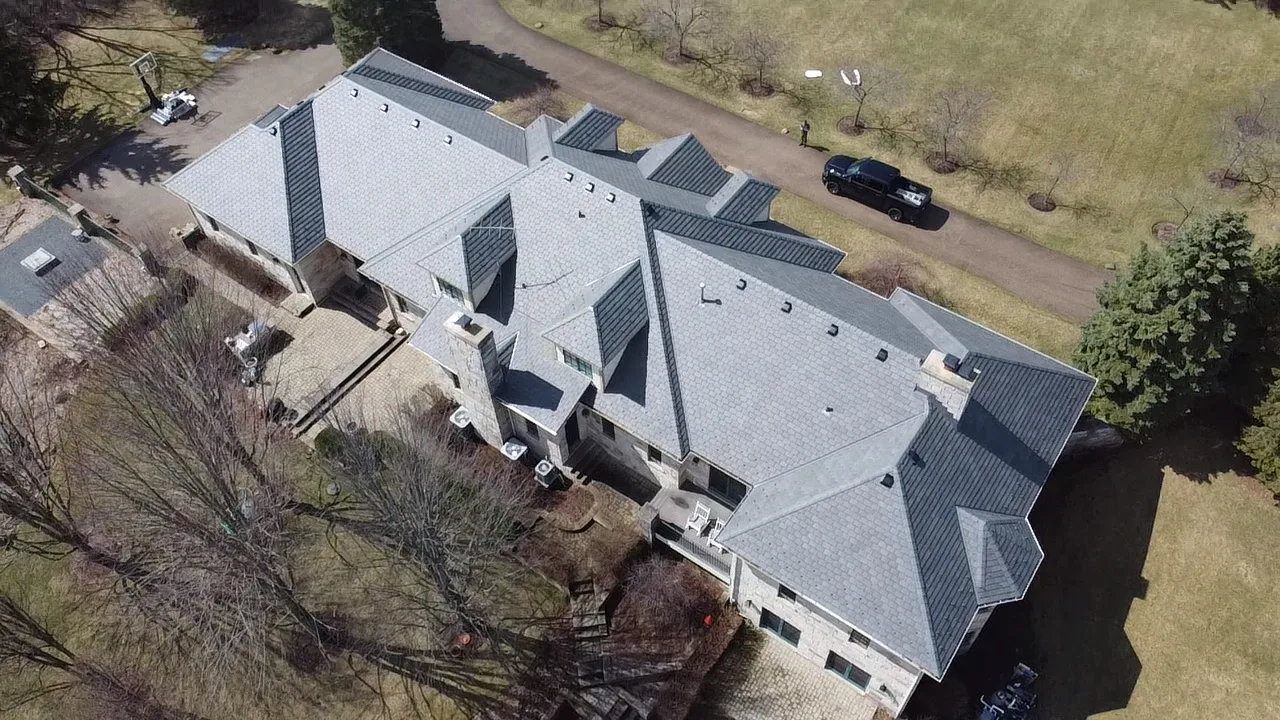
After the August 16, 2025 Naperville hailstorm, one homeowner we later worked with described contractors at her door within days and the sinking feeling of not knowing how to pick. She ended up with a legitimate local company for a reason worth noting: the rep explained the process patiently, never pushed a same-day signature, and stayed on the job with her insurer through completion.
That's the pattern to look for. The company that's still here next year behaves at your door like a company that's still here next year.
| Sign Today | Verify First | |
|---|---|---|
| What you know about the damage | Nothing verified. You're taking a stranger's word for what's up there. | Documented by an inspection you control, with photos you keep. |
| What you know about the company | A business card and a first impression. | A checked Illinois license, a street address, and reviews with history. |
| Contract terms | Read under pressure on your porch. | Read at your kitchen table, on your schedule. |
| Cancellation | Racing a 3-business-day window if you change your mind. | No need to cancel anything. |
| Your insurance claim | Filed on a stranger's say-so about damage you haven't seen. | Filed with photo documentation of verified damage. |
| Outcome if they're legitimate | Same roof, same price. | Same roof, same price. |
The last row is the one to sit with. If the roofer is legitimate, verifying first costs you nothing. Only an illegitimate company benefits from your hurry.
What Should I Do in the Next Ten Minutes?
Take the card, thank them, and don't sign. Then ask five questions before they leave the porch: their Illinois roofing license number, their office address, who services their warranty and from where, local jobs that predate this storm, and how payment works, including whether the contract is contingent on insurance approval.
A legitimate contractor answers all five on the spot without flinching. Ours are IL #104.017643 and 24 N Hillside Ave in Hillside, and we've held that license and that address since long before whatever storm brought anyone to your block. Evasion on any of the five is your answer.
Once the door closes, spend twenty minutes verifying: look up the license on the IDFPR site, search the office address, and read reviews older than the storm. Our full breakdown of what separates the two kinds of company at your door is here: storm chaser vs local roofing contractor.
One exception to the slow-down rule: water coming in right now. Get emergency tarping handled today as its own small job, and keep the replacement decision separate.
Get Independent Documentation First
A free Haag-certified inspection gives you your own photo report of what's damaged before you commit to anyone. Whoever you hire, you'll be deciding from your own evidence instead of a stranger's pitch.
Get My Free InspectionOr call (708) 847-5095
What's a Contingency Agreement, and Should I Sign One?
A contingency agreement commits you to use that contractor if your insurance approves the claim, and it's a standard tool that legitimate contractors use too. Ours works like this: work starts only after your insurer approves the claim, and if the claim is denied and can't be overturned, you owe nothing. No deposit, no cancellation fee.
The problem isn't the document. It's signing one before you've verified the company or gotten independent documentation of the damage. A fair contingency agreement is still a commitment to a specific contractor, so it deserves the same twenty minutes of verification as any other contract.
Three clauses should end the conversation no matter who's offering. Never sign a contingency agreement that requires a deposit, includes an assignment of your insurance benefits, or contains any language about waiving or covering your deductible. The Illinois Attorney General's consumer protection guidance flags these same patterns in its post-storm contractor warnings.
I Already Signed. Can I Get Out?
Generally yes, if you act fast. The FTC Cooling-Off Rule typically gives you three business days to cancel a sale made at your home. Put the cancellation in writing, send it in a way you can prove, and keep a copy of everything.
Read your contract's own cancellation clause too, since it may give you more time or spell out a required method. This is general information about a federal rule, not legal advice about your contract, and the details of your situation matter.
Once you're out, slow the whole thing down. Get an independent inspection with photos before you re-commit to anyone, including us. You'll make the second decision with documentation the first one didn't have.
What About My Deductible?
If any door-knocker offers to waive, absorb, or "eat" your deductible, walk away. That structure is insurance fraud in Illinois, and a company willing to propose it at your door has told you what kind of company it is.
Here's how a legitimate insurance-funded project typically works: your insurer approves a scope, the contractor performs it, and your deductible is generally the only out-of-pocket cost. We disclose one exception up front, and it's the same for every contractor: replacing rotted decking. Crews can't safely stand on rotten boards, and insurers don't always cover the replacement, so we price it in writing before work starts.
A contractor who's straight with you about the deductible and the decking is showing you how they'll handle everything else.
Never sign at the door. Verify first: check the license, search the address, and get your own inspection. If the company is real, waiting costs you nothing, because the roof and the price come out the same. Only a company that can't survive verification needs your signature today.
Slow down and verify when
- There's any same-day discount or 'this price expires tonight' pressure
- They ask for a deposit before insurance has approved anything
- They offer to waive, absorb, or handle your deductible in any way
- You can't find the company at a permanent local address with history there
Moving fast is reasonable when
- Your roof is actively leaking and needs emergency tarping today (get the tarp, not the replacement contract)
- You've verified the Illinois license and the office address yourself
- The contract is contingency-only with no deposit and no assignment of benefits
- You've already had, or scheduled, an independent inspection
Local Contractor, Not a Storm Chaser
C&N Construction runs from 24 N Hillside Ave, Hillside, IL 60162. Permanent office, not a PO box. Licensed and insured in Illinois since 2015. Over 25,400 projects completed across Chicagoland with in-house W-2 crews. When we give you a warranty, we're still here to honor it.
Chicago Storm Pros is a service of C&N Construction, Inc. (cnroofs.com). Reviews, project counts, certifications, and ratings shown here reflect C&N Construction's work.
Related Decisions
- Storm chaser vs local roofing contractor: how to tell the difference
- Insurance claim vs paying out of pocket for storm damage
- How to choose a storm damage roofing contractor
Free Storm Damage Inspection
Haag-certified inspection with full photo documentation, from a contractor with a permanent Hillside office and an Illinois license you can verify before we arrive. If your roof is leaking right now, our emergency roof repair line is the faster path.
Get My Free InspectionOr call (708) 847-5095