






A roof leak shows up as a water stain on your ceiling, a drip in the attic, or damp insulation above a bedroom. If you're noticing these issues, our guide to signs of a leaky roof helps you assess the severity. Your first question is usually "will insurance cover this?" The answer depends entirely on one thing: what caused the leak in the first place.
Illinois homeowner policies are peril-based. They cover damage from specific listed events (wind, hail, fire, fallen objects) and exclude damage from maintenance neglect, gradual deterioration, and normal wear. The leak itself isn't what matters to the carrier. The cause of the leak is everything.
When Insurance Covers a Roof Leak
Your homeowner's policy will generally cover roof leaks caused by sudden, accidental events that your policy lists as covered perils. In the Chicagoland area, these are the most common covered scenarios.
Wind Damage
High winds lift shingle tabs, strip ridge caps, and tear off flashing. Once the roof's weather barrier is broken, the next rain comes right through. Wind damage is covered under virtually every Illinois homeowner policy. The key evidence is directional damage patterns (shingles lifted on the windward slope), matching with documented wind events in your area, and missing components that were intact before the storm.
Hail Damage
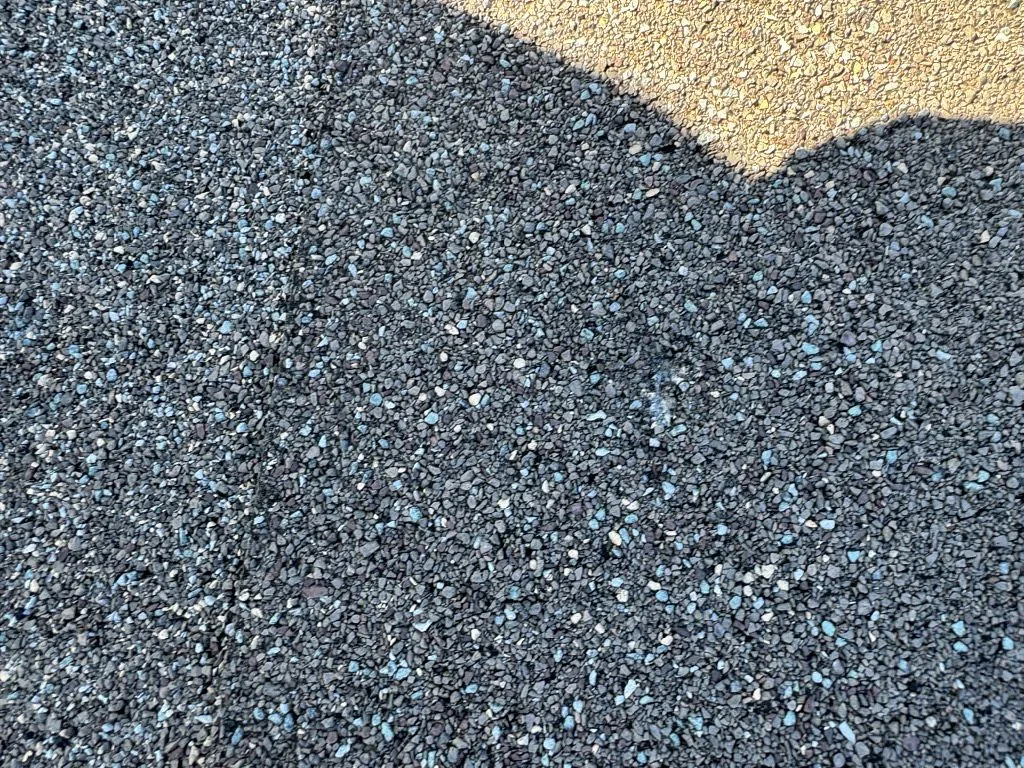
Hail cracks shingles, dents metal components, and knocks granules off the surface layer that protects against UV and water penetration. The granule loss is the real problem. Without that protective layer, shingles deteriorate rapidly and water eventually penetrates the mat. Hail damage is covered under standard policies, though some newer Illinois policies have cosmetic damage exclusions for hail that dents but doesn't crack.
Fallen Trees and Debris
A tree limb punches through your roof during a storm, and rain follows. This is covered. The carrier pays to repair the roof opening and the resulting water damage inside the home. They'll also typically cover the cost of removing the tree from the structure, though removal from the yard (where the tree isn't touching the house) may have a sublimit.
Ice Dam Damage
Ice dams form when heat escaping through the roof melts snow on the upper slopes, and the meltwater refreezes at the cold eaves. The ice backs up under shingles and forces water into the roof deck and walls. Most Illinois policies cover ice dam damage as a winter weather peril. The underlying ventilation problem that allowed the ice dam to form is your maintenance responsibility, but the water damage from the dam itself is typically covered.
When Insurance Does Not Cover a Roof Leak
This is where most coverage disputes happen. Your policy explicitly excludes certain causes of damage, and carriers enforce these exclusions consistently.
Wear and Tear
Every roof has a finite service life. Three-tab shingles last 15 to 20 years. Architectural shingles last 25 to 30. As shingles age, they curl, crack, lose granules, and eventually fail. A leak from normal aging is not a covered event. The roof wore out. That's maintenance, not a peril.
Neglected Maintenance
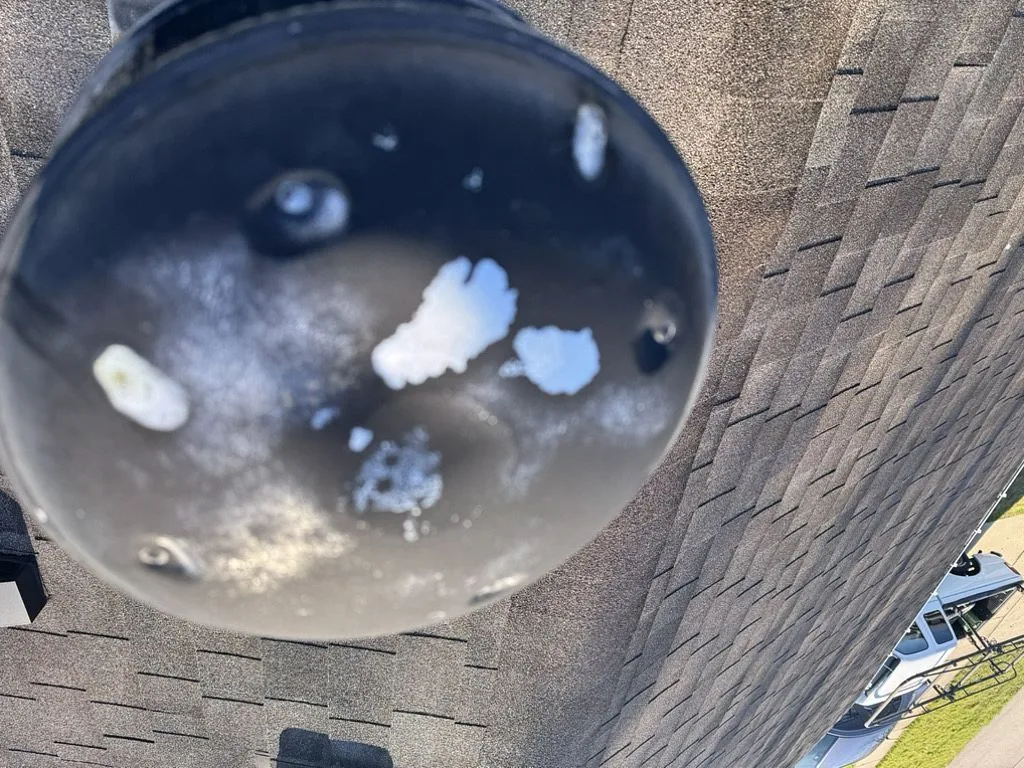
Clogged gutters that cause water to back up under shingles. Cracked caulk around pipe boots that was never re-sealed. Flashing that pulled away from a chimney years ago. These are maintenance failures, and your policy doesn't cover them. The carrier's position is that you had a responsibility to maintain the roof and didn't.
Gradual Deterioration
A slow leak that's been seeping for months, staining plywood and growing mold behind the drywall, is almost never covered. The carrier argues that a reasonable homeowner would have noticed and addressed the problem before it caused significant damage. This is the "gradual deterioration" exclusion, and it's one of the broadest exclusions in most policies.
Free Storm Damage Inspection
Haag-certified inspectors. Full photo documentation. Adjuster meeting and supplements for documented misses.
Get My Free InspectionOr call (708) 847-5095
The Gray Area: Storm Damage on an Aging Roof
Here's where things get complicated. Your roof is 18 years old with some existing wear, and then a hailstorm rolls through and causes additional damage. The hail cracked several shingles that were already showing age. Is that covered?
In Illinois, the carrier should cover the storm-caused damage even if the roof had pre-existing wear. The legal standard is that the covered peril must be a proximate cause of the damage, not the only cause. But in practice, carriers regularly try to deny these claims by attributing all the damage to age.
This is exactly the situation where documentation wins or loses the claim. A Haag-certified inspector can distinguish between hail impact fractures (which radiate from a point of impact and expose fresh black mat material) and age-related thermal cracking (which follows shingle stress lines and shows oxidized edges). Our guide on what hail damage looks like shows how these patterns differ. That distinction is the difference between a covered claim and a denial.
Not Sure If Your Leak Is Covered?
Our Haag-certified inspectors determine the cause of roof damage and document it in the format insurance companies require. Free inspection, no obligation.
Get My Free InspectionOr call (708) 847-5095
ACV vs. RCV: How Your Policy Pays
Even when your leak is covered, the payout depends on how your policy values the loss. There are two methods, and the difference can be thousands of dollars.
Replacement Cost Value (RCV) pays the full cost to replace the damaged roof with comparable materials at today's prices. If a new architectural shingle roof costs $14,000, you get $14,000 minus your deductible. Most standard Illinois homeowner policies use RCV.
Actual Cash Value (ACV) deducts depreciation. If your 15-year architectural shingle roof has a 30-year rated life, the carrier depreciates it by roughly 50%. That $14,000 replacement now pays out around $7,000 minus your deductible. ACV policies are less common but sometimes appear on older homes or budget-tier policies. Check your declarations page to confirm which type you have.
On RCV policies, the carrier typically issues two payments. The first is the ACV amount (the depreciated value). The second, called the recoverable depreciation or the "supplement check," comes after you complete repairs and submit the final invoice. Don't skip the second payment. It's often 30% to 50% of the total claim value.
Wind/Hail Deductibles in Illinois
Since about 2018, many Illinois carriers have introduced separate wind/hail deductibles that are higher than your standard all-peril deductible. Instead of a flat $1,000 or $2,500, these deductibles are calculated as a percentage of your home's insured value.
On a home insured for $350,000 with a 2% wind/hail deductible, you pay $7,000 out of pocket before coverage kicks in. That's a significant amount, and it catches homeowners off guard when they file their first storm claim. Check your policy for a separate wind/hail deductible line item. It's often buried in the endorsements section.
What to Do Right Now If Your Roof Is Leaking
Stop the water first. If it's actively leaking during a storm, place buckets to catch water and move valuables out of the affected area. If the leak is severe, call for emergency roof repair. We can tarp and stabilize a leaking roof within hours to prevent further interior damage.
Document everything before you clean up. Photograph the interior water damage, the ceiling stain, any wet insulation in the attic, and the exterior of the roof if you can safely see damage from the ground. Date-stamped photos become evidence for your claim.
Get a professional inspection to determine the cause. This is the critical step that determines whether your leak is a covered insurance claim or an out-of-pocket repair. A Haag-certified inspector can tell you what caused the leak, whether it's consistent with recent storm activity, and whether filing a claim makes sense given your deductible and policy type.
If the cause is storm-related, file the claim promptly. The longer you wait, the harder it becomes to prove the connection between the storm and the damage. For details on how long you have to file in Illinois, we've published a dedicated guide. And if your claim gets denied, read our walkthrough on what to do when a roof insurance claim is denied.
Local Contractor, Not a Storm Chaser
C&N Construction runs from 24 N Hillside Ave, Hillside, IL 60162. Permanent office, not a PO box. Licensed and insured in Illinois since 2015. Over 25,400 projects completed across Chicagoland with in-house W-2 crews. When we give you a warranty, we're still here to honor it.
How It Works When You Say Yes
No-risk contract. You sign a contingency agreement. Work starts after insurance approves the claim. If it doesn't go through, you owe nothing.
Your budget, your call. You can spec down the project to match your insurance payout exactly. You won't pay for unapproved work unless you tell us to order it before the approval.
We call you first. If there's a gap between our recommendation and insurance, we call you. The only reasons you'd pay extra are damaged lumber or a luxury shingle upgrade.