






Water is coming through your ceiling. Maybe it's a steady drip into a bucket. Maybe it's a spreading stain that appeared during the storm and keeps getting bigger. Maybe you can hear it running inside the walls. Whatever it looks like, an active roof leak demands immediate action.
The damage water causes inside your home compounds by the hour. Soaked drywall starts to fail. Insulation loses its R-value. Mold can begin growing within 24 to 48 hours in warm, humid conditions. The faster you control the water, the less secondary damage you'll deal with. If you need a step-by-step checklist, see what to do if your roof is leaking.
What Counts as a Roofing Emergency
Not every roof issue qualifies as an emergency, and it helps to know the difference so you can communicate clearly when you call for help.
An emergency is any situation where water is actively entering your home or where your roof has an opening that will allow water in during the next rain. That includes active leaks, missing shingles that have exposed the underlayment or decking, holes from fallen trees or debris, and blown-off ridge caps or vent covers.
A non-emergency is a suspected issue that isn't causing active water intrusion. A few missing shingles with intact underlayment beneath them, granule loss from hail that hasn't yet penetrated, or a slow attic drip that only shows during heavy, sustained rain. These still need attention, but they can wait a few days for a scheduled inspection. If you're trying to figure out what caused the problem, our guide to common causes of roof leaks covers the most frequent culprits. An active leak cannot wait.
Free Storm Damage Inspection
Haag-certified inspectors. Full photo documentation. Adjuster meeting and supplements for documented misses.
Get My Free InspectionOr call (708) 847-5095
Immediate Steps to Minimize Interior Damage
While you're waiting for the repair crew, there are things you can do inside your home to limit the damage. These are safe for any homeowner.
Move belongings out of the way. Get furniture, electronics, and anything valuable away from the leak zone. Even if the drip seems contained now, it can shift as water finds new paths. Give yourself a wide margin.
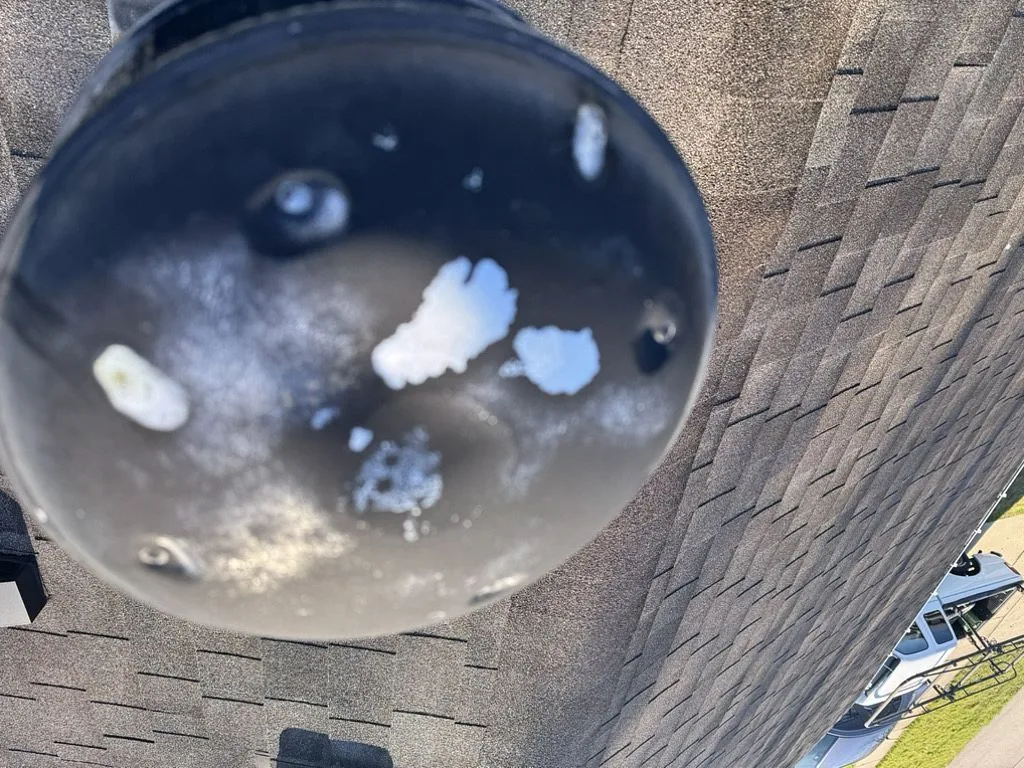
Catch the water. Place buckets, bins, or any large containers under active drips. For a spread-out leak area, lay plastic sheeting or a tarp on the floor to protect hardwood or carpet. A kiddie pool works surprisingly well for a large area with multiple drip points.
Poke a drain hole if the ceiling is bulging. This sounds counterintuitive, but a bulging ceiling full of pooling water is a collapse risk. Poke a small hole in the center of the bulge with a screwdriver or nail and place a bucket underneath. Controlled drainage into a bucket is far better than a sudden ceiling collapse that dumps 50 gallons of water onto your living room floor.
Check the attic if you can safely access it. If your attic has a pull-down stair or access panel, go up with a flashlight. Look for where water is entering through the decking. You can place a bucket under the entry point, or drape plastic sheeting over the area and angle it to direct water into a container. Step only on the joists, never on the drywall or insulation between them.
What a Professional Emergency Repair Looks Like
Professional emergency roof repair is about stopping the water. It's not a permanent fix. It's a controlled, temporary solution that protects your home while the permanent repair is planned and executed.
Tarping is the most common emergency repair. The crew lays heavy-duty poly tarp over the damaged area, extending well beyond the damage zone on all sides. They secure it to the decking using 2x4 lumber screwed through the tarp and into the roof structure. The tarp extends over the ridge if possible, so water sheds off both sides without finding a path underneath.
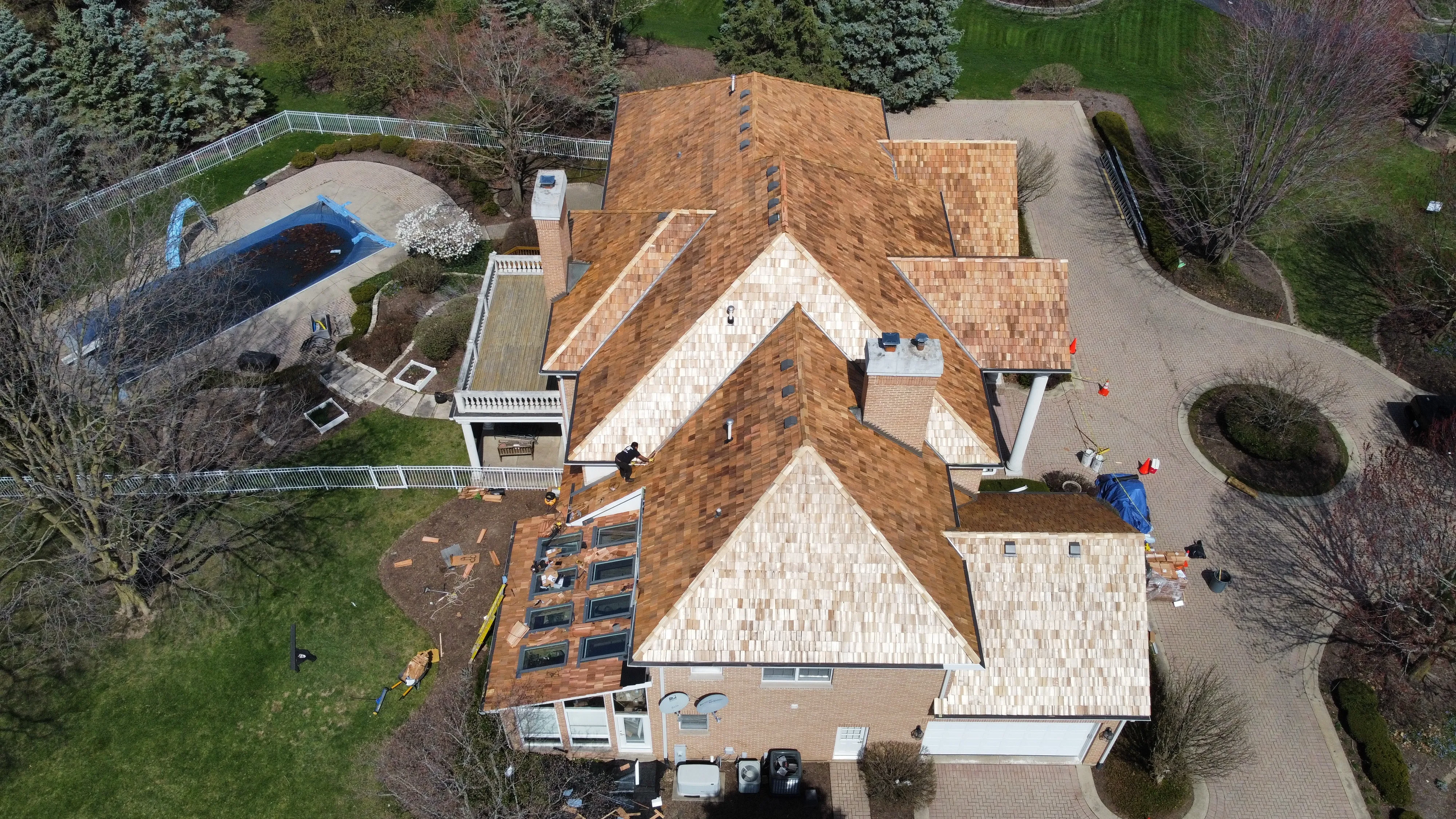
A properly installed tarp can hold for weeks or even months through multiple storms. It buys you the time needed for the insurance process and material ordering without risking additional water damage.
Temporary sealing is used for smaller penetrations. Roofing cement, flashing tape, or emergency sealant applied directly to cracks, punctures, or failed flashing connections can stop a pinpoint leak without the full tarp treatment. These fixes aren't permanent, but they can hold through the immediate weather event while a full repair is planned.
Board-up applies to larger openings, like a hole from a fallen tree limb. Plywood is cut to cover the opening and screwed into the surrounding structure, then tarped over for a watertight seal. Board-ups are common after severe storms that leave gaping damage.
Roof Leaking Right Now?
Call us directly for same-day emergency tarping. We dispatch crews within hours for active leaks and exposed roof sections in the Chicagoland area.
Get My Free InspectionOr call (708) 847-5095
Response Times: What to Expect
Under normal conditions, a qualified emergency roof repair crew can be on site within a few hours. Same-day response is standard for active leaks and exposed openings.
After a major storm event, demand surges. Every roofer in the metro area is fielding emergency calls simultaneously. After a large hail or wind event, response times can stretch to 24 to 48 hours for non-critical situations. Active, heavy leaks still get prioritized, but the queue is longer.
When you call, be clear about the severity. "Water is dripping from my ceiling" is different from "I can see sky through my roof." Both are emergencies, but the second one gets dispatched first. Give the dispatcher as much detail as you can: where the damage is, how large the opening is, whether water is actively coming in, and whether anyone is displaced.
Cost Considerations
Emergency tarping typically costs $300 to $1,200 depending on the area being covered, roof pitch, accessibility, and whether the work is happening during business hours or after hours. Larger tarps on steep roofs cost more. After-hours emergency calls carry a premium.
For storm damage, ask your insurer how your homeowner insurance policy treats emergency tarping. Your policy sets its own terms; check your declarations page, and keep receipts and photos.
If the leak isn't storm-related (an old, worn-out roof that finally gave way), policies often treat it as a maintenance issue, which is the homeowner's responsibility. That distinction matters, so be honest with your contractor about the history of the roof and when the leak started relative to any recent storm events.
When Temporary Repair Becomes Permanent Replacement
Emergency repair stops the bleeding. The question that follows is whether the roof needs localized repair or full replacement.
Localized repair makes sense when the damage is contained to a small area, the surrounding roof is in good condition, and the affected section can be re-roofed without creating a patchwork problem. A tree limb that punched a 4-foot hole in an otherwise sound 5-year-old roof is a repair candidate.
Full replacement becomes the answer when the damage is widespread, when the roof was already approaching end of life, or when the cost of section repairs approaches the cost of a full re-roof. A 20-year-old roof with widespread hail damage, multiple leak points, and deteriorated decking is a replacement, not a repair. Our guide on roof repair vs replacement breaks down how to make that call.
Your contractor will make a recommendation based on the inspection. If insurance is involved, the adjuster's assessment factors in too. The storm restoration process is designed to get you the repair your roof actually needs, whether that's a section fix or a complete replacement.
Preventing Roof Leak Emergencies
Most emergency roof leaks don't come out of nowhere. Storm damage is an exception, but many "emergency" leaks are the result of deferred maintenance. Cracked flashing that went unaddressed for years. Missing shingles from a minor wind event that nobody bothered to replace. Clogged gutters that caused ice damming the previous winter and damaged the edge shingles.
An annual roof inspection catches these issues before they become emergencies. After any notable storm in your area, a quick check for visible damage from the ground can flag problems early. And if you know your roof is aging (15+ years for 3-tab shingles, 20+ years for architectural), plan for replacement before it fails on you during the worst possible weather.
If you're in Naperville, Downers Grove, Chicago, or the surrounding suburbs, a free inspection takes about 45 minutes and gives you a clear picture of your roof's condition. It's the cheapest insurance policy you can buy.
When the emergency is over and it's time to choose a permanent repair contractor, don't rush that decision. Our 8-point contractor checklist covers what to verify before you sign: permanent address, insurance coverage, storm damage certifications, in-house crews, and contingency contract terms that protect you if the insurance claim doesn't go through.