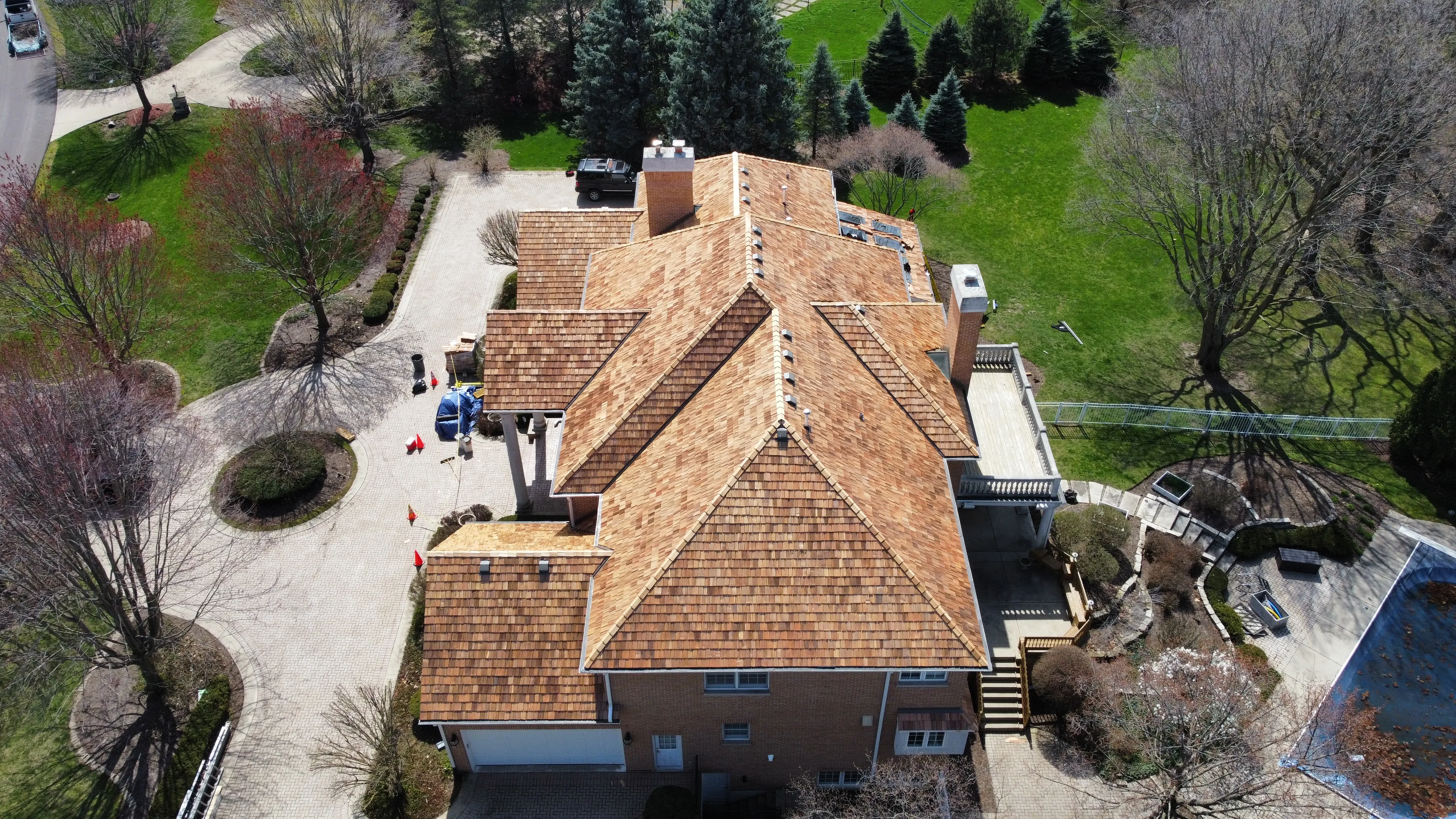





On cedar, hail splits shakes and leaves fresh, bright-wood fractures and crushed fibers at impact points. Wind lifts and tears shakes at the fasteners. The tricky part is that cedar also splits naturally as it ages, so the storm-vs-weathering call comes down to fracture freshness, pattern, and directionality, which is exactly what a documented inspection establishes.
Splits in the cedar shakes? Snap a photo.
Photograph the gutters, vents or shingles. We circle what we seem to see and say whether an inspection is worth it.
Free. 30 seconds. No signup.
This AI only looks for storm and roof damage, and it isn't perfect. Think of it as a good starting point for a conversation.
Your browser shrinks the photo and removes the location data before it leaves your device. Privacy details.
Want to check recent storms near you? Your city only.
We never ask for a street address here, and the city stays in your browser.
Want us to get an inspector over, as soon as tomorrow in most cases?
A free inspection puts someone on the roof with a hand on the shingle. The report is yours to keep.
| Storm Damage | Natural Weathering | |
|---|---|---|
| Split appearance | Fresh splits show bright, unweathered wood inside the fracture. | Old splits are gray throughout, weathered to match the surface. |
| Pattern | Random impact scatter, heavier on windward slopes. | Uniform across sun and weather exposure. |
| Impact marks | Crushed or frayed fibers at a strike point, sometimes a dent in the wood. | Smooth erosion, cupping, and curling. |
| Fasteners | Shakes torn loose or shifted after wind. | Shakes thinned but still seated. |
| Timing | Appears after a documented storm event. | Gradual over seasons. |
| Insurance treatment | Your policy sets its own terms; check your declarations page. | Maintenance and age wear are generally outside what storm claims address. |
Cedar's natural aging is the false-positive risk in both directions. Distinguishing the two takes close inspection, not a driveway glance.
What Does Hail Do to Cedar Shakes?
Hail damages cedar by splitting it along the grain. A hard impact drives a fracture that radiates out from the strike point, and the point itself shows crushed or frayed wood fibers where the stone landed. On a fresh split, the fracture faces show bright, unweathered wood that stands out against the gray surface.
Older shakes take hail worse. Decades of sun and freeze-thaw cycling thin the wood, and a large stone can punch clean through a shake that's already lost half its original thickness. That's how a single hail event turns a serviceable older cedar roof into an exposure problem.
Hail damage also follows the storm. It concentrates on the slopes that faced the wind during the event, and it shows up on the soft metal around the roof too. Dented gutters, downspouts, and vent caps on the same slopes corroborate what the shakes are telling you, which matters when it's time to document a hail damage claim.
What Does Wind Do to Cedar?
Wind attacks cedar at the fasteners. Straight-line gusts get under the butt edge of a shake and lever it upward, and the shake either tears out at the nail line or shifts enough to break its seal against the course above. The classic Chicagoland cause is a derecho, where gusts hit highway speeds and strip shakes off entire slope sections.
A missing shake is more urgent on cedar than it looks. Cedar roofs are built over felt interlayment between courses, and that felt was never meant to face the weather directly. Once shakes are gone, sun and rain degrade the exposed interlayment fast, and the leak path opens well before the next storm season.
Displaced shakes are easy to miss from the ground because the roof's texture hides them. An inspector on the roof finds the lifted butts, the shifted courses, and the tear-outs that a street-level look never catches.
Get the Damage Documented While It's Still Fresh
A free Haag-certified inspection photographs the fracture faces, maps the impact pattern by slope, and records the accessory damage that corroborates a storm claim. The report is yours to keep.
Get My Free InspectionOr call (708) 847-5095
How Do You Tell Storm Splits From Age Splits?
Start with the freshness test. Break faces inside a recent split show bright, unweathered wood because the interior of the shake has never seen sunlight. An age split that's been open for seasons is gray all the way through, weathered to match the surface around it.
Then look at pattern and direction. Storm damage scatters randomly across the slopes that faced the wind, while age-related splitting spreads uniformly wherever sun and weather exposure are heaviest. If the split concentration matches the documented wind direction of a specific event, that's evidence. You can verify the storm date itself through the National Weather Service, which archives severe weather reports by location.
Finally, check the corroboration. Hail large enough to split shakes dents gutters, vents, and flashing on the same slopes. Carriers scrutinize cedar claims closely for exactly this wear-vs-storm question, so documentation quality tends to decide these claims more than most. Coverage always depends on your policy and your adjuster's findings, which is why the photo record matters so much.


What Does Cedar Storm Repair and Replacement Cost?
Cedar repair costs more per square than comparable asphalt work. Individual shake replacement is specialty labor, the material itself costs more, and matching new cedar into a weathered field takes time that a standard shingle repair doesn't. Small repairs often land in the several-hundred to few-thousand dollar range depending on access and count.
Full cedar replacements commonly run $30,000 to $60,000 and up in Chicagoland, driven by roof size, shake grade, and tear-off complexity. That's a wide range, and a written scope from an inspection narrows it to your actual roof. Our hail damage repair cost guide covers how insurance scopes get built.
Many policies restore like kind and quality; your policy sets its own terms, so check your declarations page. That like-kind standard is worth protecting on cedar. Document that the roof is cedar-grade construction from the first inspection forward, because a claim scoped at asphalt prices leaves the gap between the two on your side of the ledger.
Slate raises the same specialty-material questions with even higher stakes, since a slate claim scoped at asphalt prices underpays badly. Our slate roof storm damage guide covers matching, repairability, and like-kind scope.
Should You Replace Cedar With Cedar?
If the roof needs replacement, you have three legitimate paths. Real cedar keeps the look the house was built around, and nothing else weathers quite the same way. It carries the premium price and it asks for ongoing maintenance, but for many homes it's the right answer.
Synthetic shake is the second path. We're a DaVinci certified installer, and composite shake carries Class 4 impact ratings that natural cedar can't, which matters in hail country. Some insurers offer impact-resistant discounts for Class 4 roofs, subject to their own underwriting, and the material holds its appearance without the treatment schedule cedar requires.
Asphalt conversion is the budget path. Architectural asphalt costs a fraction of cedar or composite and installs faster, though it changes the character of a house designed for shake. Which path fits depends on the house, the budget, and how long you plan to own it, and the repair-vs-replacement question deserves its own look before any of this.
Cedar storm claims are won or lost on documentation, because aging cedar hands the carrier an easy wear story. Get the fracture-freshness evidence photographed before weather grays it out, and know your replacement options before the scope conversation starts.
Likely storm damage when
- Splits show fresh, bright wood inside the fracture faces
- Impact scatter matches the documented storm direction
- Gutters, vents, and flashing on the same slopes show dents
- A documented storm event hit recently
Likely weathering when
- Splits are gray throughout, weathered to match the surface
- Cupping and curling are uniform across exposures
- No corroborating damage on gutters or soft metal accessories
- The condition appeared gradually over seasons, not after an event
Chicago Storm Pros is a service of C&N Construction, Inc. (cnroofs.com). Reviews, project counts, certifications, and ratings shown here reflect C&N Construction's work.
Related Decisions
- Storm damage on an asphalt shingle roof
- Roof repair vs replacement: which call to make
- What hail damage repair costs in Chicagoland
Free Cedar Shake Storm Inspection
Haag-certified inspectors who know cedar, from a GAF Master Elite and DaVinci certified contractor with a permanent Hillside office. Book a free inspection and get the photo documentation your claim will need.
Get My Free InspectionOr call (708) 847-5095