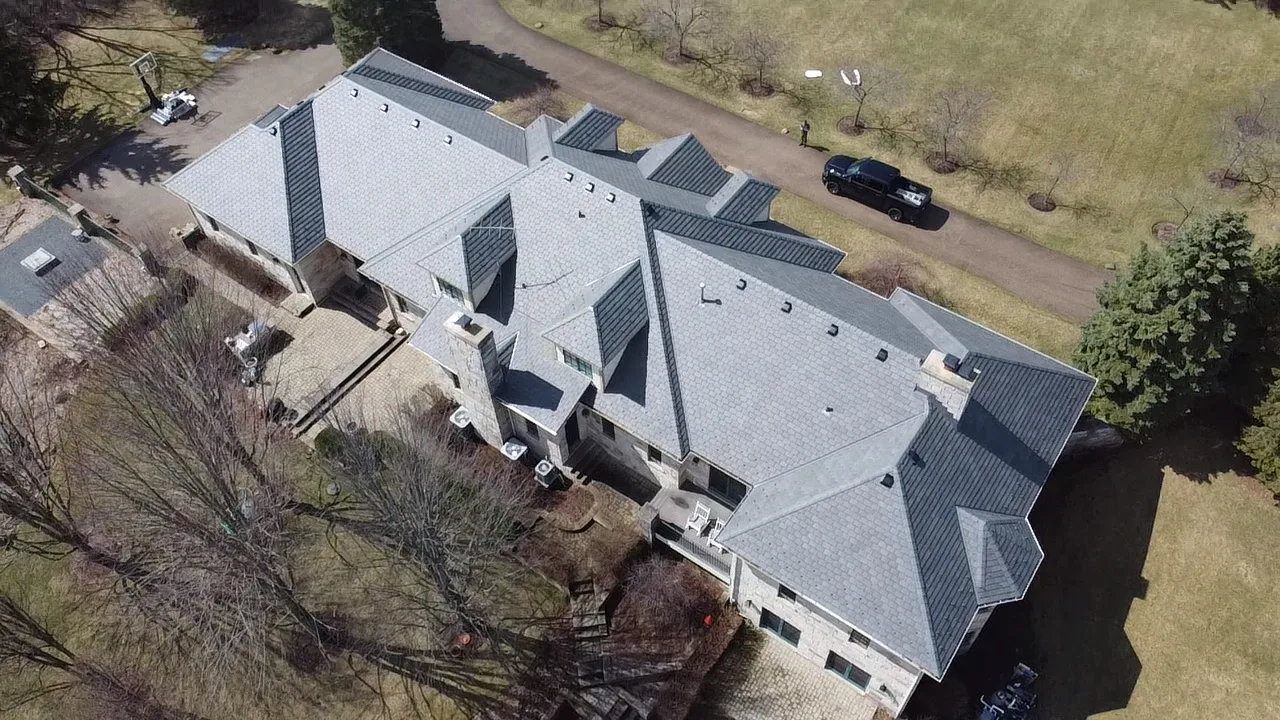





On asphalt shingles, hail shows up as bruises, soft spots where the fiberglass mat fractured under the granules, plus random granule loss scattered across a slope. Wind shows up as creased, lifted, or missing tabs. Normal aging thins granules evenly instead. The distinction matters because carriers pay for storm damage, not wear, and adjusters are trained to tell them apart.
Think hail or wind hit your shingles? Snap a photo.
Photograph the gutters, vents or shingles. We circle what we seem to see and say whether an inspection is worth it.
Free. 30 seconds. No signup.
This AI only looks for storm and roof damage, and it isn't perfect. Think of it as a good starting point for a conversation.
Your browser shrinks the photo and removes the location data before it leaves your device. Privacy details.
Want to check recent storms near you? Your city only.
We never ask for a street address here, and the city stays in your browser.
Want us to get an inspector over, as soon as tomorrow in most cases?
A free inspection puts someone on the roof with a hand on the shingle. The report is yours to keep.
What Does Hail Damage Look Like on Asphalt Shingles?
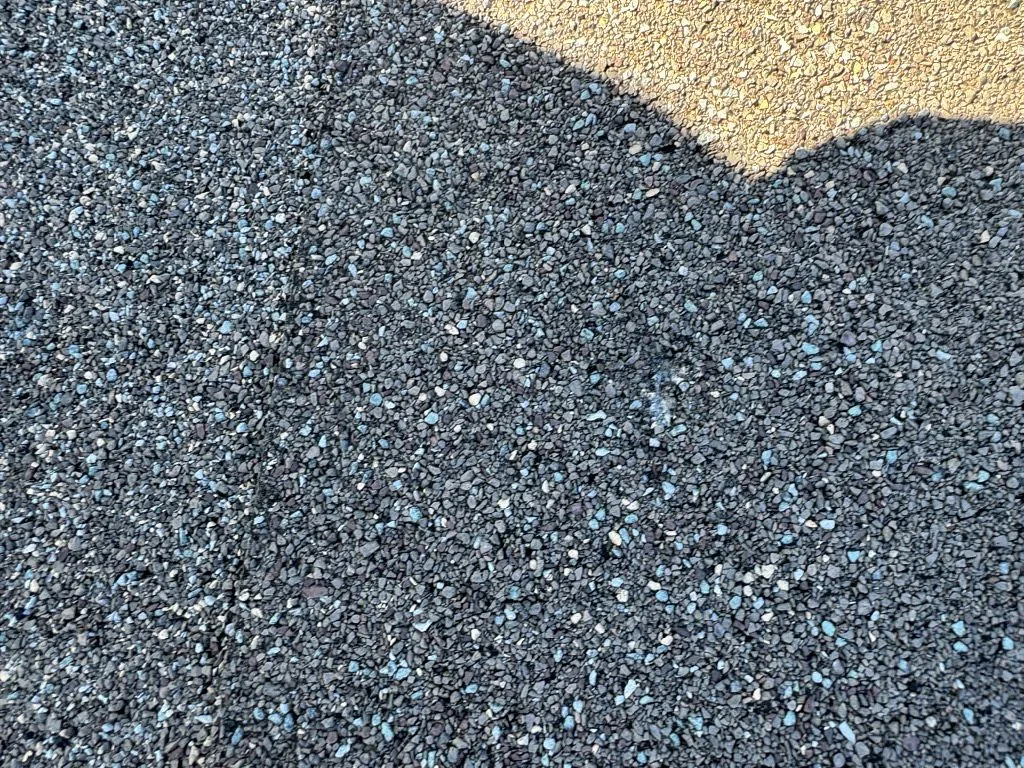
The signature mark is a bruise: a roughly circular soft spot where the hailstone fractured the fiberglass mat and crushed granules down into the asphalt. Press it with a thumb and it gives slightly. Sometimes a faint dark ring outlines the impact where displaced granules left the asphalt exposed.
Fresh hits are darker than anything aging produces, because they expose black substrate that hasn't seen sunlight since the shingle left the factory. Some of the clearest bruises hide along the shadow line at the bottom edge of each tab, where the overhanging shingle above concentrated the impact.
The pattern is as telling as any single mark. Hail doesn't aim, so hits scatter randomly across the slope rather than clustering where water runs or where feet have walked. If every mark sits in a traffic path or along a worn drainage line, you're probably looking at something else, and we cover the full storm picture on our hail damage page.
| Storm Damage | Normal Wear and Aging | |
|---|---|---|
| Granule loss pattern | Random scatter concentrated at impact points, often with exposed black mat | Even thinning across sun-exposed slopes |
| Texture | Soft, bruised spots that give under thumb pressure | Uniformly brittle surface |
| Distribution | Follows the storm's direction, heavier on the windward slopes | Symmetric, worst on south-facing exposure |
| Shingle tabs | Creased, folded, or torn at the nail line after wind | Curling and cupping at the edges with age |
| Accessories | Dented vents, gutters, and flashing alongside roof hits | Aged but undented metal |
| Insurance treatment | Your policy sets its own terms; check your declarations page. | Maintenance and age wear are generally outside what storm claims address. |
Blistering, heat and manufacturing pockets that pop and expose granule loss inside a raised rim, mimics hail and is the most common false positive. An experienced inspector distinguishes them.
What Does Wind Damage Look Like?
Wind damages asphalt shingles by lifting them, and the evidence is mechanical rather than impact-shaped. The most common mark is a horizontal crease across a tab where repeated lifting and slapping fractured the mat along a line. A creased tab is broken even when it lies back down flat.
Stronger gusts snap tabs off entirely, usually at the nail line, leaving rectangular gaps with exposed nail heads and bare underlayment. Just as damaging are the shingles that lifted without tearing: their factory seal strips broke, so the next storm gets underneath and peels them further.
Chicagoland doesn't need hail for any of this. Derechos and ordinary thunderstorm gusts crossing DuPage, Will, and Kane counties crease and strip asphalt tabs several times a season. You can confirm the wind speeds for a specific date through the National Weather Service, which is the same record adjusters check.
Not Sure Which One You're Looking At?
A free Haag-certified inspection documents your slopes with photos and marked test squares, so you know whether you have storm damage, wear, or nothing worth filing, before you call anyone.
Get My Free InspectionOr call (708) 847-5095


How Do Adjusters Tell Storm Damage From Wear?
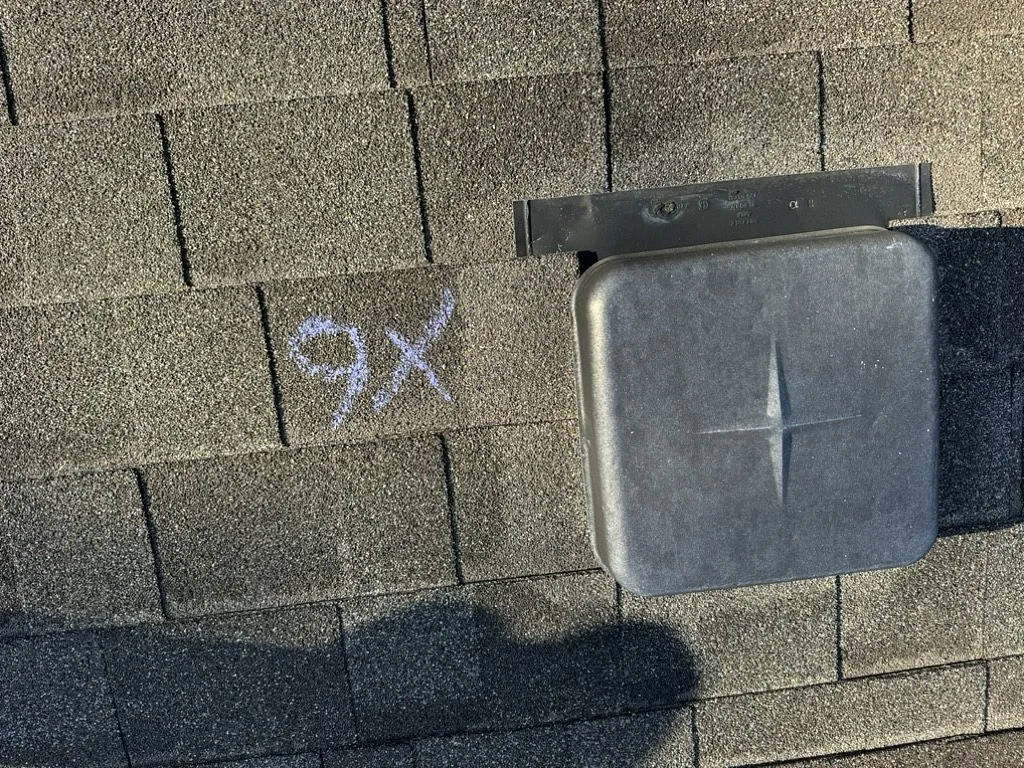
Adjusters work from a method, not a glance. The core tool is the test square: a marked 10-by-10-foot section on each slope where the inspector counts qualifying hits one by one. The count per square, not the general look of the roof, drives the storm-damage finding.
Directionality gets checked next. Hail and wind arrive from a bearing, so damage should run heavier on the windward slopes and lighter on the sheltered ones. Damage spread evenly across every exposure reads as aging.
Then comes accessory corroboration. Soft metal doesn't wear into dents, so dings in vents, gutters, and flashing prove impact happened at this address, on this date. Thresholds for how many hits justify replacement vary by carrier and policy, which is why the documentation from a free storm damage roof inspection matters more than any adjective in a report.
What Gets Mistaken for Hail (and Shouldn't Be Claimed)?
Blistering is the big one. Heat and small manufacturing pockets in the asphalt pop open, exposing granule loss inside a raised rim, and from a few feet away a popped blister looks like a hail hit. It's the most common false positive on asphalt roofs, and an experienced inspector separates the two by the raised rim and the absence of mat fracture.
Thermal cracking, scuff marks from foot traffic, and manufacturing defects round out the list. All of them are wear or defect, none of them are storm damage, and adjusters recognize each on sight.
Filing wear as storm damage gains you nothing. The claim gets denied, and the filing still sits on your loss history when a legitimate storm hits next year. A straight contractor tells you which one you have before you file, and sometimes the honest answer is that there's nothing to claim.
When Is Asphalt Storm Damage Repairable, and When Is It Replacement Territory?
Wind damage repairs well when it's isolated. A handful of creased or missing tabs on an otherwise sound roof is a straightforward fix, typically in the $400 to $1,500 range covered in our roof repair cost guide, and it's often not worth a claim against your deductible.
Hail bruising is different because it's distributed. You can't patch forty fractures scattered across a slope, so documented hail commonly supports slope or full replacement on a claim, subject to your carrier's threshold and policy terms. The numbers for that path live in our hail damage repair cost guide.
Age tips the scale too. Asphalt past 15 years turns brittle, and brittle shingles crack when a repair crew lifts them to work, so a spot repair on an old roof often creates new damage around the patch. That's when the repair versus replacement math shifts, even for modest storm damage.
Asphalt takes storm damage in ways you can learn to spot from the ground, but the repair-or-replace and claim-or-cash calls both turn on slope-level documentation, and that inspection is free. On this material, isolated wind damage repairs well and distributed hail bruising doesn't.
Likely repairable when
- A few tabs are creased or missing and the rest of the slope is sound
- Damage is confined to one slope edge or a small section
- The roof is under 15 years old and still flexible
- Matching shingles are available for a clean blend
Likely replacement territory when
- Bruising runs across a full slope or several slopes
- Exposed black mat shows at many impact points
- Vents, gutters, and flashing are dented alongside the roof hits
- The shingles were already brittle with age before the storm
Chicago Storm Pros is a service of C&N Construction, Inc. (cnroofs.com). Reviews, project counts, certifications, and ratings shown here reflect C&N Construction's work.
Related Decisions
- Hail damage roof repair and free inspection
- What hail damage repair costs in Chicagoland
- Roof repair vs replacement: which call fits your damage
Free Asphalt Roof Storm Inspection
A Haag-certified inspector walks every slope, marks test squares, and hands you the photo report. From C&N Construction, Inc., Hillside based, IL #104.017643, with 25,400+ projects behind the crew on your roof.
Get My Free InspectionOr call (708) 847-5095