
After a free inspection you get three things. A one-page damage form marks wind and hail damage on each side of the house for the roof, gutters and siding. A photo report shows every hail hit circled in chalk, with each slope's test square count written on the roof. And the damage is matched to a storm date in weather records. You don't need to file a claim first, and you don't need to be home.
Who This Is For
This page is for homeowners deciding whether to book an inspection after a hail or wind storm, and for anyone who already has a report and wants to read it. It walks through each part of a real C&N report: what the inspector records, what the chalk on your roof means, and how the storm date gets confirmed. If an adjuster's visit is coming, this is the same evidence you would bring to it.
Part 1: The Property Assessment Damage Report
The inspector fills out this one-page form on site. It covers the roof, the gutters and downspouts, the siding and exterior, and any damage inside. Each section has a grid for wind and hail by side of the house: front, left, back and right, as you face the house from the street. Here is the form with sample entries.
- Customer
- Sample Homeowner
- Address
- Sample address, Oak Brook, IL
- C&N representative
- Haag-certified inspector
Roof (Main Dwelling)
- Type:
- Residential
- Shingle:
- Architectural
- Roof age:
- 14 years
- Layers:
- 1
- Pitch:
- 7-9
- Structures:
- Detached garage
- Flashing:
- Step, chimney
- Ventilation:
- 4 box vents
- Pipe jacks:
- 3
- Sheathing:
- Good
- Valley:
- Closed
| Front | Left | Back | Right | |
|---|---|---|---|---|
| Wind | ☐ | ☐ | ☐ | ☐ |
| Hail | ☑ | ☐ | ☑ | ☑ |
Comments: Test squares: Front (west) H=11 W=0. Back (east) H=9+ W=0. Right (south) H=10 W=0. Left slope under the threshold. Box vents dented, 11 hits on one. Pipe flashing x2.
Gutters / Downspouts
- Gutter size:
- 5 in.
- Downspouts:
- 2x3
- Gutter condition:
- Hail
- Downspout condition:
- Hail
- Protection:
- Screens
| Front | Left | Back | Right | |
|---|---|---|---|---|
| Wind | ☐ | ☐ | ☐ | ☐ |
| Hail | ☑ | ☐ | ☑ | ☐ |
Comments: Dents along the front and back gutter runs, marked in chalk by side.
Siding / Exterior
- Siding:
- Vinyl
- Soffit:
- Vinyl
- Fascia:
- Aluminum
| Front | Left | Back | Right | |
|---|---|---|---|---|
| Wind | ☐ | ☐ | ☐ | ☐ |
| Hail | ☐ | ☐ | ☐ | ☐ |
Comments: No storm damage found on the siding.
Interior
- Damage:
- None reported
Comments: Homeowner reports no leaks.
Read it from the top. The roof section records what the roof is (shingle type, age, layers, pitch, vents, flashing) so the scope later matches the roof you actually have. The wind and hail grid shows which sides took damage. On this sample, hail is checked on the front, back and right slopes, and the comments carry the count from each test square. The siding section says no damage, and a real report says that too when it's true.
Part 2: The Photo Report
The photos are where the counts come from. On each slope the inspector marks out a 10 by 10 foot test square, presses every suspect mark to feel for the bruise underneath, and circles each confirmed hit in chalk. The total for the square gets written on the roof next to the slope's name, and the inspector photographs it. Soft metal (vents, pipes, gutters, downspouts) gets checked the same way, because a dent there is hard to argue with.
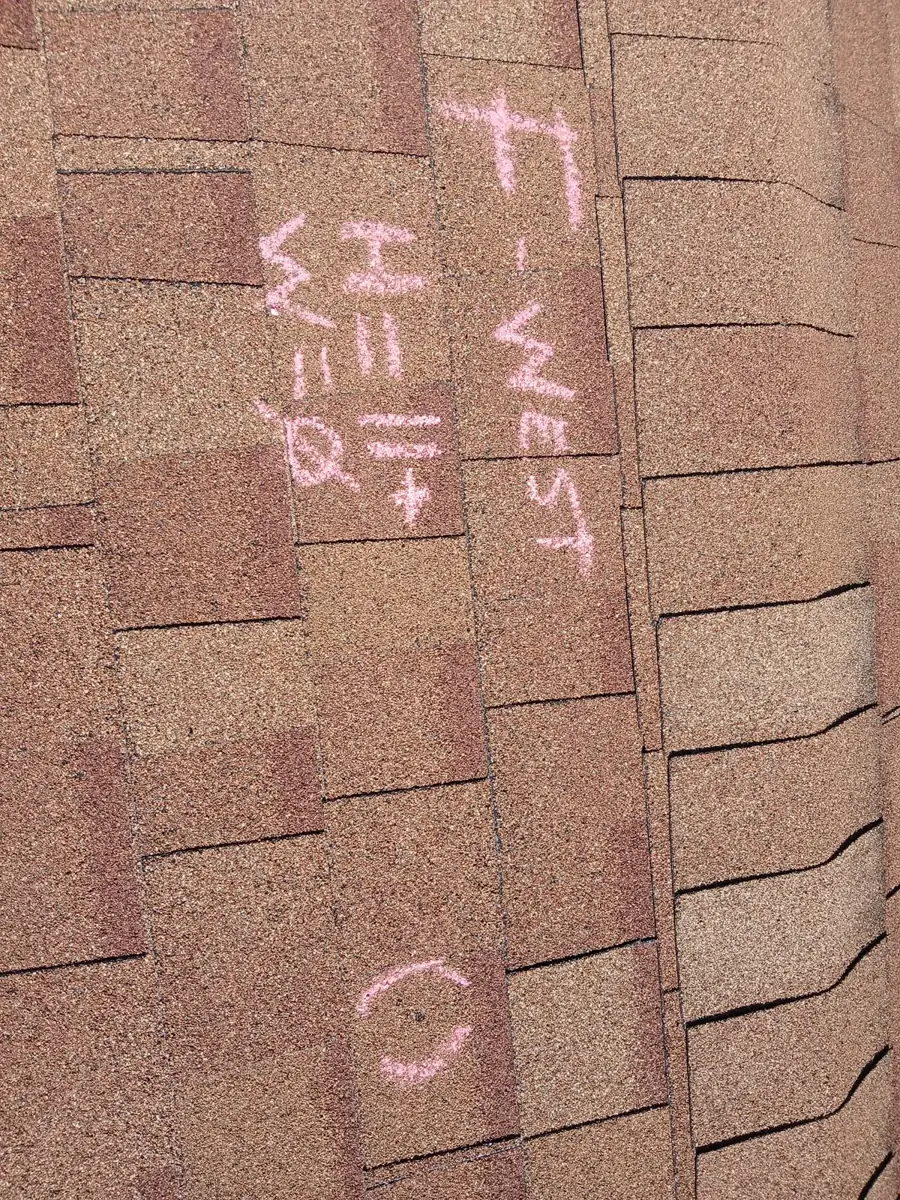
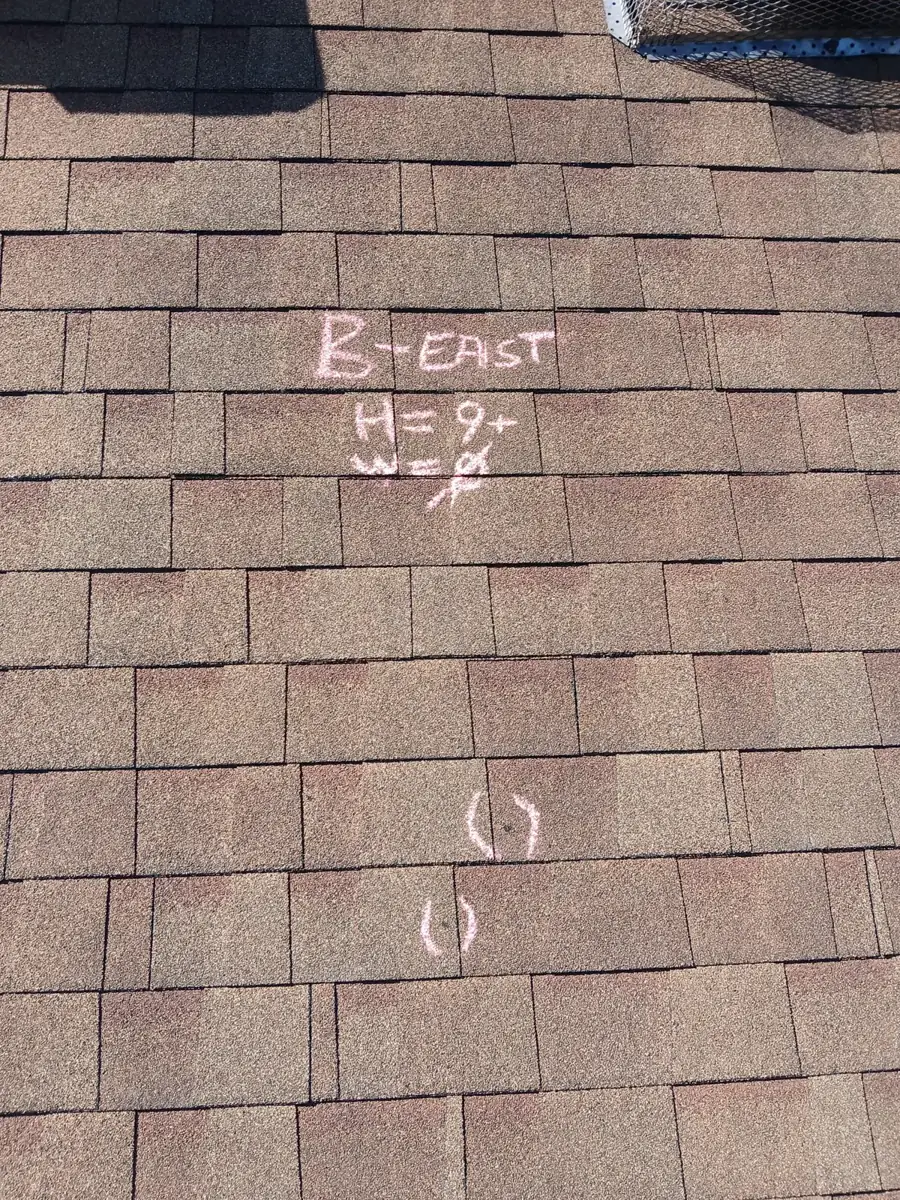
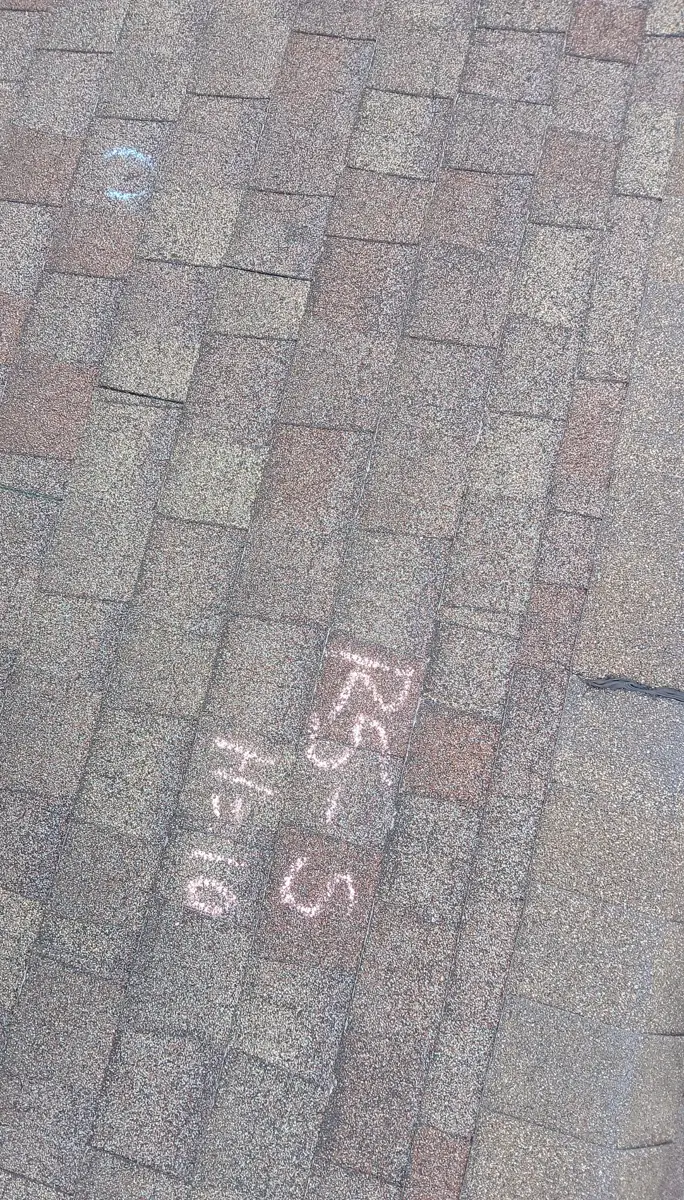
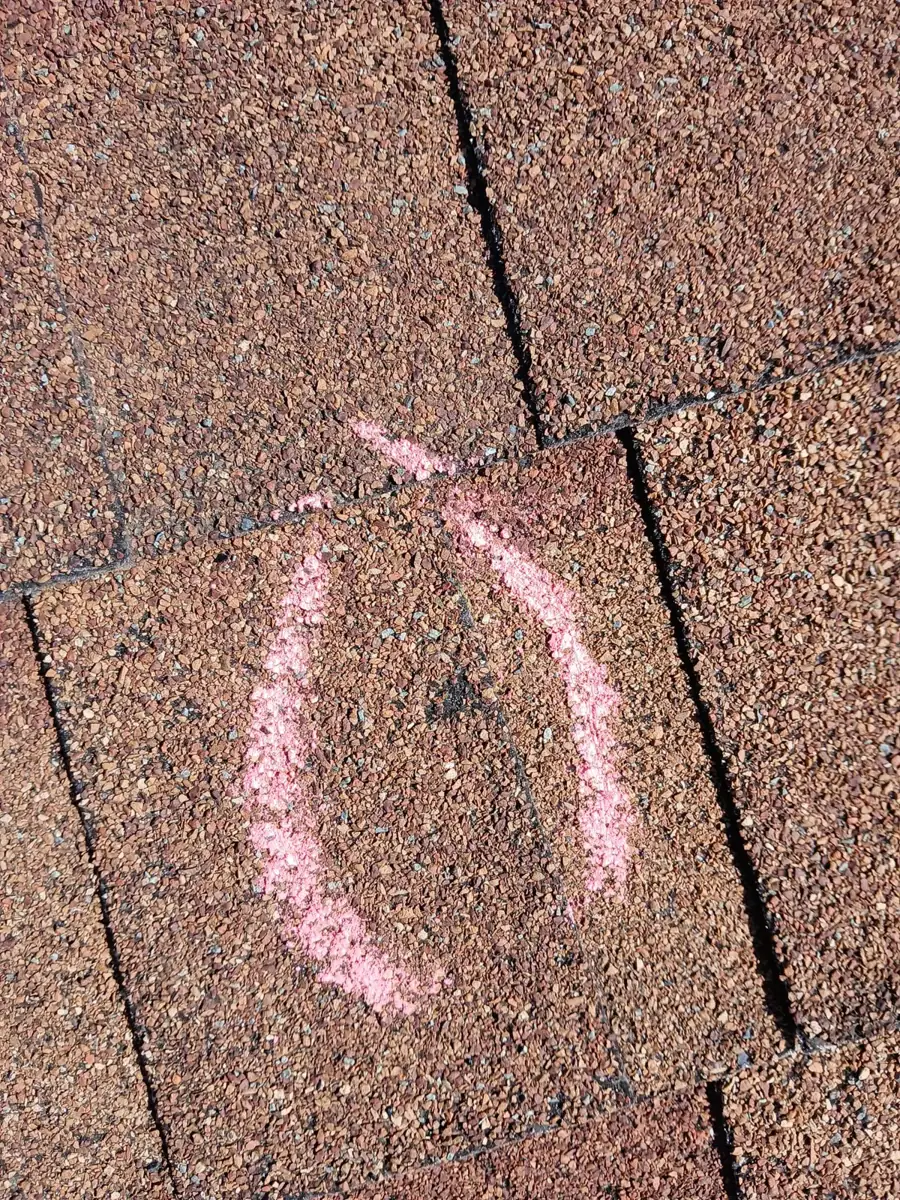
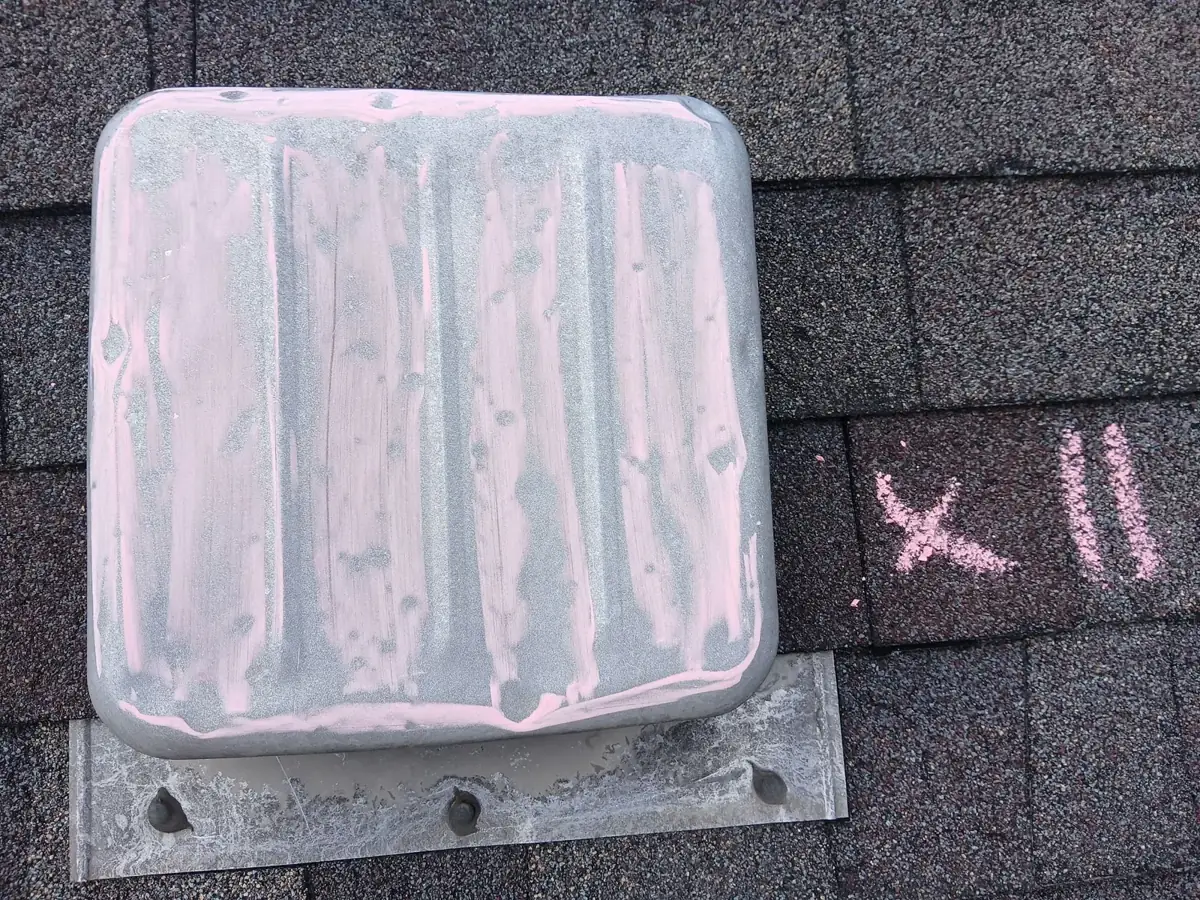
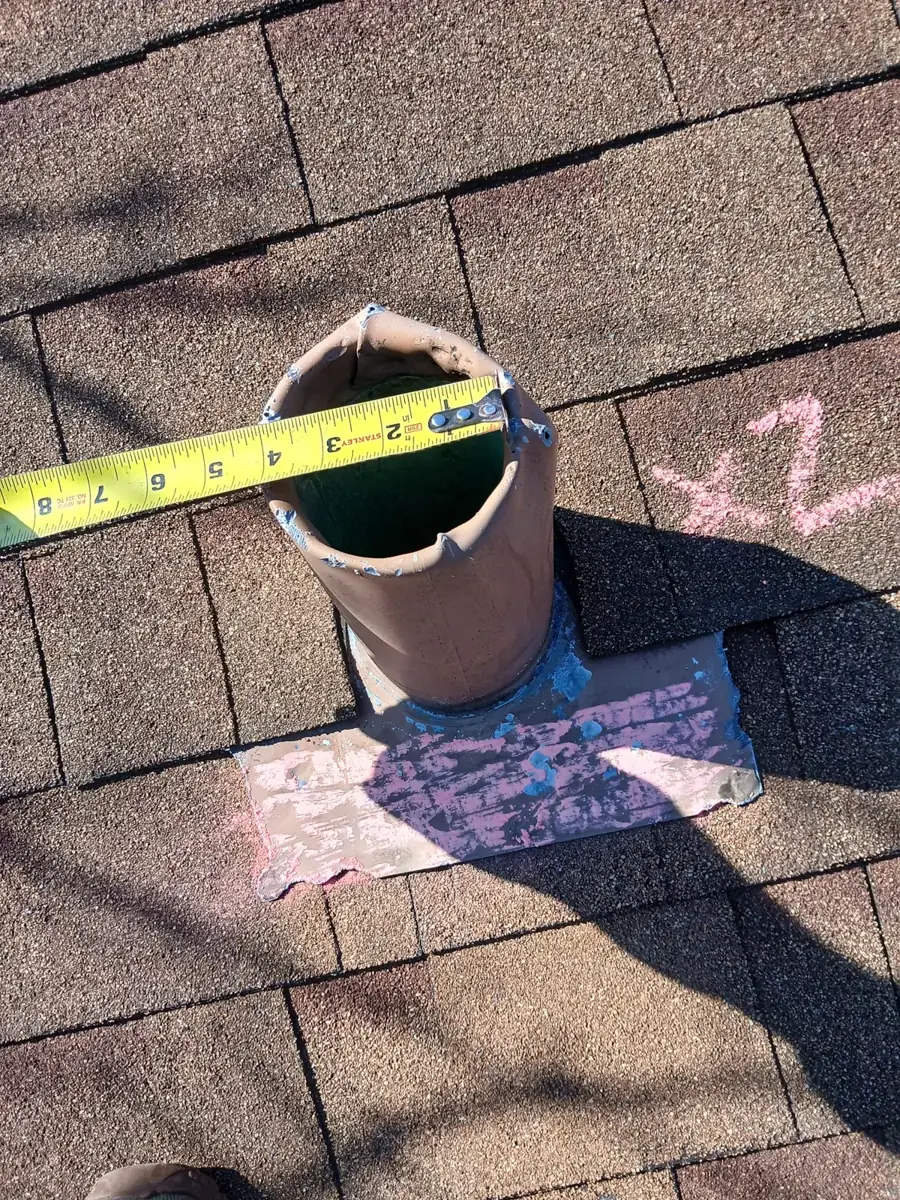
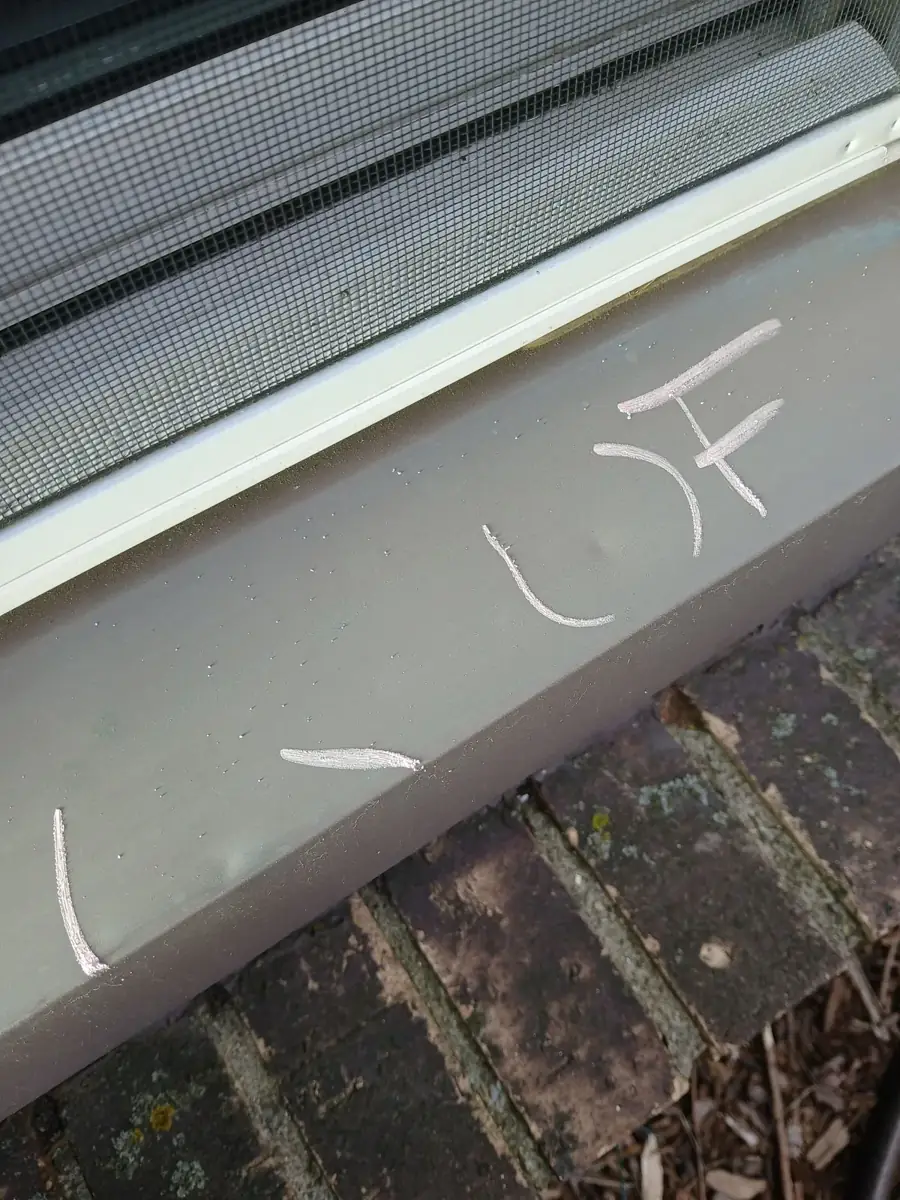
The finished photo report is a PDF in order: the slope summaries, the circled hits, then soft metal and gutters. Each page carries C&N's name and the date the photos were taken. If you've filed a claim, the claim number goes on it too, so the adjuster can match each photo to a spot on the roof.
Get This Report for Your Roof
A free Haag-certified inspection, with every hit circled and counted on each slope. The report is yours to keep, whatever it finds.
Get My Free InspectionOr call (708) 847-5095
Part 3: The Storm Date, Checked
Damage has to line up with a storm. For a real report we pull a weather history for the exact address, with the dates and the hail size estimated there. Then we check it against the National Weather Service's local storm reports.
For this sample, the public record shows that on July 28, 2026 the National Weather Service logged 2-inch hail in Oak Brook (about the size of a hen's egg). You can check storms near you on our hail history page and the Oak Brook page.
What to Have Ready Before We Come
You don't need anything to book. A few things make the report more complete:
- Access to the yard. Unlock the gate and keep pets inside. You don't need to be home for the exterior.
- The storm date, if you know it. We confirm it anyway, but your date tells us where to start.
- Your roof's age, if you know it. It goes on the form and matters to how a carrier looks at the claim.
- Any leaks inside. Note where (ceiling, wall, window) so the inspector checks that spot and the attic above it.
- Other buildings. Tell us about a detached garage or shed, since the form covers those too.
- Your claim number, if you've already filed. It goes on the photo report. You don't need to file first.
What the Report Does and Doesn't Do
The report documents the roof. It doesn't decide your claim. Your insurance company decides coverage, sends its own adjuster and writes its own estimate. Insurance typically covers sudden storm damage, subject to your policy's terms and deductible. What the report does is put specific marks, on specific slopes, with counts, in front of that adjuster. If the adjuster misses a slope, you have the photo. If the adjuster finds no damage and you disagree, the report is the evidence for a re-inspection.
If the inspection finds nothing, the form says so. You've lost an hour and avoided filing a claim you didn't need.
If a storm hit your town and you can't tell from the ground, the inspection is the cheapest way to know. It costs nothing, and you keep the report either way.
Book an inspection when
- Hail or high wind hit your town and nobody has been on your roof since
- You can see dents on gutters, downspouts or vents from the ground
- An adjuster is coming and you want your own evidence first
- Your roof is leaking after a storm
You may not need one yet when
- You only want to know whether a storm reached your street (check the hail history first)
- You want a quick read from a photo before anyone visits (try the roof photo check)
- Your roof was replaced after the last storm in your area
Chicago Storm Pros is a service of C&N Construction, Inc. (cnroofs.com). Reviews, project counts, certifications, and ratings shown here reflect C&N Construction's work.