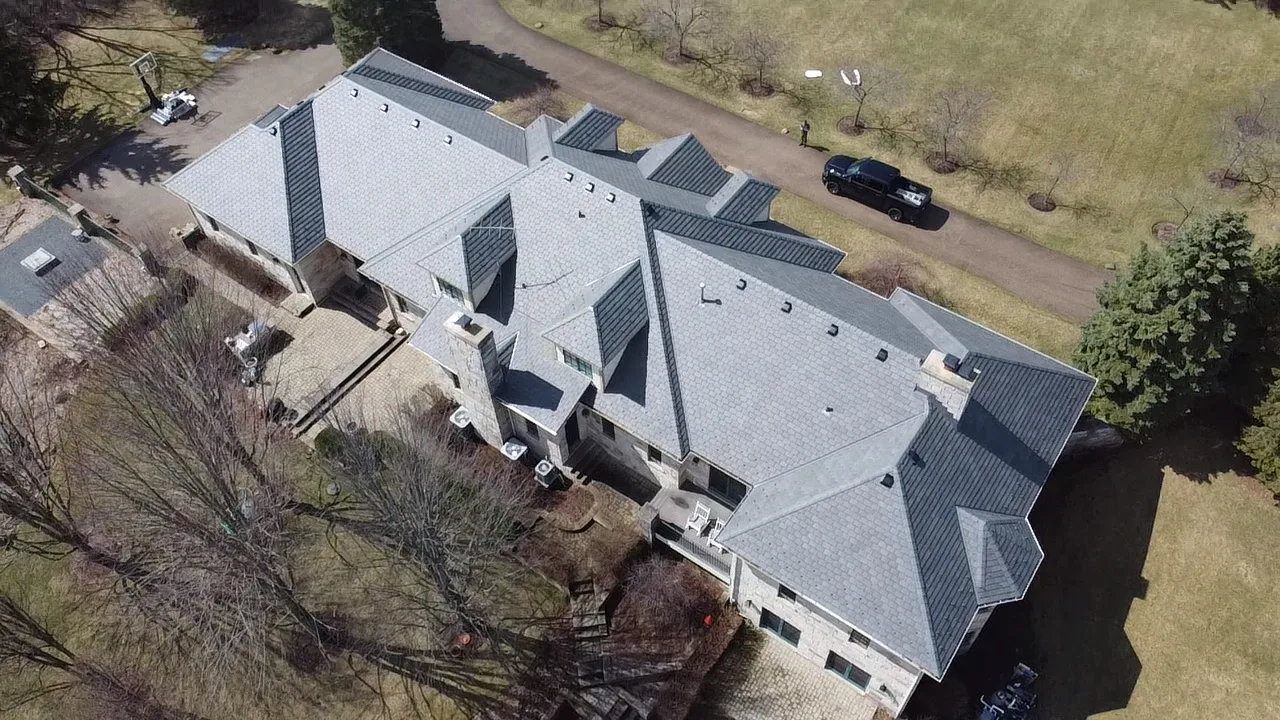




Three alternatives exist: targeted repair, partial (per-slope) replacement, and an overlay, which is a second shingle layer. Repair and partial replacement are legitimate tools when damage is contained. The overlay is legal in Illinois (code allows two layers) but usually a poor Chicagoland investment, and on storm claims it's rarely the right answer anyway.
A full replacement runs $12,000-$45,000 or more, so it's reasonable to ask what else is on the table. There are real alternatives, and there's one that mostly exists to make a sales pitch sound cheaper than it is.
Here's the honest version of all four options side by side, then the details on when each one earns its place.
| How It Works | Where It Falls Short | |
|---|---|---|
| Targeted repair ($400-$9,000) | Replaces damaged shingles, flashing, and pipe boots in the affected areas only. | Can't fix distributed hail bruising across a slope, and matching aged shingles reads patchy. |
| Partial replacement (per slope) | Replaces whole slopes, common when directional storm damage hits one side of the roof. Insurance frequently pays per documented damaged slope. | Color mismatch between new and aged slopes, and you pay labor mobilization each visit. |
| Overlay (second shingle layer) | New shingles installed over the old layer, saving $2,000-$4,000 in tear-off and disposal. | Hides the decking you most need to see, runs hotter which shortens shingle life, may limit or void manufacturer warranties, adds weight, and the eventual double tear-off costs more than you saved. |
| Full replacement (for reference) | $12,000-$45,000+. Strips to the decking and resets everything: underlayment, flashing, ventilation, shingles. | The price. |
Illinois code allows a maximum of two shingle layers. Homes already carrying two layers must strip to the decking before any new shingles go on.
When Does a Repair Genuinely Solve It?
A targeted repair is the right tool when the damage is contained and the rest of the roof is healthy. Wind peeled a shingle course off one section, a tree limb punched through a slope, flashing failed around a chimney. In those cases, replacing the affected shingles and details restores the roof for $400-$9,000 depending on scope. We break down where jobs land in that range in our roof repair cost guide.
What a repair can't do is fix distributed damage. Hail doesn't hit three shingles, it bruises hundreds across a slope, and you can't patch your way out of that. Repairs on an aging roof also read patchy, because new shingles never quite match granule-shedding twenty-year-old ones.
The full decision framework, including the age and damage thresholds where repair stops making sense, is in our guide to roof repair vs replacement.
When Is a Partial Replacement Smart?
Chicagoland storms are directional. A hailstorm driven by west wind hammers the west-facing slopes and can leave the east side nearly untouched. When that's what the inspection documents, replacing only the damaged slopes is a legitimate middle path between patching and a full reset.
Insurance frequently supports this approach. When damage is photographed and mapped slope by slope, carriers commonly approve replacement at the slope level, though every policy and adjuster review is its own case and no contractor can promise a scope before the carrier rules on it. The documentation is what makes the conversation concrete instead of speculative.
The tradeoff is cosmetic. New shingles sit next to slopes that have aged in the sun, and the color difference is visible if you look for it. On a rear slope it's often invisible from anywhere a person normally stands, which matters because directional storm damage frequently lands on exactly one side of the house.
There's also a cost-efficiency note worth knowing: labor mobilization happens per visit. Replacing two slopes this year and two more in three years costs more in total than doing all four at once, which is part of why the per-slope math should be run honestly before you commit.
Find Out Which Slopes Took the Hit
A free Haag-certified inspection maps damage slope by slope with photos. That documentation is what determines whether a repair, a partial replacement, or a full replacement fits, and it's what an adjuster needs to see.
Get My Free InspectionOr call (708) 847-5095
Why Do Roofers Talk You Out of Overlays?
An overlay means installing new shingles directly over the old layer, skipping the tear-off. It saves $2,000-$4,000 in labor and disposal, and Illinois code permits it as long as the roof ends up with no more than two layers. The savings are real, which is why the pitch works. Here's what the pitch leaves out.
The tear-off is the one moment in a roof's life when the decking is fully visible. Soft spots, rot around penetrations, and delaminated sheathing all get found and fixed then. An overlay nails new shingles over all of it, sight unseen, and whatever is wrong underneath stays wrong under a fresh surface.
The second layer also traps heat. Shingles over shingles run hotter than shingles over underlayment, and heat is what ages asphalt. The new layer on an overlay wears out faster than the same shingles would on a clean deck, and most manufacturers limit or void their warranties on overlay installations for exactly that reason.
Then the bill comes due. When the roof does need replacing, the crew strips two layers instead of one: more labor, more disposal weight, more cost. The $2,000-$4,000 you saved returns as a larger tear-off invoice, plus whatever the hidden decking problems grew into in the meantime. Resale inspectors flag double-layer roofs too, so the overlay can surface as a negotiating point when you sell.
There's a narrow honest case for it: a short ownership horizon, a structurally sound deck, one existing layer, and a cash budget. Even then, we'd rather spec down materials on a proper tear-off than stack layers, because the deck inspection is the part of the job we're least willing to skip.
What About Coatings and "Roof Restoration" Products?
Roof coatings are mostly a flat and low-slope commercial tool. Silicone and acrylic systems applied over an aging membrane can extend its service life meaningfully, and on that kind of roof they're a legitimate line item.
Steep-slope asphalt shingles are a different story. A coating doesn't repair hail bruising or wind damage, and the shingle restoration products marketed door to door after storms are generally not a repair in any sense an inspection would recognize. Worse, coating a storm-damaged roof can complicate a future claim, because it alters the evidence an adjuster would need to evaluate. Be careful with anyone selling a spray-on answer to storm damage.
How Does Insurance Treat Each Alternative?
The principle carriers work from is like-kind restoration: the policy pays to restore what the storm damaged, based on the documented scope. Depending on what the inspection and adjuster review establish, that can mean a repair, replacement of specific slopes, or a full replacement. Outcomes vary by policy, and no one can promise yours in advance. The Insurance Information Institute is a useful neutral primer on how the claim process works.
What carriers don't do is pay for overlays as a shortcut on covered losses. If the approved scope is replacement, the standard is restoring the roof to its pre-storm condition, and layering new shingles over damaged ones doesn't meet it. This is part of why the overlay question tends to dissolve on storm-damaged roofs: if the claim is approved, the tear-off is in the scope.
If you're weighing alternatives specifically because you're worried about what a claim will cover, we walk through that math in insurance claim vs paying out of pocket.
Repair and partial replacement are real alternatives, matched to contained damage that a documented inspection can define. The overlay saves the least where it matters most, hiding the decking at the one moment you could see it. And if you're weighing an overlay to save money on a storm-damaged roof, get the damage documented first, because an approved claim usually makes the whole question moot.
An alternative fits when
- Damage is contained to specific areas or specific slopes, and the inspection documents it that way
- The rest of the roof is healthy, with sound decking and years of expected life left
- A directional storm hit one side of the house and the other slopes check out clean
- The cosmetic mismatch of newer shingles lands on a rear slope where nobody sees it
Go full replacement when
- Hail bruising or wind damage is distributed across multiple slopes rather than contained
- The roof is near the end of its service life, so partial fixes buy little time
- The decking's condition is in question, which only a tear-off can settle
- An approved claim already scopes replacement, making the alternatives a downgrade you'd pay for later
Chicago Storm Pros is a service of C&N Construction, Inc. (cnroofs.com). Reviews, project counts, certifications, and ratings shown here reflect C&N Construction's work.
Related Decisions
- Roof repair vs replacement: the full decision framework
- What a roof replacement costs in Chicagoland
- Replacing a roof without insurance: your options
Free Storm Damage Inspection
Before you choose between repair, partial replacement, or a full reset, get the damage documented slope by slope. Haag-certified inspection, full photo report, and the report is yours to keep whatever you decide.
Get My Free InspectionOr call (708) 847-5095