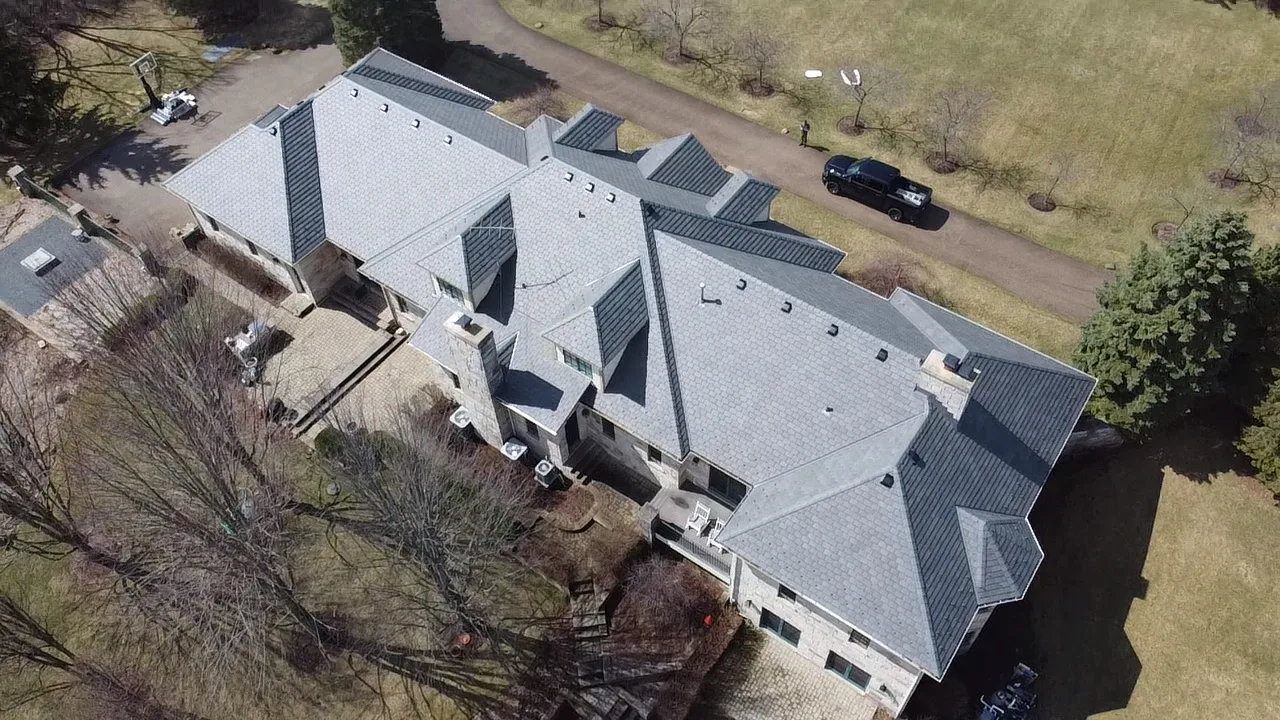





On flat and low-slope commercial roofs, hail damage hides: membranes can look fine while the insulation board underneath is crushed, and punctures show up as leaks months later. Wind peels at edges and corners first. Commercial policies also differ from homeowner policies in deductibles and exclusions, so the claim reads differently too.
Hail or wind on a flat roof? Snap a photo.
Photograph the gutters, vents or shingles. We circle what we seem to see and say whether an inspection is worth it.
Free. 30 seconds. No signup.
This AI only looks for storm and roof damage, and it isn't perfect. Think of it as a good starting point for a conversation.
Your browser shrinks the photo and removes the location data before it leaves your device. Privacy details.
Want to check recent storms near you? Your city only.
We never ask for a street address here, and the city stays in your browser.
Want us to get an inspector over, as soon as tomorrow in most cases?
A free inspection puts someone on the roof with a hand on the shingle. The report is yours to keep.
Why Does Flat-Roof Hail Damage Hide?
A single-ply membrane is designed to flex. When a hailstone hits, the membrane often absorbs the impact and springs back, while the rigid insulation board underneath takes the crush. The result is a roof that looks fine from the hatch but has fractured polyiso below, which means lost R-value and a spongy deck with no visible wound on the surface.
When the membrane does break, the puncture is frequently pinhole-size. Water works through it slowly, saturating insulation for weeks or months before a stain ever reaches a ceiling tile inside.
That lag is the trap. By the time stains appear, the storm that caused them is months old, which complicates attributing the damage to a specific event and can crowd the policy's notice deadline. Matching interior damage to a storm date the National Weather Service has on record is far cleaner when the inspection happens close to the event.
| What Storms Do | How It's Found | |
|---|---|---|
| TPO and PVC single-ply | Hail bruises and punctures the membrane and crushes the insulation board beneath it. Seams strain under uplift. | Test cuts and core samples, seam probing, infrared moisture scans. |
| EPDM rubber | Punctures at hail sizes that spare harder membranes, especially when aged or unballasted. Wind leaves shrinkage stress at flashings. | Surface scan plus core sampling at suspect impact points. |
| Modified bitumen and built-up | Granule displacement and mat fracture, much like asphalt shingles. Impacts open existing blisters. | Test cuts and granule pattern mapping. |
| Metal panels and copings | Dents, opened seams, displaced copings and edge metal. | Seam and fastener inspection, edge-metal review. |
| All systems after wind | Peeling starts at edges, corners, and terminations. Scuppers and drains clog with debris. | Perimeter and penetration inspection, drainage check. |
Flat-roof hail damage frequently isn't visible from the surface. Crushed insulation and slow punctures are why post-storm commercial inspections use core sampling and infrared.
What Does Wind Do to Commercial Roofs?
Wind loads a flat roof unevenly. Uplift pressure is highest at the perimeter and highest of all at the corners, so that's where failures start: membrane that peels or balloons, displaced edge metal, and copings shifted off the parapet.
Terminations and penetrations come next. Flashing around rooftop units, curbs, and pipe penetrations takes stress it wasn't carrying before the storm, and debris driven across the roof ends up clogging scuppers and drains, which sets up ponding problems the next time it rains.
A roof that held through the storm isn't automatically sound. Wind can break the adhesion or fastener engagement holding a membrane down without lifting it, leaving a roof that passed this event and fails in the next one. That's the kind of condition a perimeter inspection finds and a glance from the hatch doesn't. If your building has metal panels or extensive edge metal, our metal roof storm damage guide covers how those systems fail in more detail.
Free Commercial Roof Inspection After a Storm
Our free inspection offer stands for building owners too. Haag-certified eyes on the membrane, seams, and edge metal, with photo documentation tied to the storm date. The report is yours to keep.
Get My Free InspectionOr call (708) 847-5095
How Do Commercial Policies Differ?
The biggest difference is usually the deductible. Many commercial property policies carry percentage deductibles for wind and hail, commonly 1 to 5 percent of the insured building value. On a $2 million building, that's $20,000 to $100,000 before coverage pays anything, which changes the math on what's worth filing.
Exclusions read differently too. Cosmetic-damage and marred-metal exclusions appear frequently on commercial policies, and they can remove coverage for dented panels and copings that still shed water. On the other side of the ledger, business-income coverage may attach if roof damage interrupts operations, which has no residential equivalent.
Commercial proof standards are also higher. The policy's language rewards documentation, so core samples, infrared scans, and moisture surveys become the vocabulary of the claim. Every policy is its own contract and coverage decisions belong to your carrier, so nothing here is a promise of payment. For the file-or-don't-file decision itself, our insurance claim vs out-of-pocket guide walks through the tradeoffs.
What Should a Post-Storm Commercial Inspection Include?
A membrane survey comes first: walking the field of the roof for bruises, punctures, and scuffs, and probing seams for strain or fishmouthing. Where impact damage is suspected, test cuts or core samples show the condition of the insulation and the underside of the membrane directly.
Non-destructive testing fills in the rest of the picture. An infrared or capacitance moisture scan maps wet insulation across the whole roof, catching saturation that no surface walk would find. The perimeter, penetrations, and drainage all get their own review: edge metal, copings, flashings at rooftop units, scuppers, and drains.
Inside the building, a deck check looks for staining, rust, or deflection under the damaged areas. The deliverable is a documented condition report tied to the storm date, which is what a claim, a repair scope, or a decision to wait all rest on. That's the same documentation standard behind our free storm damage inspection.
Where We Fit
Most of our work is residential storm restoration across Chicagoland, and we're straightforward about that. Commercial storm projects are a smaller, selective part of what we do.
Commercial roofing is part of C&N Construction's service catalog, and the commercial projects we take get the same documentation-first approach as our residential work: inspection, photos, testing where warranted, and a condition report tied to the storm date. Selective means we take the projects we're equipped to do well.
So if your building's storm damage fits what we do, we'll say so and get to work. If it needs a different specialist, a roof consultant for a complex forensic dispute or a crew tooled for a specific system, we'll say that too, because a straight answer costs you nothing and a bad fit costs you plenty.
After any hail or wind event, get a flat roof inspected even if it looks fine from the hatch. The damage that matters is usually in the insulation and seams, and commercial notice deadlines and percentage deductibles reward finding it early.
Get it inspected now when
- A documented hail or wind event hit the building within your policy's notice period
- Any new interior stains have appeared, even small ones
- Membrane scuffs, displaced edge metal, or shifted copings are visible
- The roof is EPDM or aged single-ply, which take hail damage at smaller stone sizes
It can probably wait when
- No storm event has hit the building
- Interior stains trace to HVAC condensate or plumbing, not the roof
- A recent post-storm inspection already documented the roof's condition
- The building is scheduled for reroofing regardless
Chicago Storm Pros is a service of C&N Construction, Inc. (cnroofs.com). Reviews, project counts, certifications, and ratings shown here reflect C&N Construction's work.
Related Decisions
- Asphalt shingle storm damage: hail bruises, wind creases, and wear
- Metal roof storm damage: dents, seams, and cosmetic exclusions
- Insurance claim vs out-of-pocket: when filing makes sense
Get Your Building's Roof Documented
Free inspection with photo documentation tied to the storm date, from a Hillside contractor with an Illinois license you can verify (IL #104.017643). If the project isn't a fit for us, we'll tell you straight.
Get My Free InspectionOr call (708) 847-5095